 Visit Porto City Guide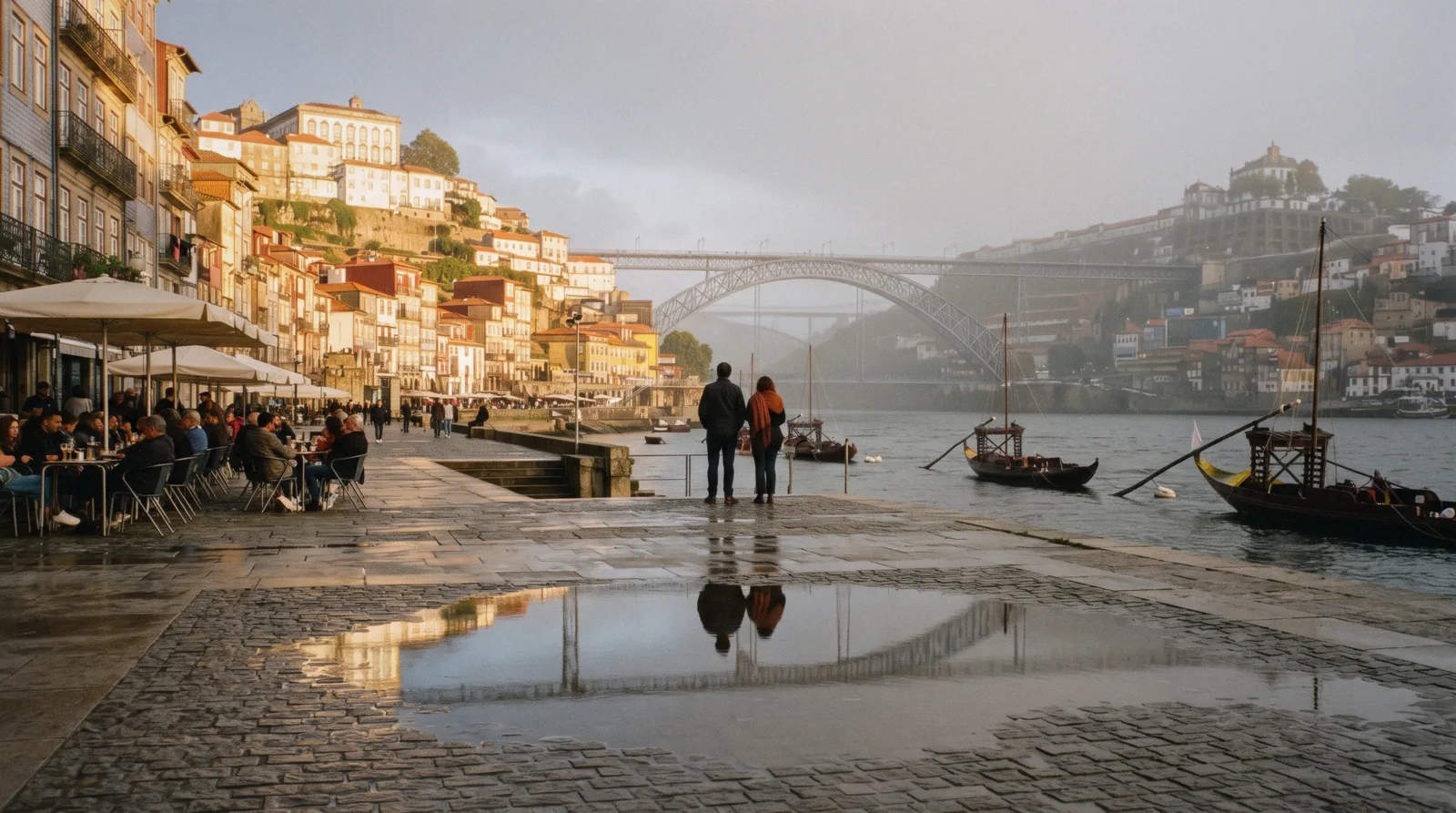
Best Time to Visit Porto
The best time to visit Porto is late spring or early autumn, and the reason is water, not heat: the IPMA 1991–2020 climate normal for the Porto / Pedras Rubras station gives the city 1,146.9 mm of rain a year on 105.4 rainy days, with November at 165.9 mm and July at 16.6 mm, while August's mean maximum is a mild 24.8 °C. This page prints that table in full, the dates that move a 2026 plan — São João, the Queima das Fitas, the beach season, the historical train, the cable-car and cathedral hour bands — what gets cheaper in winter and what does not, and the honest gaps: no official monthly visitor count exists, and IPMA publishes no sea-temperature normal. Whichever month you land in, what the city actually costs and holds sets out the rest of the trip.
Quick answer The two best windows, the wet months, the beach months and the one week to book ahead
May, June, September and October are the best months to visit Porto: mean daily highs of 20.3 to 23.5 °C on the IPMA 1991–2020 normal, between 4.9 and 8.9 rainy days a month, and the Gaia cable car, the cathedral tower and the Douro trains on their long summer hours. July and August are the driest months at 16.6 and 29.3 mm of rain and the only beach months, with the Matosinhos and Gaia bathing season running 13 June to 13 September 2026, but the city's busiest stretch on our reading. November to January is the wet season, 148.9 to 165.9 mm a month on 11 to 13 rainy days, when the museums and the port lodges do the work. The night of 23 to 24 June, São João, is the one date to book around.
Key takeaways
- For the Douro, September and October: the historical steam train runs 6 June to 18 October 2026 at $69.73 (€60), and the coach-and-boat day runs all year, with the vineyards at their fullest in the weeks before the vintage.
- For a beach, July and August, and only those: the four Porto Blue Flag beaches are lifeguarded through the 2026 bathing season, and the Matosinhos surf lesson is a summer product with a wetsuit for the Atlantic.
- For the lowest prices and the shortest queues, November to February, when the Livraria Lello voucher sells same-day and a fado evening fills the wet nights; the rainy-day page is the plan for the 13 wet days a January has.
- For the party, the São João week: fireworks at midnight on 23 June for 12 minutes between the Luís I and Arrábida bridges, the bridge closed from noon, and 24 June a municipal holiday when Soares dos Reis is shut.
Porto Month by Month
Mean daily maximum temperature by month in Celsius, with the Fahrenheit reading underneath, from the IPMA 1991–2020 climate normal for Porto / Pedras Rubras (station 545, version 1.0 of 2024), the airport station and the only one IPMA publishes for the city. The bands below the bars come from the same sheet's rain-day and hot-day counts, the 2026 bathing season and the festival calendar; the crowd band is our reading and is labelled as such.
August is the warmest month on the thirty-year mean at 24.8 °C and the station's record is 38.6 °C on 7 August 2016; the record low is −2.4 °C on 13 January 2003. July is the driest month at 16.6 mm across 3.1 rainy days, which is why a July plan can leave the umbrella at home and a November one cannot.
Porto Weather by Month
The IPMA 1991–2020 climate normal for Porto / Pedras Rubras, parsed from the institute's PDF in Q3 2026: mean daily maximum and minimum temperature, mean monthly rainfall and the mean number of days with at least a millimetre of rain. The annual total is 1,146.9 mm on 105.4 days, and 619.1 mm of it — more than half — falls between October and January. The Fahrenheit readings are rounded conversions of the Celsius means, not separate measurements.
| Month | Average high | Average low | Rain | Rainy days |
|---|---|---|---|---|
| January | 14.0°C (57°F) | 6.4°C (44°F) | 151.0 mm | 12.8 |
| February | 15.0°C (59°F) | 6.8°C (44°F) | 97.8 mm | 10.0 |
| March | 17.0°C (63°F) | 8.8°C (48°F) | 101.1 mm | 9.9 |
| April | 18.1°C (65°F) | 10.1°C (50°F) | 95.5 mm | 10.4 |
| May | 20.3°C (69°F) | 12.3°C (54°F) | 85.6 mm | 8.9 |
| June | 22.7°C (73°F) | 14.5°C (58°F) | 33.7 mm | 4.9 |
| July | 24.3°C (76°F) | 15.5°C (60°F) | 16.6 mm | 3.1 |
| August | 24.8°C (77°F) | 15.7°C (60°F) | 29.3 mm | 3.2 |
| September | 23.5°C (74°F) | 14.8°C (59°F) | 68.2 mm | 5.8 |
| October | 20.7°C (69°F) | 12.9°C (55°F) | 148.9 mm | 11.1 |
| November | 16.8°C (62°F) | 9.4°C (49°F) | 165.9 mm | 13.0 |
| December | 14.7°C (58°F) | 7.6°C (46°F) | 153.3 mm | 12.4 |
The station is the airport at Pedras Rubras, 67.7 metres up and 11 kilometres from the Sé; IPMA publishes no 1991–2020 normal for the city centre or for Serra do Pilar, and the centre runs a little warmer and a little drier than the table. Sea temperature is not stated: IPMA publishes no monthly sea normal and we found no official Porto figure, so nobody on this site promises you a warm swim at the beaches.
The Rainy Season, and What the Heat Actually Does
Porto is a wet Atlantic city, not a Mediterranean one, and the number that matters is 1,146.9 mm — about half as much again as Lisbon and more than London. The rainy season on the IPMA table is October to January, with every one of those four months above 148 mm and above 11 rainy days, and a shoulder on each side: February to May run 85 to 101 mm on nine or ten wet days, and September 68 mm on six. The rain comes as fronts off the ocean, a day or two of it and then a clearing, rather than a monsoon, so a wet week in November still has dry mornings; but the granite steps between Ribeira and the Sé are slick when wet, the Guindais funicular that used to spare that climb is closed for maintenance, and the Clérigos tower terrace in a squall is a view of cloud. The summer is the mirror image: 16.6 mm in July and 29.3 mm in August across three rainy days each, which is a dry season by any standard.
The heat is the thing Porto does not have. August's mean maximum is 24.8 °C, the mean number of days at or above 30 °C is 3.1 in July and 3.5 in August, and the number at or above 25 °C peaks at 10.6 in August; the record, 38.6 °C on 7 August 2016, is the exception that made the news. Compare the coast with the Douro: the valley an hour inland is a different climate, several degrees hotter through July and August with no sea breeze, which is why the Douro Valley day is better taken in September than in the beach weeks. The evenings in every month are cool by the river — the mean minimum never reaches 16 °C — so the linen jacket comes on every Porto trip, and the umbrella on most of them.
Month by Month, With the Dates That Move a Plan
Every date below is from the organiser's or the venue's own page read in Q3 2026; where a 2026 date is not yet printed we say so. Hours quoted are the winter and summer bands the venues publish, and prices are the venue's own.
January and February
The wet, quiet months: 151.0 and 97.8 mm, highs of 14 to 15 °C, lows around 6.5 °C. Livraria Lello and Soares dos Reis close on 1 January and Clérigos opens 11:00 to 19:00 that day; otherwise everything runs on winter hours — the Sé 09:00 to 17:30 with the tower shutting at 17:00, the Gaia cable car 10:00 to 18:00, the Cockburn's and Graham's lodges 10:00 to 17:00. Queues are short enough that the Lello voucher can be bought for the same morning. Carnival falls in February or early March and is not a Porto festival of any size.
March and April
Rain eases only slightly, 101.1 and 95.5 mm, but the light lengthens and the highs reach 17 to 18 °C. Is March a good time to visit Porto? For the museums and the lodges, yes, and for a first sight of the river without a crowd; for the terraces, not yet. Easter moves through these months and brings the Clérigos night ticket at €5, sold on Easter dates only, and Easter Sunday closes Lello and Soares dos Reis.
The Sé switches to summer hours on 1 April (09:00 to 18:30), São Francisco to 09:00 to 20:00, the Cockburn's and Graham's visits to 17:30, and the cable car runs 10:00 to 19:00 from 24 March and 10:00 to 20:00 from 26 April. The Serra do Pilar monastery remains closed for works with no date.
May
The first of the good months: 85.6 mm, a 20.3 °C mean high, 8.9 rainy days. The Queima das Fitas, the student week, runs 2 to 9 May 2026 at the Queimódromo in the Parque da Cidade, with the Cortejo Académico parade on 5 May from 14:01 and some 250,000 people expected over eight days by the organisers; it is loud, cheap and not a reason to avoid the city, but hotel rooms near the Parque go early. 1 May closes Lello, Soares dos Reis and the Guimarães palace. Serralves em Festa, 29 to 31 May 2026, opens the Serralves park and museum free for about fifty continuous hours, the one weekend a year the €24 ticket is nothing.
June
The month with two halves: 33.7 mm, 22.7 °C, 4.9 rainy days, and São João. The bathing season at Matosinhos and Gaia opens on 13 June 2026 and the historical Douro train starts on 6 June. Then the night of 23 to 24 June: stages on Aliados, at the Largo do Amor de Perdição, Casa da Música, Ribeira and the Palácio de Cristal from 20:00 or 22:00 until 04:00, fireworks at 00:00 for 12 minutes on the river between the Luís I and Arrábida bridges, the bridge itself closed from noon on 23 June until 04:00, the funicular (when open) running all night and the metro reinforced. 24 June is a municipal holiday that closes Soares dos Reis and Lello; the Sé closes 24 June for the Mass.
Rules on the plastic hammers, the balloons and glass are not stated on the official pages, so read the events page and the safety page before the night. Book the room for 22 to 24 June months ahead.
July and August
The dry season and, on our reading, the busy one: 16.6 and 29.3 mm, highs of 24.3 and 24.8 °C, 3.1 and 3.2 rainy days. Everything runs on its longest hours — Clérigos to 23:00 in its peak-season band with the €5 night ticket on summer dates, the cable car to 20:00, the Sé tower to 18:00. Porto's four Blue Flag beaches, Homem do Leme, Gondarém, Foz and Aquário, are the reason to be here now rather than in May, and the Atlantic is cold enough that the surf lesson comes with a wetsuit; the sea temperature itself is not stated by any official source.
From 3 August Serralves sells a late-afternoon ticket at €12 for the park and €15 for everything, and a family ticket at €48 and €58, until 30 September. The Douro is hot; take the valley day early or leave it for September.
September and October
The second good window and, for the Douro, the best: 68.2 mm and 23.5 °C in September, 148.9 mm and 20.7 °C in October, the vintage under way in the valley and the historical train running until 18 October. The bathing season ends on 13 September 2026, the cable car drops to 10:00 to 19:00 from 25 September and to 18:00 from 25 October, and the Sé and São Francisco go to winter hours on 1 November. October is the first wet month — 11.1 rainy days — so the second half of it is the rainy-day plan with the museums, and the first half is the last of the terraces.
Is October a good time to visit Porto? The first two weeks, yes, on every count; the last two, bring the coat.
November and December
The wettest two months, 165.9 and 153.3 mm on 13.0 and 12.4 rainy days, highs of 16.8 and 14.7 °C. The EDP Porto Marathon runs on 8 November 2026 from 08:00, finishing at the Queimódromo, with its expo at the Alfândega on 6 and 7 November, and the riverside roads close for the morning. The municipal Christmas markets run 'until the end of December' at Santo Ildefonso, Batalha, Avenida D. Afonso Henriques, Parada Leitão, Carlos Alberto and the Passeio Alegre on the 2025 leaflet; the 2026 dates are not yet printed. 24 December closes the Museu do Porto spaces and the funicular at 19:00; 25 December closes Lello, Soares dos Reis, São Francisco, the cable car, the lodges and the Museu do Porto, while Clérigos opens 11:00 to 19:00; 31 December is a Museu do Porto closure, and the funicular, when open, runs continuously into the new year.
What Gets Cheaper in Winter, and What Does Not
Almost nothing official. Porto's attractions price by ticket, not by season: the Lello voucher is €15.95 all year (its terms say the price is set 'per season', but the figure printed on in Q3 2026 is the only one we have seen), Clérigos €10, the Sé €3, the Bolsa €14, Taylor's €25, the Andante Tour 1 €7.75, the tram €6, and the tourist tax €3 a night for up to seven nights in Porto and €3 in Gaia from 21 August 2026. The two dated exceptions run the other way, in summer: Serralves's late-afternoon tickets at €12 and €15 and family tickets at €48 and €58 from 3 August to 30 September, and the Clérigos €5 night ticket on Easter, summer and Christmas dates only.
What does drop is the room rate, which no official body publishes and which the where to stay page reads from a booking search on a stated date rather than guesses; and the queue, which in January makes the Lello time slot a formality and the Bolsa's mandatory guided tour an English-language one more often, because the language is set by the order of arrival. The costs page prints the full ticket bill with the live rate; none of its lines has a winter column.
Crowds: What Is Measured, and What Is Our Reading
No official body publishes a monthly visitor count for Porto's attractions, and the tourism board's arrivals statistics are annual, so every 'peak season' claim on this page is an inference from the calendar, not a measurement: the beach season, the school holidays across Europe, the São João week, the Queima week and the cruise calls at Leixões, which the port authority's terminal page describes without a monthly schedule we could read. On that reading, June to September is the busy stretch, with the two festival weeks as spikes, and November to February the quiet one.
- Livraria Lello sells a timed voucher all year and the summer afternoons run out of slots; buy the first slot of the day in any month and the question disappears — the Lello page explains the voucher.
- The Palácio da Bolsa's tour language is set by arrival order, so a July queue is more often a Spanish or French tour than an English one; the Bolsa page has the timing that helps.
- The lodges that take reservations — Cockburn's and Graham's — fill their English slots in summer; Taylor's takes no booking at all, so it absorbs the walk-ups; the port wine cellars page sorts them.
- The six-bridges cruise runs every hour in summer and less often in winter; it is the product whose season shows in the timetable, and its cheapest boat is the cheapest way onto the water, not the best one.
Free Days: the Rule That Changed in 2024
The free first Sunday that older guides promise for Porto's state museums ended for tourists in August 2024: since then, the Portuguese museums and monuments network gives residents in Portugal 52 free entries a year on any day, on presentation of a Citizen Card and tax number, and non-residents pay every day at Soares dos Reis (€10), the Guimarães castle and palace and the rest of the state list; under-12s stay free. The municipal Museu do Porto spaces are €4 each or €8 for a seven-day ticket, free for under-18s and students on any day and free on Sundays for holders of the residents' Cartão Porto; commemorative dates such as Heritage Days and Museum Night are free for everyone and are announced on museudoporto.pt when they fall. Serralves keeps the one first-Sunday rule that applies to a visitor, free entry on the first Sunday of each month with no time window stated, and opens everything free for Serralves em Festa on 29 to 31 May 2026.
The free things to do page lists what costs nothing on every day of the year; the Monday openings page lists what is shut on the day the museums rest.
The Beaches, the Douro and the Day Trips, by Season
Three geographies with three calendars. The coast: the Blue Flag list for 2026 gives Porto four beaches (Homem do Leme, Gondarém, Foz, Aquário), Matosinhos eighteen and Gaia nineteen, with the Matosinhos and Gaia bathing season and lifeguards from 13 June to 13 September 2026; the Porto beaches' own 2026 season dates are not yet printed on the programme's page, which still shows 2025. Outside those dates the beaches are a walk, not a swim. The valley: the Douro's calendar is the vine's — bare in winter, green from May, heavy in September when the vintage starts and gold in October — and the historical steam train between Régua and Tua runs Saturdays and Sundays and some Wednesdays from 6 June to 18 October 2026, 51 trips, leaving Régua at 15:00 and back at 18:22, €60 adult and €32 for a child of 4 to 12; the scheduled CP trains to Pinhão at €12.45 run all year. The Douro Valley page puts the train against the coach-and-boat day, which runs in every month and whose lunch is the same in January.
The day trips north and south are all-weather: Braga's Bom Jesus funicular runs summer 09:00 to 20:00 and winter 08:55 to 17:55 with a lunch break; Guimarães castle and palace are 10:00 to 18:00 all year, the keep closed for works; Coimbra's Joanina library is timed to the minute in every season and its tickets are non-refundable, so a rainy day is no reason to miss the slot; and Aveiro's lagoon boats run on the weather, with no municipal page stating a fare. Santiago de Compostela is a wetter city than Porto and a four-season cathedral.
Four Bookings That Fit the Season
One for the vintage, one for the beach months, one for the wet nights and one for the dry evenings on the water; prices and ratings as listed in Q3 2026.
 from €55
From Porto: Douro Valley w/ Boat Tour, Wine Tasting & Lunch
listed at $63.87
The most-booked Douro day trip, with 22,000 reviews: a 1959 cooperative winery, a second cellar, cellar lunch with Douro wines, olive oil and an hour on the river. Groups can grow and go bilingual without notice.
Check Availability from €30
Matosinhos: Surfing Lesson with Equipment
listed at $34.84
A 90-minute lesson at Matosinhos beach with Fish Surf School, board and wetsuit included, eight people to an instructor. The beach is 25 minutes from the centre by bus or metro.
Check Availability from €20
Porto: Live Fado Show with Glass of Port Wine
listed at $23.23
An hour of fado in one of three historic Casa do Fado rooms, including the old convent pantry under São João Novo, with a glass of port. The most-booked fado ticket in Porto.
Check Availability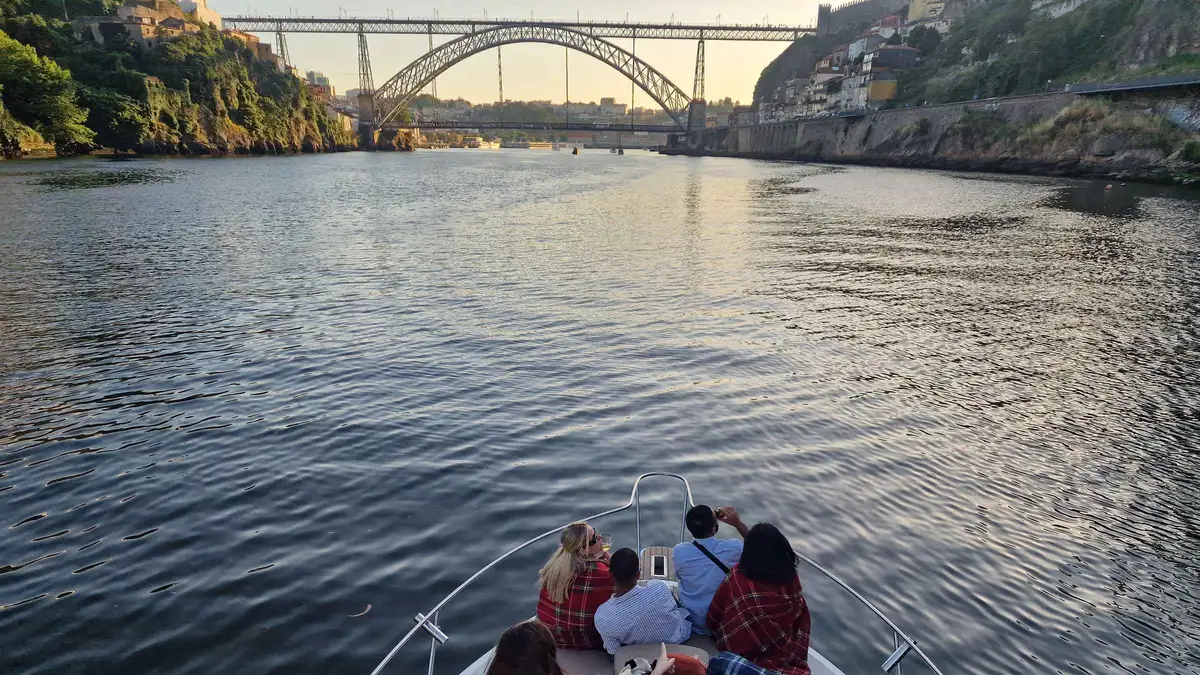 from €40
Porto: 7 Bridges Cruise & Port Wine with Sunset Option
listed at $47.03
Two hours from Afurada past all seven bridges with a certified crew, a glass of port and a bathroom on board, ten people at most. Near-perfect ratings; the sunset departure sells first.
Check AvailabilityPrices, ratings and details are the platform's own, checked in Q3 2026; dollar figures are the listed prices — the platform bills in your account's currency.
The Best Month for You, by What You Came For
The table turns the calendar into a decision. The rows are what people come to Porto for; the columns are the month we would pick and the one we would avoid, with the reason from the IPMA sheet or the organiser's page.
| You came for | Pick | Avoid | Because |
|---|---|---|---|
| The city on foot: the bridge, the tower, the quay | May or September | November to January | 20.3 to 23.5 °C highs, 5 to 9 rainy days against 11 to 13; the Ribeira stairs are slick when wet |
| The Douro Valley | Late September to mid-October | July and August | The vintage and the steam train to 18 October; the valley runs several degrees hotter than the coast in summer |
| A beach day | July or August | Anything before 13 June or after 13 September | 16.6 and 29.3 mm of rain; lifeguarded season 13 June to 13 September 2026 at Matosinhos and Gaia |
| The lowest prices and no queues | January or February | The São João week | Attractions do not discount, rooms do; Lello slots sell same-day in winter |
| The festival | 23 to 24 June | — | Fireworks at 00:00 for 12 minutes; bridge closed from noon on 23 June; 24 June a municipal holiday |
| Museums and the lodges in the rain | Any month; the wet ones make it a virtue | Mondays | State and municipal museums close Monday; the lodges, the tower and Lello do not |
If the trip has one fixed date and it is not one of the above, the rule is simple: June to September, pack for sun with a jacket for the river; October to May, pack for rain with a morning that may clear. The events calendar has the full dated list, and the Porto in 3 days itinerary is written for the shoulder months, with a wet-day swap on each day.
Plan the Rest of the Trip
The pages this one hands over to.
Porto events
São João, the Queima, Serralves em Festa and the marathon, with what each closes.
The 2026 datesPorto rainy day
The museums, the lodges and the arcades, ordered for a wet morning.
For the 105 wet daysPorto to Douro Valley
The €12.45 train, the steam train and the coach days compared.
Best in SeptemberBest Time to Visit Porto: Questions
What is the best month to visit Porto?
May, June, September or October: mean highs of 20.3 to 23.5 °C and 4.9 to 8.9 rainy days on the IPMA 1991–2020 normal, with the venues on summer hours. September adds the Douro vintage, which is why the coach-and-boat day is best then; the month table has every figure.
What is the rainy season in Porto?
October to January, each month above 148 mm and above 11 rainy days, with November the wettest at 165.9 mm on 13.0 days; the annual total is 1,146.9 mm. July is the driest at 16.6 mm. The rain section explains what the fronts do to a day, and the rainy-day page what to do with one.
Is March a good time to visit Porto?
For museums, lodges and the river without crowds, yes: 17 °C highs and 101 mm of rain on about ten days. Easter may fall in it, which brings the Clérigos €5 night ticket and closes Lello on Easter Sunday; the month-by-month section has the hour changes on 1 April.
Is October a good time to visit Porto?
The first half, yes — 20.7 °C highs, the vintage in the Douro and the steam train to 18 October; the second half is the first of the wet months at 148.9 mm. The cable car shortens its hours from 25 September and the Sé goes to winter hours on 1 November.
When is beach season in Porto?
13 June to 13 September 2026 at Matosinhos and Gaia, with lifeguards; the Porto city beaches' 2026 dates are not yet printed. July and August are the only months under 30 mm of rain, and the sea temperature is not stated by any official source — the surf lesson comes with a wetsuit for a reason. The beaches page lists the Blue Flags.
When is the best time to visit the Douro Valley from Porto?
Late September to mid-October, when the vintage is under way and the historical train still runs (to 18 October 2026); July and August are hotter in the valley than on the coast. The Douro page compares the €12.45 train with the coach days, which run all year.
How hot does Porto get in summer?
Not very: August's mean maximum is 24.8 °C, with 3.5 days a month at or above 30 °C and 10.6 at or above 25 °C; the station record is 38.6 °C on 7 August 2016. Evenings by the river are cool in every month, so the what to pack advice on the costs page is a jacket, not a fan.
When to Visit Porto, on Video
Three films that show the city in different months and say what the filmmakers wished they had known; the weather figures on this page are the IPMA table, not the camera's day.
27 Tips I Wish I Knew Before Visiting Porto, Portugal
A practical list from a stay in the city, several of its tips about the rain and the hills this page quantifies.
Video: Camden DavidTHE 15 Things to Know BEFORE You Go to Porto — First Time Porto Portugal Travel Guide
A first-timer's briefing, including the packing choices the month table above decides.
Video: CORR TravelIs This Europe's Most Charming City? | 4 Days in Porto Travel Guide
Four days in the city across the sights this page schedules by season.
Video: Top TravelVideos load from YouTube only when you press play.
Reviewed Q3 2026 (July–September 2026); next review Q4 2026. Prices, hours and terms are set by the venue or operator and confirmed at checkout.
We may earn a commission if you book through one of our links, at no extra cost to you. Full affiliate disclosure