 Visit Porto City Guide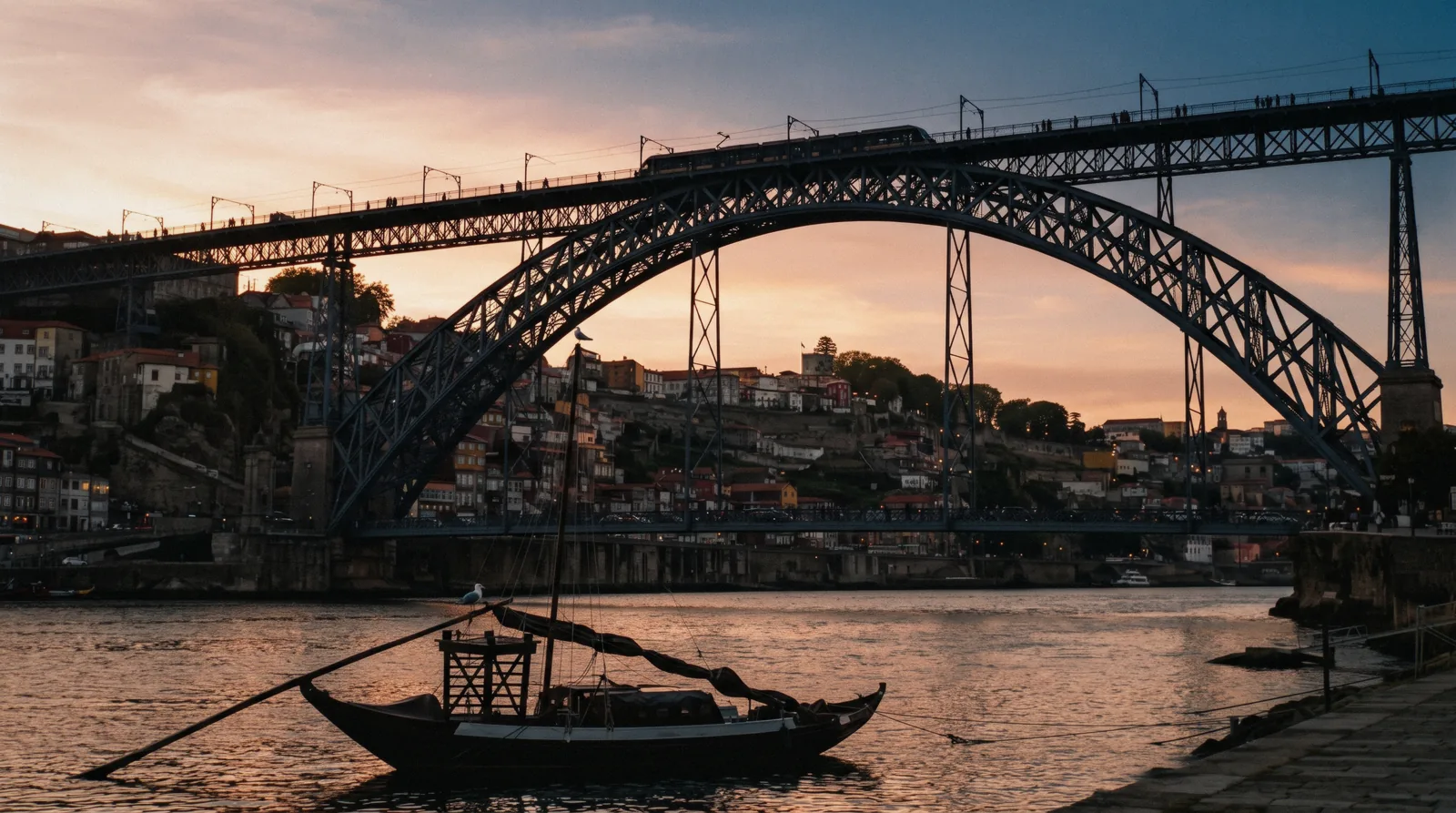
Luís I Bridge
Luís I Bridge is the double-deck iron arch that joins Porto to Vila Nova de Gaia across the Douro, opened in 1886 to a design by Théophile Seyrig, and you can walk both of its decks for nothing: the upper one beside the metro trains, about sixty metres over the water, and the lower one beside the road at quay level. This page explains which deck to take in which direction, how to get to the top without the closed funicular, what the bridge's numbers actually are, when it shuts, and where the walk lands you on the Gaia side. The cruise boats that pass under it are compared on the Porto tours hub, the lodges at its Gaia end on the port wine cellars page, and the rest of the city on the Porto city guide homepage.
Quick answer Free, two decks, which one to walk, how to get to the top and the one night it closes — the facts that decide the crossing
Luís I Bridge is free to cross on foot on both decks at any hour: the upper deck, 395 metres long and shared with the yellow metro line, gives the view; the lower deck, at quay level beside the road, gives the ten-minute walk from the Ribeira to the Gaia lodges. The bridge opened on 31 October 1886, its arch spans 172 metres, and the whole structure closes on São João night, 23 June, from midday to 04:00.
Key takeaways
- Walk over on the upper deck from the Sé side and back on the lower deck from the lodges — the port wine cellars page has the lodges' hours — and the loop is an hour with the Gaia cable car as the optional lift between the two levels at $8.14 (€7)
- Getting to the top from the Ribeira is the climb, not the crossing: the funicular is shut, so it is the steps up Rua Escura or Calçada de Vandoma to the Sé, or metro line D one stop from São Bento for $1.63 (€1.40) — the e-bike tour does it on two wheels and the three-hour walk on foot
- From the water the Six Bridges cruise at $20.90 (€18) is the cheapest way under it and not the best boat; the two-hour seven-bridges cruise at $46.50 (€40) is the one to book for sunset
Key facts
Opening hours
| Both decks, daily | 00:00–24:00 |
|---|---|
| Metro line D over the upper deck | 06:00–01:00 |
Closed None routine; closed to everyone on São João night, 23 June, 12:00 to 04:00, and for other city events by notice
Admission
- Adult
- Free to walk
- Reduced
- Metro across the upper deck $1.63 (€1.40) Z2 title; cable car from the Gaia end $8.14 (€7) one way, $11.62 (€10) return
- Free
- Everyone, both decks, always
Planning it
- Time needed
- Not stated by any authority; our routing: 10 minutes to cross the upper deck, 30 with the photographs, an hour for the loop over one deck and back over the other
- Book ahead
- Optional — walk-up usually fine
- Address
- Ponte Luís I, between the Ribeira (Porto) and Cais de Gaia (Vila Nova de Gaia)
The bridge has no ticket; both decks are public roads. What the table compares, priced in Q3 2026 from metrodoporto.pt, the Gaia cable car's tariff and GetYourGuide and converted at €1 = $1.1622, is the free crossing against the four paid ways to see the bridge from a different angle — the metro over it, the cable car beside it, a bike across it and a boat under it.
Do you want to cross the bridge, or to see it? Crossing is free on either deck; seeing the arch whole means the Gaia quay, the cable car or a boat.
| Option | Price | Includes | Cancel | Book |
|---|---|---|---|---|
| Walk either deck; Metro do Porto keeps the upper-deck passage openEveryone; the upper deck for the view, the lower for the lodges | Free; metro across the upper deck $1.63 (€1.40) Z2 | Both decks, any hour; the metro ride is one stop, São Bento or Jardim do Morro | — | Official site |
| Six Bridges cruise, 50 minutesThe cheapest way onto the water and under the arch — not the best boat, and the rating says so | $20.90 (€18) | The loop under all six bridges on a rabelo-style boat; QR-code audio on your own phone; 4.2 from 16,287 reviews | Free up to 24 hours before | Check Availability |
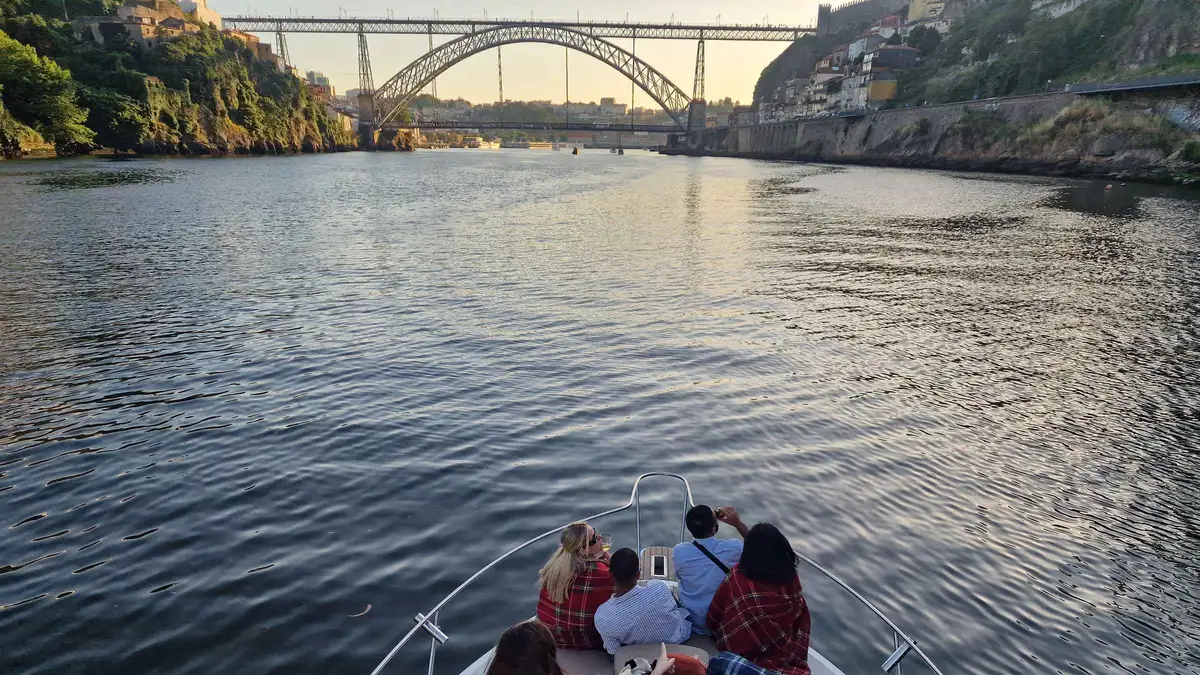
| Seven bridges cruise with port wine, 2 h, sunset optionThe arch at sunset from the water, with somewhere to sit | $46.50 (€40) | Small boat, ten people, a glass of port, certified crew, bathroom on board; 5.0 from 1,756 reviews | Free up to 24 hours before | Check Availability |
| City highlights e-bike tour, 3 hSomeone who wants the climb to the upper deck done by a motor | $32.50 (€28) | Guide, e-bike, helmet; the Ribeira, the Sé and the top deck of the bridge on the route; 4.8 from 3,789 reviews | Free up to 24 hours before | Check Availability |
| Walking tour with Lello, boat and cable car, 3–4 hA first day that wants the bridge from the water and from the cable car in one booking | $69.70 (€60) | Guided walk, a Douro cruise under the bridges and the Gaia cable car ride; Lello entry on some options; 4.7 from 1,279 reviews | Free up to 24 hours before | Check Availability |
The Gaia cable car at the upper deck's south end is $8.14 (€7) one way and $11.62 (€10) return from its own tariff, not part of any Andante ticket; the Gaia cable car page has the seasonal hours. The Funicular dos Guindais at the Porto end is closed for maintenance with no reopening date, per STCP Serviços in Q3 2026; when it runs the fare is €4, not the €2.50 older guides print.
Luís I Bridge: under it by boat, over it by bike, beside it by cable car
Every card links to the operator's own page, where the calendar shows what is still open on your date. Prices in dollars as listed in Q3 2026; the crossing itself is free, and these are the ways to see the arch from somewhere other than the deck.
 from €40
Porto: 7 Bridges Cruise & Port Wine with Sunset Option
listed at $47.03
Two hours from Afurada past all seven bridges with a certified crew, a glass of port and a bathroom on board, ten people at most. Near-perfect ratings; the sunset departure sells first.
Check Availability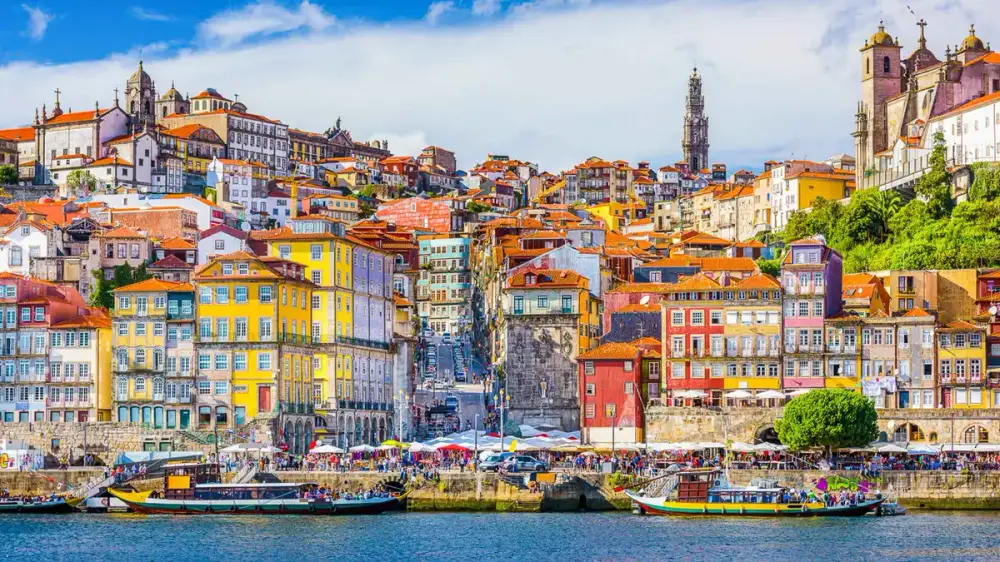 from €18
Porto: Six Bridges Cruise
listed at $20.90
The 50-minute Six Bridges loop on a traditional-style boat, the cheapest way onto the river and the most-booked. Audio comes by QR code on your own phone; the 4.2 rating reflects the crowds.
Check Availability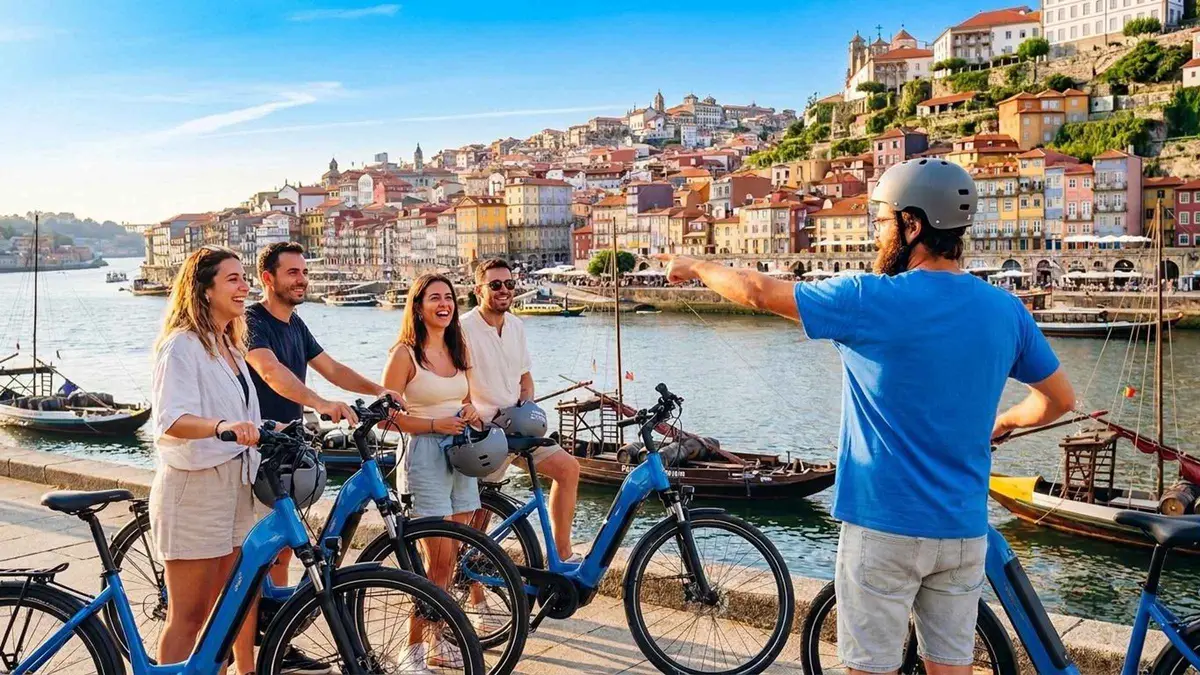 from €28
Porto: City Highlights 3-Hour Guided Electric Bike Tour
listed at $33.10
Three hours by e-bike across the historic centre and the riverfront with Bluedragon, in five languages. The weight limit is 118 kg and the operator can refuse riders who cannot handle a bike, without refund.
Check Availability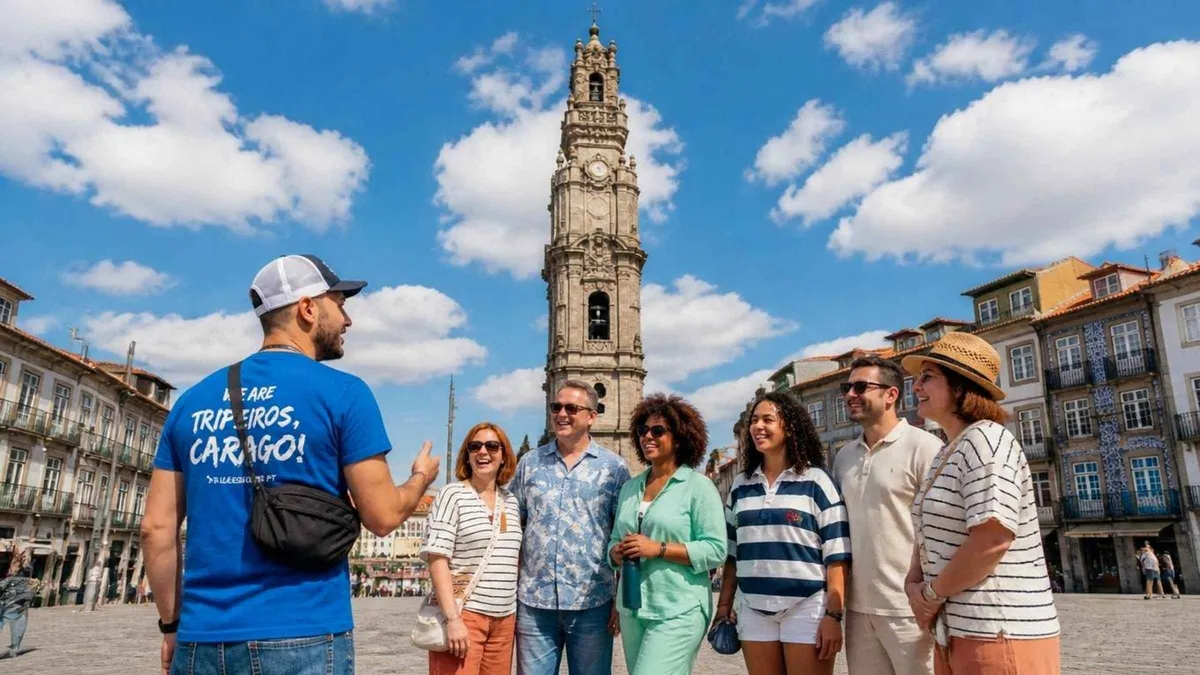 from €29
Porto: 3-Hour Guided City Highlights Walking Tour
listed at $33.68
The three-hour Bluedragon walk through the historic centre, offered in five languages with a private option. The most-booked classic walking tour in Porto, and a public tour needs at least two people.
Check Availability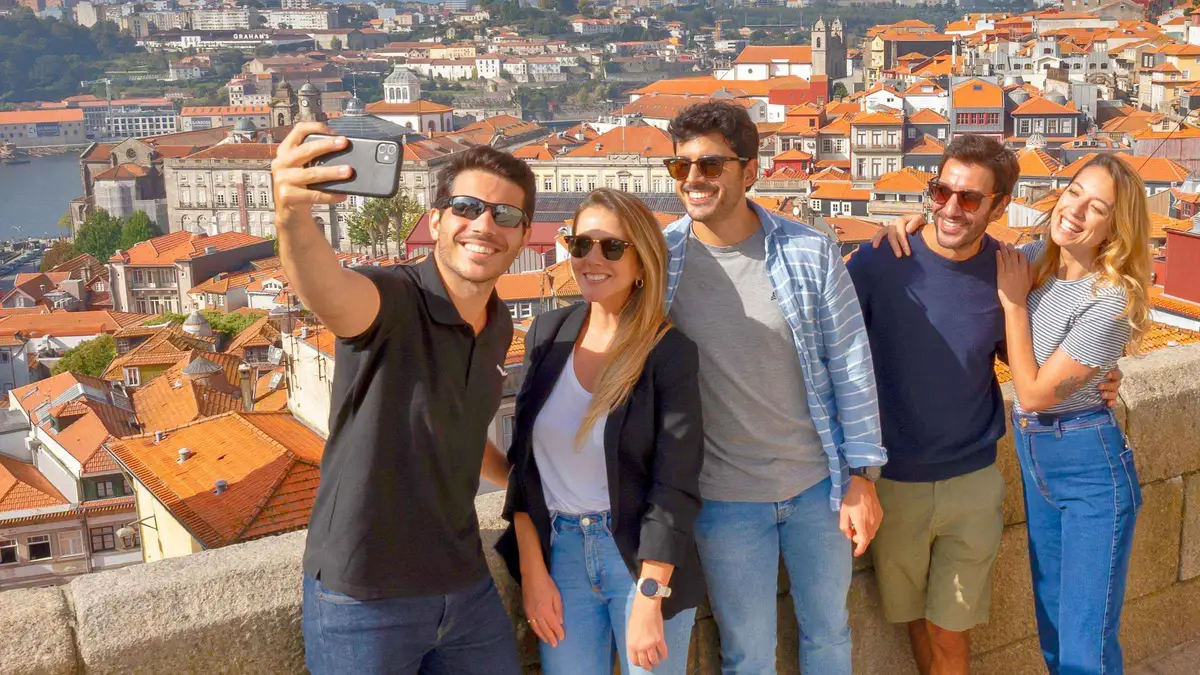 from €60
Porto: Walking Tour, Lello Bookshop, Boat and Cable Car
listed at $69.67
A guided walk that folds in the Gaia cable car ride and a Douro river cruise, with Lello entry as an option. Suits a first day when you want the three riverside set pieces handled in one booking.
Check AvailabilityPrices, ratings and details are the platform's own, checked in Q3 2026; dollar figures are the listed prices — the platform bills in your account's currency.
How to walk across Luís I Bridge: which deck, which direction
Both decks have a pedestrian walkway and both are free; the choice is between the view and the destination, and the answer for most people is one of each.
The upper deck: the view, beside the trains
The upper deck is 395 metres long and carries metro line D on two tracks down its centre with a walkway on each side; it has been closed to cars since 27 June 2003 and the metro has run over it since 18 September 2005. You walk beside the trains, separated by a low barrier, roughly sixty metres above the river — the Wikipedia infobox prints 70 metres for the structure, and no operator publishes a deck height, so 'about sixty' is the honest figure — with the Ribeira and the Gaia lodges spread out below on either side. It is the most photographed hundred metres in Porto and it knows it: from mid-afternoon to sunset in summer the walkways are shoulder to shoulder, and the west side, facing the river mouth, is the one everybody wants.
Start it from the Porto end. The Porto end is at the Sé, the cathedral, on the plateau above the Ribeira; you arrive by the steps from the quay, by Rua Escura or Calçada de Vandoma, or by metro line D one stop from São Bento to the São Bento platform, which sits at bridge level. Cross towards Gaia with the river on your right, and the deck lands you at Jardim do Morro, the garden and viewpoint under the Serra do Pilar monastery — the monastery itself is closed for works with no date, the terrace outside it is open — with the Gaia cable car's upper station a minute away.
The lower deck: the crossing to the lodges
The lower deck is 172 metres, the span of the arch, at quay level; it carries a road with a narrow pavement each side and lands you in ten minutes from Praça da Ribeira on the Cais de Gaia, at the door of the first port lodges — Sandeman and Cálem are the closest, and the port wine cellars page has the hours and the booking rules for each. It is the working crossing: the view is of the arch overhead and the water beside you rather than the city laid out, the pavement is tight when a bus passes, and it is never crowded. Cross it on the way back from Gaia when the light has gone, or on the way over if the lodges are the point and the view is not.
The loop
Over the upper deck from the Sé to Jardim do Morro, down to the quay by the cable car or the zigzag path through the garden, along the lodges and back over the lower deck to the Ribeira: an hour without stopping, two with a cellar visit, and the only sequence that gives you both views without repeating either. Reverse it in the evening — lower deck over, lodges, cable car up, upper deck back — and the last crossing puts the sunset behind the arch.
How to get to the top of Luís I Bridge without the funicular
The most-asked practical question, because the obvious answer — the Funicular dos Guindais — is closed for maintenance with no reopening date, per STCP Serviços' notice read in Q3 2026.
The upper deck sits about sixty metres above the quay, and the Porto side of that climb is what the funicular used to do. With it shut, there are four ways up, and the table gives them; the metro is the one to remember, because it puts you on the deck itself rather than at the top of a staircase near it. On the Gaia side the cable car does the same job at $8.14 (€7) one way and is running on its seasonal timetable, 10:00 to 20:00 from late April to late September; the zigzag path through Jardim do Morro is the free alternative and takes about eight minutes.
When the funicular reopens, its fare is $4.65 (€4) one way and $6.97 (€6) return from STCP Serviços' tariff, not the €2.50 that most guides still print; it is not covered by Andante titles, and neither are the heritage trams. The getting around page tracks the closure.
| From the Ribeira quay to the upper deck | How | Fare | Time |
|---|---|---|---|
| Metro line D | Walk to São Bento (8 min uphill), one stop to the bridge platform | $1.63 (€1.40) Z2 | About 15 minutes |
| Steps via the Sé | Rua Escura or Calçada de Vandoma from the east end of the quay | Free | 10–12 minutes, steep |
| Funicular dos Guindais | Closed for maintenance, no date; €4 when running | — | — |
| Gaia side: cable car | Cais de Gaia lower station to Jardim do Morro | $8.14 (€7) one way | About 5 minutes |
| Gaia side: on foot | Zigzag path up through Jardim do Morro | Free | About 8 minutes |
Luís I Bridge height, length and the figures that get quoted wrong
Figures from the bridge's Wikipedia entry, read in Q3 2026; no operator publishes a technical sheet for visitors, and Metro do Porto's pages carry notices, not dimensions.
The arch spans 172 metres, which at its opening in 1886 was the longest iron arch of its type in the world; the upper deck is 395.25 metres end to end, the lower deck 172 metres, the same as the span. The infobox gives the height as 70 metres and the vehicular width between the walkways as 8 metres; the figure visitors want — how far the upper deck is above the water — is not printed by anyone official, and the 60 metres most guides give is consistent with the 70-metre structure and a deck below its crown. We print it as 'about sixty' and nothing more precise.
The cost was 369,000$00 réis. The designer was Théophile Seyrig, a Belgian engineer who had been Gustave Eiffel's partner on the Maria Pia railway bridge a kilometre upstream a decade earlier, and the builder was the Société de Willebroek of Brussels; the two bridges are often confused, and the Eiffel one is the single-deck rail arch you see upstream, not this one.
| Figure | Value | Source |
|---|---|---|
| Arch span | 172 m | Wikipedia |
| Upper deck length | 395.25 m | Wikipedia |
| Lower deck length | 172 m | Wikipedia |
| Structure height | 70 m | Wikipedia infobox |
| Upper deck above water | About 60 m; no official figure | Our reading |
| Road width between walkways | 8 m | Wikipedia |
| Cost | 369,000$00 réis | Wikipedia |
Luís I Bridge history: the third bridge on the site
Dates from the bridge's Wikipedia entry and Metro do Porto's notices, read in Q3 2026. The arch is famous; the two bridges it replaced are the better story.
Before the iron there were boats. The Ponte das Barcas, a pontoon bridge of twenty boats chained together, crossed here from 1806, and on 29 March 1809, as Marshal Soult's French army entered the city, it collapsed under the crowd fleeing across it; the dead are commemorated on the Ribeira quay and the story is told on the 1809 bridge disaster page. Its replacement, the Ponte Pênsil of 1843, was a suspension bridge whose granite pylons still stand at the Porto end of the lower deck — the meeting point of the port wine walking tour, which tells you to look for 'the big granite pillars of the old Ponte Pensil'.
The iron bridge was the third. Théophile Seyrig's design won the competition, the Société de Willebroek began work on 21 November 1881 and finished on 30 October 1886; the upper deck was inaugurated on 31 October 1886 and the lower deck the following year, and the whole was named for the reigning king, Luís I. It carried road traffic on both decks for over a century — the 1954 works under Edgar Cardoso adapted the lower deck — until the upper deck was closed to cars on 27 June 2003 to be rebuilt for the metro, which opened over it on 18 September 2005. The lower deck closed for repairs in October 2021 and reopened in April 2023 with restrictions on private traffic. It has been a National Monument since 26 February 1982 and part of the UNESCO Historic Centre of Porto since 1996, whose listing names it and the Serra do Pilar monastery specifically.
Luís I Bridge In Ten Dates
Three bridges on one crossing, from the boats to the metro.
-
1806
The Ponte das Barcas
A pontoon bridge of twenty chained boats becomes Porto's first fixed crossing on this line.
-
29 March 1809
The pontoon collapses under the crowd
As Soult's French army enters the city the boats give way beneath the people fleeing over them; the 1809 bridge disaster page tells it.
-
1843
The Ponte Pênsil
A suspension bridge replaces the boats; its granite pylons still stand at the Porto end of the lower deck.
-
21 November 1881
Work begins on Seyrig's arch
The Société de Willebroek of Brussels builds to Théophile Seyrig's competition-winning design, a decade after his Maria Pia bridge with Eiffel upstream.
-
31 October 1886
The upper deck opens
Named for King Luís I; the 172-metre arch is the longest of its type in the world at the time. The lower deck follows the next year.
-
1954
Edgar Cardoso's works
The lower deck is adapted; the bridge carries road traffic on both levels for the rest of the century.
-
26 February 1982
National Monument
Classified fourteen years before the UNESCO listing of 1996 names it alongside the historic centre and Serra do Pilar.
-
27 June 2003
Cars leave the upper deck
Closed to motor traffic to be rebuilt for the metro; pedestrians keep their walkways.
-
18 September 2005
Metro line D crosses
The yellow line opens over the upper deck, one stop from São Bento to Jardim do Morro.
-
October 2021 – April 2023
The lower deck is repaired
Closed for eighteen months and reopened with restrictions on private traffic; the pavements are back.
Sources: the Dom Luís I Bridge entry on Wikipedia and Metro do Porto's maintenance notices, read in Q3 2026; the UNESCO listing for the Historic Centre of Oporto, Luiz I Bridge and Monastery of Serra do Pilar.
When Luís I Bridge closes: São João, maintenance and the rules nobody prints
Metro do Porto's notice pages, read in Q3 2026, are the only official source on closures; there is no visitor page for the bridge and no published code of conduct for the walkways.
The one fixed closure is São João. On 23 June, the night of Porto's festival, the bridge shuts to everyone from 12:00 until 04:00 the next morning so the fireworks can be fired from the river between it and the Arrábida bridge — the display starts at midnight and runs about twelve minutes, per the city's 2026 programme in the events calendar. The decks are the best seat in the city for the fireworks and you cannot be on them; the quays on both banks are where the crowd goes.
Maintenance windows recur. The notice for 18 May to 6 June 2026 had the metro running single-track over the bridge on weekday nights from 22:10 to 01:00, and it stated that the pedestrian passage on the upper deck was 'always guaranteed'; that is the operator's standing line, and it is the reason we can say the walkways stay open through works. Other big events — the marathon on 8 November 2026 crosses the lower deck — close a deck by notice for hours, not days.
What is not published: whether cycling on the upper walkway is allowed (it is narrow and busy, and the e-bike tours walk the bikes), which side to walk on, and any limit on numbers. Treat the west walkway as the slow lane and the east as the through route, because that is how it sorts itself.
Dos And Don'ts On Luís I Bridge
The short version of everything above, for the day you cross.
Do
- Cross the upper deck from the Sé end towards Gaia with the river on your right; the deck lands you at Jardim do Morro and the cable car
- Take metro line D one stop from São Bento if the climb from the quay is the problem — it delivers you onto the deck for €1.40
- Come back over the lower deck from the lodges; ten minutes to the Ribeira and never crowded
- Book the two-hour cruise rather than the fifty-minute loop if you want the arch at sunset from the water
- Check the events calendar for 23 June and marathon day; both close a deck
- Stand in front of the granite pylons at the Porto end of the lower deck — they are the 1843 suspension bridge, and the port wine walk meets there
Don't
- Don't plan on the Funicular dos Guindais; it is closed for maintenance with no date, and its fare when it runs is €4, not €2.50
- Don't expect the metro fare to cover the cable car or the heritage trams; neither is an Andante title
- Don't call it the Eiffel bridge — Eiffel's is the Maria Pia rail arch upstream; this one is Seyrig's, his former partner
- Don't be on the bridge at 23:50 on 23 June expecting fireworks; it has been closed since midday
- Don't quote 60 metres as an official height; nobody prints one, and 70 metres is the structure
Luís I Bridge map: both ends, both decks, the ways up and the next stops
The bridge, its four landing points, the metro stops at bridge level, the cable car and the closed funicular, and the sights within ten minutes of either end. Coordinates from Wikidata for the bridge and the named pages; the deck ends, the cable-car stations and the funicular pins are approximate.
Five Things Most Visitors Do Not Know About Luís I Bridge
Facts that change how the crossing reads, each with where it comes from.
- It is not Eiffel's. Théophile Seyrig, Eiffel's former partner, designed it; Eiffel's Porto bridge is the Maria Pia rail arch upstream, opened in 1877. The two are confused on half the postcards. (Dom Luís I Bridge, Wikipedia, read in Q3 2026) - The pylons at the Ribeira end are a different bridge. The granite piers beside the lower deck's Porto landing are what remains of the Ponte Pênsil, the 1843 suspension bridge this one replaced; a walking tour uses them as its meeting point.
(Wikipedia; the port wine walk's listed meeting point) - Cars ran on the top deck until 2003. The upper deck was a road for 117 years; it closed to motor traffic on 27 June 2003 and the metro opened over it on 18 September 2005. (Wikipedia) - The walkways stay open through the metro works. Metro do Porto's maintenance notice for 18 May to 6 June 2026 states that pedestrian passage on the upper deck is 'always guaranteed'; the one night it is not is 23 June. (metrodoporto.pt notice, read in Q3 2026) - Nobody official prints its height above the water. The 60 metres in every guide is a reading off the 70-metre structure; the operator publishes notices, not dimensions.
(Wikipedia infobox; metrodoporto.pt)
Eating At Luís I Bridge
Nothing is sold on the bridge; the two quays it joins are lined with terraces, and the honest word about both is that the view is what you pay for.
At the Porto end the Ribeira terraces on Cais da Ribeira and Praça da Ribeira face the arch; at the Gaia end the Cais de Gaia terraces face the Ribeira, which is the better view, with the lodges behind them. Neither quay's restaurants appear on a citable list we can print with a year, so none is named here; the where to eat page names the Michelin 2026 and Bib Gourmand addresses in the city and the certified gluten-free bakeries, and the lodges themselves — Graham's, at the far end of the Gaia quay, with its lunch and dinner at $162.70 (€140) and $313.80 (€270) on 48 and 72 hours' notice per its own page — are the one dining with a printed price on this walk. For a bench and a bought sandwich, Jardim do Morro at the upper deck's Gaia end is the place the city itself uses.
Next stop from Luís I Bridge
Walk minutes are our estimates from the GPS distances; the Sé is at the upper deck's Porto end, the lodges at the lower deck's Gaia end.
Port wine cellars, Vila Nova de Gaia
Sandeman and Cálem are at the foot of the bridge; Taylor's, up the hill, needs no booking and charges $29.10 (€25) for the audio tour and three ports. The port wine cellars page compares the houses, their hours and which ones make you reserve.
2 min from the lower deck's Gaia endSé do Porto
The fortress-cathedral on the plateau where the upper deck begins; one $3.49 (€3) ticket covers the cloister, museum and tower. The cathedral page has the Mass time and the tower cut-off.
2 min from the upper deck's Porto endSerra do Pilar
The round monastery church above Jardim do Morro is closed for works with no reopening date; its terrace, the classic view of the bridge and the city, is open and free. The Serra do Pilar page tracks the closure.
5 min from the upper deck's Gaia endLuís I Bridge questions
Can you walk across Luís I Bridge?
Yes, on both decks, free, at any hour. The upper deck has a walkway on each side of the metro tracks and gives the view; the lower deck has a pavement beside the road and is the ten-minute crossing from the Ribeira to the Gaia lodges. Metro do Porto keeps the upper-deck passage open during works; the one closure is São João night, 23 June. The walk section above says which deck to take in which direction.
How high is Luís I Bridge?
The structure is 70 metres by the Wikipedia infobox, the arch spans 172 metres and the upper deck is 395.25 metres long; no operator publishes the deck's height above the water, and the 60 metres most guides give is a reading, not a figure. The numbers section sets out what is sourced and what is not.
How do I get to the top of Luís I Bridge?
From the Ribeira, metro line D one stop from São Bento puts you on the deck for $1.63 (€1.40); the steps via Rua Escura to the Sé take ten to twelve minutes. The Funicular dos Guindais is closed for maintenance with no date. From Gaia, the cable car is $8.14 (€7) one way and the path through Jardim do Morro is free.
Why is the Luís I Bridge famous?
Its 172-metre iron arch was the longest of its type in the world when it opened on 31 October 1886, its designer Théophile Seyrig had been Eiffel's partner on the Maria Pia bridge upstream, and its two decks — a metro line on top since 2005, a road below — make it the crossing every visitor uses between the Ribeira and the port lodges. It is named in the UNESCO listing of 1996 with the historic centre. The history section has the two bridges it replaced.
Which two cities does Luís I Bridge connect?
Porto, on the north bank, and Vila Nova de Gaia, on the south, where the port wine lodges are; the upper deck lands at the Sé on the Porto side and Jardim do Morro on the Gaia side, the lower deck at the Ribeira and the Cais de Gaia. The Vila Nova de Gaia page covers the south bank.
Does the metro cross Luís I Bridge?
Yes, line D, the yellow line, has run over the upper deck since 18 September 2005, between the São Bento and Jardim do Morro stops; a Z2 title is $1.63 (€1.40) on an Andante card. Pedestrians walk beside the tracks on both sides. The getting around page explains the card and the zones.
Is Luís I Bridge closed on São João?
Yes: on 23 June the whole bridge closes from 12:00 until 04:00 so the fireworks can be fired from the river between it and the Arrábida bridge at midnight. Watch from the quays on either bank instead. The events calendar has the 2026 programme.
Where Luís I Bridge fits in a day
The bridge is the seam between the two halves of a Porto day, so cross it at the moment the day changes sides. The old town morning — São Bento at 08:30, the Sé at 09:00, the Bolsa and the Ribeira by lunch — ends at the foot of the lower deck; walk over it and the afternoon is the lodges, with Taylor's needing no booking and Cockburn's and Graham's needing one. Come back at the end of the afternoon by the cable car to Jardim do Morro and the upper deck, which gives you the sunset crossing and the fastest way home, metro line D from the far end.
If you want it narrated, the three-hour highlights walk crosses the upper deck in the morning and the e-bike tour rides it; if you want it from below, the two-hour cruise at sunset is the boat and the fifty-minute loop is the budget. The one-day itinerary puts the crossing at 15:00; the two-day plan gives Gaia the whole second afternoon.
Luís I Bridge on Video
Three crossings on camera — the upper deck at walking pace, the route up from the Ribeira, and the history of the bridges that stood here before. Fares on camera are from their filming dates; the figures on this page were read in Q3 2026.
Porto Walking Tour 4K 🇵🇹 Dom Luís I Bridge Crossing | Real Ambient Sound (No Narration)
The upper deck crossed end to end at walking pace, trains passing, no commentary — the view the page describes.
Video: World Walks 4K — City & Beach Walking ToursRibeira to Dom Luís I Bridge – Porto Walking Tour (25 Minutes)
The route from the quay up to the deck and across, the climb the top section above explains.
Video: Global City Walks 4KPorto Portugal Dom Luis Bridge Walk Tour & Its Sad History
A crossing with the story of the pontoon bridge and the 1809 disaster, the history this page's timeline starts with.
Video: Fantastic Life360Videos load from YouTube only when you press play.
Reviewed Q3 2026 (July–September 2026); next review Q4 2026. Prices, hours and terms are set by the venue or operator and confirmed at checkout.
We may earn a commission if you book through one of our links, at no extra cost to you. Full affiliate disclosure