 Visit Porto City Guide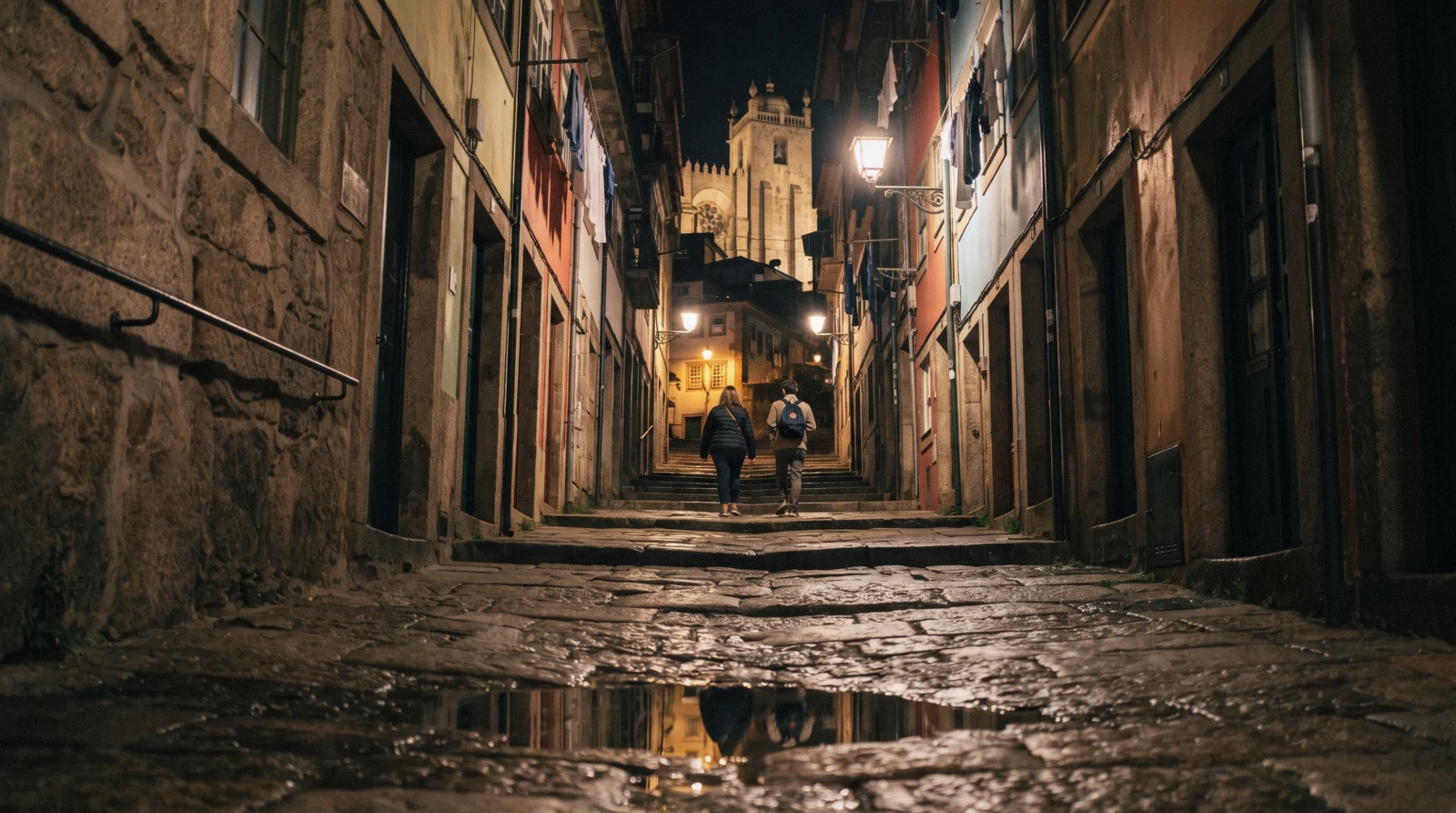
Is Porto Safe?
Is Porto safe is a question with a short answer and a long footnote. The short answer is yes: this is a city to walk around in, at night and alone, and no official advisory names a district in it. The footnote is the specific version — which tram, which stop, which approach on the pavement, which unordered plate on the table is a rule rather than a fraud, and which number to call when something does go wrong. It sits in the plan hub of this Porto city guide beside what Porto costs and how the transport works, the two pages that cover the other things that go wrong on a trip here.
Quick answer The one-sentence answer, the two places it goes wrong, and the number to call
Porto is a safe city to walk around, at night and alone. The UK Foreign, Commonwealth and Development Office's Portugal advice, read in Q3 2026, asks for exactly one behaviour change: be alert to the risk of street crime, take care on public transport and at crowded bus and tram stops, because thieves use distraction techniques and often work in teams. That is the whole of it, and in Porto it means two specific places — the heritage trams and the Ribeira crowd — rather than a district to avoid. Violent crime against visitors is rare; the injuries that actually happen here are slips on wet granite. The emergency number is 112 and the tourist police station is at Praça de Pedro Nunes 16, open daily 08:00 to 24:00.
Key takeaways
- The tram is the pickpocket's office: lines 1, 18 and 22 are slow, packed and full of people looking at the view. Hold your bag in front on the tram and at the crowded stops the FCDO names.
- Several things sold online as Porto scams are simply rules — the bread on the table, the fish priced by weight, the tram not being on your transit pass. The rules table separates them, and the where-to-eat page prints the law behind the first one.
- The one night the ordinary rules stop applying is São João, 23 to 24 June: a whole city out until four in the morning, the Luís I bridge closed from noon, and the metro and buses on a special operation.
- Arriving after dark with luggage is the one situation worth paying to remove — a private airport transfer puts you at the door, and the airport page prices the metro against it.
Is Porto Safe? The Honest Version
The honest answer is short, and the useful part is what the official advice does not say rather than what it does.
The Official Advice, Word for Word
The UK Foreign, Commonwealth and Development Office's Portugal travel advice, read in Q3 2026, has no warning specific to Porto and no district it tells you to avoid. Its crime section asks you to be alert to the risk of street crime, to take care on public transport and at crowded bus and tram stops, and it explains why: thieves use distraction techniques and often work in teams. It adds the ordinary travel hygiene — do not carry all your valuables in one place, keep a copy of your passport's photo page, lock the accommodation at night.
On violence it is equally plain: attacks including sexual assaults are rare but do occur, and the risk is highest late at night around popular nightlife locations. That sentence is written for the whole country and it is the same sentence you would read about most of western Europe.
Why the City Is Easy to Read
Two structural facts make Porto easier than its size suggests. The historic centre is small — you can walk from Bolhão to the Ribeira quay in twenty minutes — so you are rarely far from a lit street with people on it. And the city's tourist geography is concentrated: the Ribeira, the Aliados axis, Clérigos, Santa Catarina and the Gaia bank. Those are the places thieves work, because that is where the crowds and the distracted people are.
Which police force you deal with depends on where you are: the PSP, the Polícia de Segurança Pública, covers the cities, and the GNR, the Guarda Nacional Republicana, covers smaller towns and rural areas. In Porto it will be the PSP, and there is a dedicated tourism station — the numbers section has the address.
Are There Areas to Avoid?
Are there areas to avoid? Not on any official list. Porto has residential neighbourhoods on the eastern and northern edges where a visitor has no reason to be after dark and nothing to see in daylight, which is a different statement from a warning. Inside the ring a first-time visitor actually walks — Ribeira, Baixa, Cedofeita, Bonfim's western edge, Foz, the Gaia riverfront — the honest advice is the FCDO's: mind your pockets in the crowd, and mind your footing on the hill.
Where Pickpockets Actually Work in Porto
Distraction theft is the crime a visitor is realistically exposed to, and it happens in a small number of predictable places at predictable moments. Six of them, in the order you are likely to meet them.
- The heritage trams, lines 1, 18 and 22. Wooden, slow, standing-room-only in summer, and full of people with a phone held out of the window. This is the single highest-risk vehicle in the city and the reason the FCDO names tram stops specifically.
- São Bento station's tiled hall. Everyone stops, everyone looks up, everyone has a camera at eye level and a bag behind them. It is the most photographed room in Porto and the easiest crowd to work.
- The Ribeira quay at sunset, where the terrace tables, the buskers and the boat touts compress a lot of people into a narrow strip against the water.
- Metro escalators and doors at Trindade, Bolhão and Aliados, in the seconds when a carriage empties. The classic version is a blockage at the top of the escalator while a second person works behind you.
- Cash machines in tourist streets, where the risk is shoulder-surfing rather than the machine. Cover the keypad, use a machine attached to a bank building, and count the money away from the screen.
- Outdoor restaurant terraces, where a bag hung on the back of a chair or a phone left on the table is the whole opportunity. Bag on your lap or between your feet with a strap round an ankle.
The countermeasures are dull and they work. Nothing in a back pocket. A zipped bag worn in front in any crowd.
Card and one note in a front pocket, the rest in the room. And the specific one for Porto: on the tram and on a crowded bus, hold the bag with both hands rather than a strap — the vehicle lurches on the hills, and a lurch is a free excuse for the contact you would otherwise notice.
The Approaches You Will See on the Street
Four street approaches are common enough in the centre to describe individually. None of them is dangerous; all of them are designed to move your attention or your money.
The offer of drugs on the Ribeira and around Aliados. A quiet word from someone walking beside you. What is being sold is usually not what is claimed and the transaction is illegal either way — the FCDO's line on Portugal is that illegal drugs carry severe penalties, and it means them. Keep walking; there is no follow-up.
The boat tout on the quay. A person with a laminated board selling a cruise leaving 'in five minutes'. The boats are usually real and the price is usually higher than the same trip booked ahead — the six-bridges cruise is the benchmark. This is a markup, not a fraud, but it is the one you meet most often.
The petition or the bracelet. A clipboard pushed towards your chest, or a bracelet tied to your wrist before you have agreed. Both exist to occupy your hands while somebody else is behind you. The response is to keep your hands in your pockets and keep moving.
The parking helper. A man who waves you into a space you had already found and then asks for money. It happens more at the beaches and around the stadium than in the centre. A euro ends it; nothing bad happens if you decline.
What you will not meet in Porto, because they are Lisbon and Madrid patterns that have not travelled: the fake police officer asking to check your wallet, and the 'friendship bracelet' gauntlet at a single famous viewpoint. If somebody in plain clothes asks to inspect your money, that is not a Portuguese police procedure — a real officer will show a badge and can take you to a station, and you are required to show photo identification if asked.
Five Things Called Scams That Are Actually Rules
A large share of what is posted online as a Porto scam is a published rule that nobody read. Knowing which is which saves both money and an argument; each row below links to the page that carries the full version.
| What happens | Why it feels like a scam | What it actually is | What to do |
|---|---|---|---|
| Bread, olives and cheese arrive unordered and appear on the bill | You did not order them | The couvert, priced on the menu and governed by Decree-Law 10/2015 article 135(3) | Leave it untouched and say não, obrigado and it cannot be charged — the bill section |
| Fish costs far more than the menu suggested | The menu said a low number | Whole fish is priced by weight, which is legal and normal | Ask the price per kilo and the weight of the portion before it goes on the grill |
| Your transit pass is refused on the tram | You bought a day pass | Trams are a separate STCP tariff at €6 a single, and the Andante Tour titles say 'except trams and funicular' on their face | Buy the tram ticket separately — the tram page has the fares |
| The card terminal offers to charge you in your own currency | It sounds like a courtesy | Dynamic currency conversion, at a rate the terminal sets rather than your bank | Always choose euros — the costs page explains the difference |
| An inspector fines you although you tapped your card | You had a valid ticket | An Andante title must be validated at the start of each journey; carrying it is not enough, and the fine runs €120 to €350 | Validate every time, including on a change — the transport page |
One more that is neither a rule nor a scam but a closure: the funicular dos Guindais, the little railway up the cliff from the Ribeira to Batalha, is closed for maintenance with no reopening date published. If a site sells you a ticket for it, or an itinerary routes you up it, that itinerary is out of date. Its fare when it runs is $4.65 (€4) one way, not the €2.50 several guides still print.
The Night, the Drink and the Nightlife Streets
Porto's going-out geography is compact and loud: Rua Galeria de Paris and Rua Cândido dos Reis in the Baixa, the Ribeira quay, and the Foz bars in summer. The official warning attaches to the hours rather than the streets.
What the Official Advice Says About Nights Out
The FCDO's language is worth quoting rather than paraphrasing: attacks, including sexual assaults, are rare but do occur, and the risk is highest late at night around popular nightlife locations. Its advice is the practical kind — do not split up from your friends, do not go off with people you do not know, do not let a friend walk back alone, save your accommodation's location in a maps app or photograph the name and address.
On drinks it is specific: be alert to the possible use of date-rape and other drugs including GHB and liquid ecstasy, buy your own drinks and keep them in sight. It adds a detail travellers underestimate, that measures poured in Portuguese bars are often larger than the ones people are used to at home.
The Porto Specifics
Porto-specific notes on the same subject.
- The Galeria de Paris streets drink outdoors. The crowd spills across the road and the noise is the point; it is busy rather than menacing, and it is well lit until it empties around three.
- The metro stops at 01:00 and starts again at 06:00. Between those hours it is a taxi, a ride app or a walk, and the walk from the Baixa to the Ribeira is downhill on wet stone in the dark — the transport page has the night bus network.
- Walking back along the river is pleasant and unlit in stretches. The quay has no barrier for most of its length. This is the one place where being drunk near water is a genuine risk rather than a theoretical one.
- A fado evening is the low-risk version of a night out: a fixed venue, a fixed end time and a glass of port rather than a session — an intimate fado show in a historic tavern runs early enough to walk home before the metro closes.
Solo Female Travellers
Solo female travellers. Nothing in the official advice singles Porto out, and the city reads as unremarkable on this front: busy centre, ordinary street harassment risk, lit main routes. The practical adjustments are the universal ones — a booked room with a proper lock, the accommodation address saved offline, and a taxi rather than the long dark quay after midnight.
The Real Hazard: Wet Granite, Steep Streets and the River
If something goes wrong on a Porto trip, this is statistically the thing. Nobody writes safety articles about it, so it gets a section here.
Porto is built on a granite hill above a river gorge and it rains a great deal: the IPMA 1991–2020 normal for Porto measures 1,146.9 mm of rain a year across 105.4 rainy days, with November the wettest month. Granite setts and the polished stone of the older pavements become genuinely slippery when wet, and the streets between the Ribeira and the cathedral are both steep and stepped.
What that means in practice: shoes with a real sole rather than a smooth one, an outside handrail used rather than ignored on the stepped lanes, and a route down chosen deliberately — the funicular that used to do this job is closed. The Luís I bridge's upper deck is the flat crossing; the lower deck is at quay level. Between them is the climb people underestimate.
Two more physical notes. The upper deck of the bridge is shared with the metro, with a separated walkway, and it is the crossing that stays open around the clock except when the city closes it for São João or for engineering. And the Ribeira quay has no railing along much of its length — it is a working riverbank, the Douro runs fast and cold, and this is the one place in the city where alcohol and geography combine badly.
São João: the One Night Porto's Rules Change
On the night of 23 to 24 June the entire city goes into the street until dawn. It is the best night of the Porto year and the only one that needs its own safety paragraph.
What Happens on the Night
The city's own operator, Ágora — Cultura e Desporto do Porto, runs stages at Aliados, Largo do Amor de Perdição, Casa da Música, the Ribeira and the Palácio de Cristal from about 20:00 or 22:00 until 04:00. The fireworks are launched at 00:00 and last twelve minutes, over the Douro between the Luís I and Arrábida bridges. The 24th is a municipal holiday, so the following day is a slow one and several museums are shut.
The transport changes with it: the metro is reinforced, STCP runs a special São João operation, and the Luís I bridge is closed to traffic from 12:00 on 23 June until 04:00 the next morning — which matters because it is also the fireworks grandstand and the crossing everyone wants at midnight.
The Rules, and What Is Not Published
What we can and cannot tell you about the night's rules.
- The plastic hammers are the tradition — people tap each other on the head with squeaky hammers all night, strangers included. It is affectionate and it is universal.
- Whether hammers, sky lanterns or glass bottles are restricted in 2026 is not stated on any official page we could read. Municipal notices for the night are published close to the date; ask at a tourist office in the days before.
- The crowd density on the bridge and on the Gaia bank around midnight is the real hazard, not crime. Pick your fireworks spot by 23:00 and accept that you will not move for an hour afterwards.
- Getting home is the hard part. Plan to walk, or to wait; a taxi at 02:00 on São João night is a theoretical object.
Getting Home
The events page has the rest of the year's dates and what each one closes. If your trip falls on 23 June, treat it as the reason for the trip rather than an obstacle in it.
The Beach, the Rips and the Flags
The Atlantic here is cold, powerful and lifeguarded only in season, and the official advice on it is more specific than anything it says about crime.
The FCDO's Portugal advice is blunt: every year people drown in the sea and in swimming pools in Portugal. Waves can be unpredictable, some beaches have a strong undertow, and rip tides can cause drowning. If you are caught in a rip, do not try to swim against it — swim parallel to the coastline until you no longer feel the current, then turn for the shore. Do not dive into unknown water and do not swim where a river runs into the sea, because the currents there are strong. Hidden rocks and shallow depths cause serious injury.
Supervised beaches fly a flag: red means you must not enter the water, yellow means it is only safe to paddle at the water's edge. Where there are no lifeguards, no flags and no signs, the advice is to take extra care and get local knowledge — which on this coast means asking rather than guessing.
For Porto specifically, the lifeguarded season and the Blue Flag list are on the beaches page, and the surf schools at Matosinhos supply wetsuits for the obvious reason. Children need arm's-reach supervision on this coast in a way they do not on a Mediterranean one; the shorebreak at Matosinhos and Foz can knock an adult over.
Numbers, Addresses and Where to Actually Go
The contact details below were read on the city tourism board's own pages in Q3 2026, and one of them matters more than the rest: directories and blogs still print a tourist-police address and number that are no longer the ones in use.
The Contacts, in One Table
| What you need | Where | Hours | Note |
|---|---|---|---|
| Emergency — police, ambulance, fire | 112 | Always | One number for all three services, free from any phone |
| Tourist police (PSP Esquadra de Turismo) | Praça de Pedro Nunes 16, 4050-466 Porto · +351 222 461 190 · prtetur@psp.pt | Daily 08:00–24:00 | Officers work in English, Spanish, French and Italian. This is where a theft report for an insurance claim is made |
| Tourist office — Sé | Calçada Dom Pedro Pitões, 4050-467 Porto · +351 935 557 024 | June–September 09:00–19:00; October–May 09:00–18:00 | The office beside the cathedral, and the one to ask about city-card sales |
| Tourist office — Trindade | Estação de Metro da Trindade, 4000-145 Porto | June–September 09:00–19:00; October–May 09:00–18:00 | Inside the metro interchange, useful when you are already underground |
| Porto Welcome Center | Praça Almeida Garrett 27, opposite São Bento | June–September 09:00–19:00; October–May 09:00–18:00 | The busiest of the three and the easiest to find |
| AIMA (immigration, ex-SEF) | Loja AIMA Porto, Avenida de França 316, Edifício Capitólio | Working days from 08:30 — the official pages contradict each other on the closing time | Only relevant for residence and visa matters, not for a lost passport |
The Address to Ignore, and the Ones That Are Missing
The address to ignore. Directories, and a number of travel sites, still give the tourist police as Rua Clube dos Fenianos 11 with the number 222 081 833. The tourism board's own point-of-interest page gives Praça de Pedro Nunes 16 and +351 222 461 190, and that is what we print. The PSP's own 'where we are' page refused our connection and its tourism page is under maintenance, so if you are going in person, phone first.
Lost property has no official Porto procedure published on any page we could read — not on the transport operators' sites and not on the municipality's. For something left on the metro or a bus, ask at a station ticket office; for something left in a taxi, the receipt carries the operator.
A stolen passport is a consular matter, not a police one, although you will want the police report for both the consulate and the insurer. Make the report at the tourism station above.
Strikes
Strikes. Portuguese strike notices are filed publicly, with five or ten working days' notice depending on the service, and they are published by the operators as well as by the national mediation service. A CP Norte-line Regional strike ran 7 to 12 September 2026, which is the sort of thing that appears as a banner on the operator's homepage and nowhere else. Before a day trip by train, look at the operator's own front page — not at a news aggregator, and not at a booking site.
The Situations Worth Handing to Somebody Else
Four bookings that remove the moments this page describes — arriving after dark with luggage, learning the geography on day one, and a night out with a fixed end time. Prices and ratings as listed in Q3 2026.
 from €26
Porto Airport: Private Transfer to or From Porto
listed at $29.96
A door-to-door private car between the airport and any Porto address, one way, priced per vehicle. Compare with the metro's 30-minute ride before booking for a party of one.
Check Availability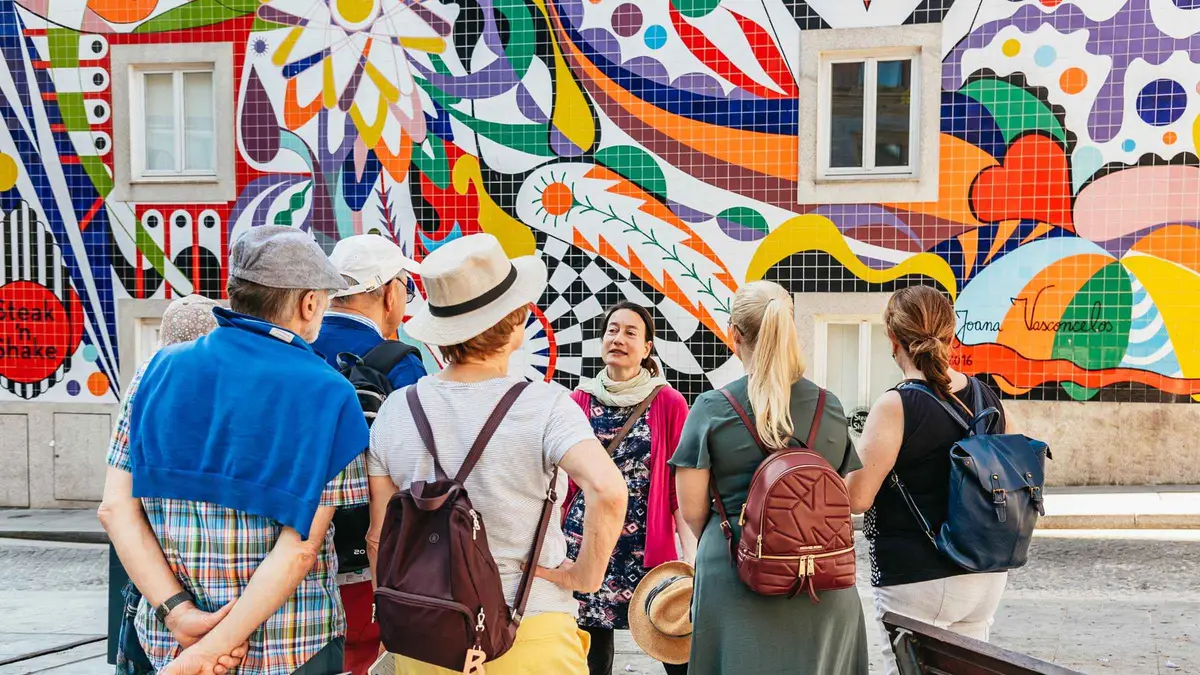 from €29
Porto Walking Tour: Highlights & hidden gems - max 8 pax
listed at $33.68
A capped-at-eight walk in English or German with restaurant recommendations written down at the end. The best-rated small-group walk here, with a two-person minimum to run.
Check Availability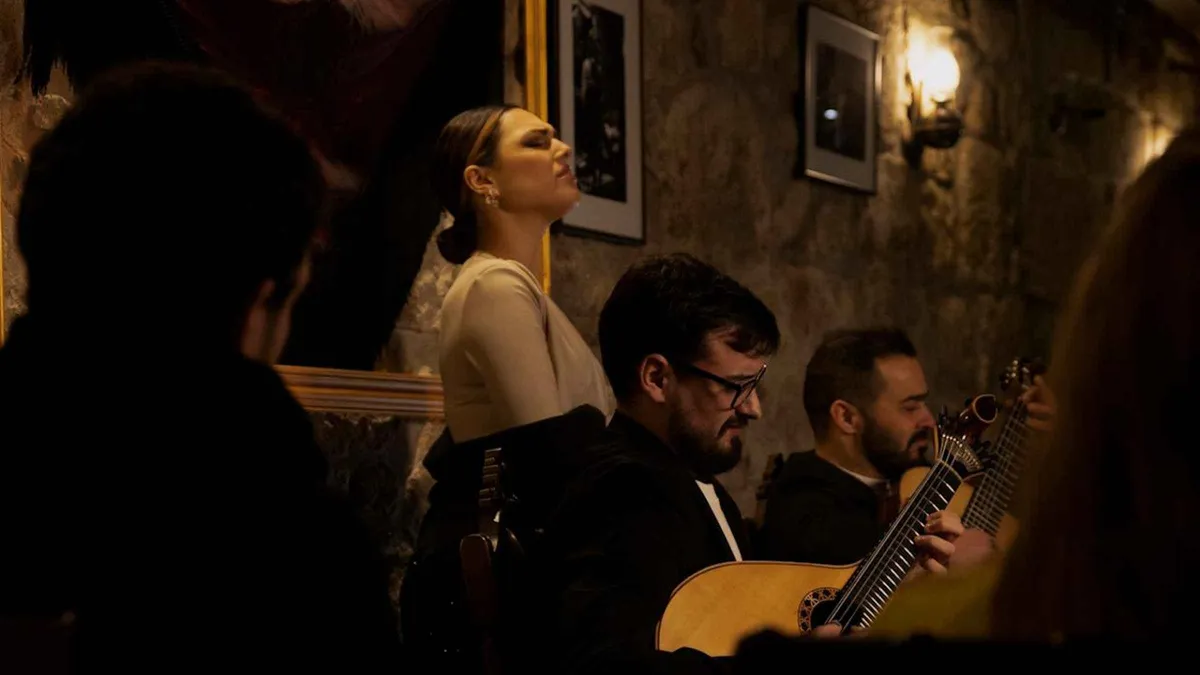 from €15
Porto: An Intimate Fado Show in a Historical Tavern
listed at $17.65
Both fado traditions, Lisbon and Coimbra, performed by two ensembles in a tavern away from the centre, with front-row seats sold as an upgrade. Cheaper than the Casa do Fado ticket and stricter on silence.
Check Availability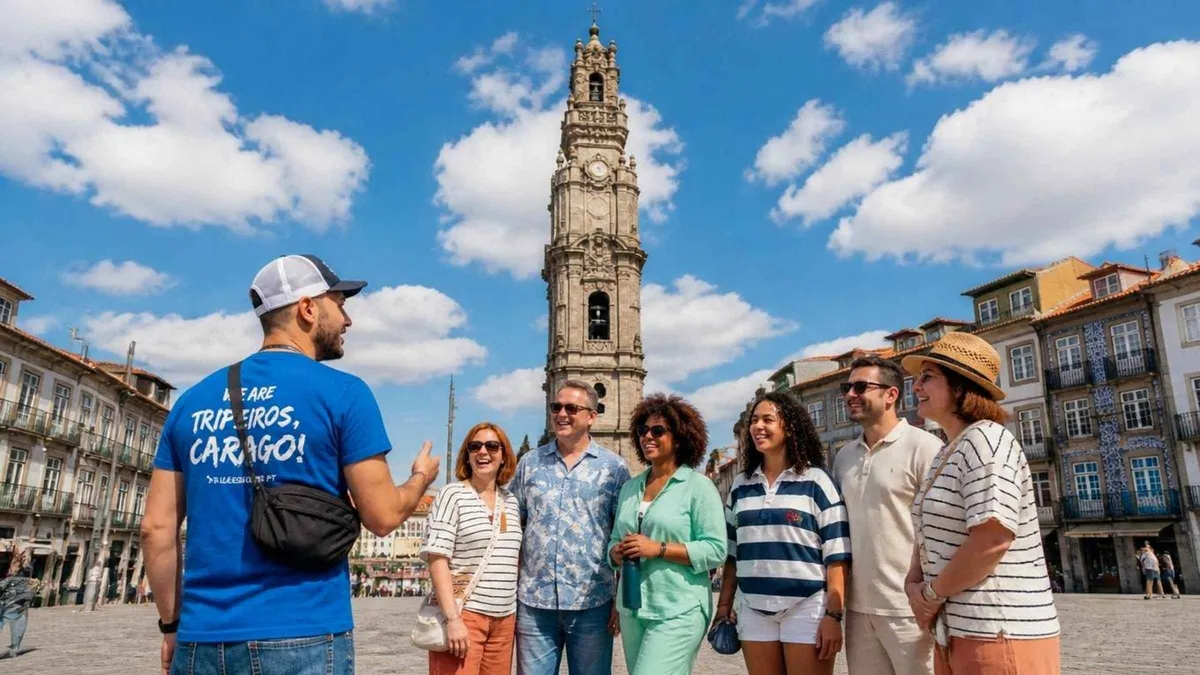 from €29
Porto: 3-Hour Guided City Highlights Walking Tour
listed at $33.68
The three-hour Bluedragon walk through the historic centre, offered in five languages with a private option. The most-booked classic walking tour in Porto, and a public tour needs at least two people.
Check AvailabilityPrices, ratings and details are the platform's own, checked in Q3 2026; dollar figures are the listed prices — the platform bills in your account's currency.
Where to Go Next
The pages that carry the rest of these rules.
Porto public transport
Zones, validation, night buses and why the tram needs its own ticket.
Validation and finesPorto Safety: Questions
Is Porto safe to walk around at night?
Yes, in the areas a visitor uses. The official advice names no district and no curfew; it names crowded transport and late nights around nightlife as the risk moments. The metro runs 06:00 to 01:00, so the practical question after that is how you get home — the night section covers it, and a fado evening ends early enough to walk.
Are there areas a visitor should avoid?
No area is on any official list. There are residential neighbourhoods on the eastern and northern edges with nothing to see and no reason to be there after dark, which is a different thing from a warning. Inside the ring you will actually walk, the honest version is the FCDO's line: mind your pockets in a crowd.
What are the most common scams here?
Most of what gets called a scam is a rule nobody read — the couvert on the table, fish priced by weight, the tram not being on your transit pass, the card terminal offering your home currency. The rules table separates the five, and the genuine street approaches, boat touts and bracelet-tying included, are in the approaches section.
Where do pickpockets operate?
On the heritage trams above all — lines 1, 18 and 22 — plus the São Bento hall, the Ribeira quay at sunset, metro doors at Trindade and Bolhão, and terrace tables. The official advice names crowded bus and tram stops for exactly this reason: thieves use distraction techniques and often work in teams. The list is here.
Is it safe for a solo female traveller?
Nothing in the official advice singles the city out, and the centre is small, busy and lit. The adjustments are the universal ones — a room with a proper lock, the address saved offline, a taxi rather than the unlit riverbank after midnight. The night section has the specifics, including the drink-spiking warning that applies to everyone.
What number do I call, and where is the tourist police station?
112 for any emergency. For a theft report you want the PSP tourism station at Praça de Pedro Nunes 16, +351 222 461 190, open daily 08:00 to 24:00, with officers in four languages. Ignore the Rua Clube dos Fenianos address still printed in directories — the numbers table has the current details and the tourist offices too.
Is it safe to swim on the coast here?
In season, at a lifeguarded beach, watching the flag: red means stay out, yellow means paddle at the edge only. The Atlantic here has rip tides, and the official advice is to swim parallel to the shore rather than against a current. The beach section has the rest, and the beaches page the season dates.
Porto Safety, on Film
Three films from people who spent time in the city rather than a weekend. Their impressions are their own; the official wording on this page comes from the FCDO's Portugal advice and the city tourism board.
Is Porto Portugal Safe? Discover The Truth Here!
A resident's answer to the same question, from the streets this page names.
Video: Atypical Vagabond in Portugal27 Tips I Wish I Knew Before Visiting Porto, Portugal
A first-timer's list, several items of which are the rules mistaken for scams above.
Video: Camden DavidWhat NOBODY tells you about PORTO! Truths before you travel
The blunt version of the hills, the rain and the crowds this page quantifies.
Video: Travel Tips GroupVideos load from YouTube only when you press play.
Reviewed Q3 2026 (July–September 2026); next review Q4 2026. Prices, hours and terms are set by the venue or operator and confirmed at checkout.
We may earn a commission if you book through one of our links, at no extra cost to you. Full affiliate disclosure