 Visit Porto City Guide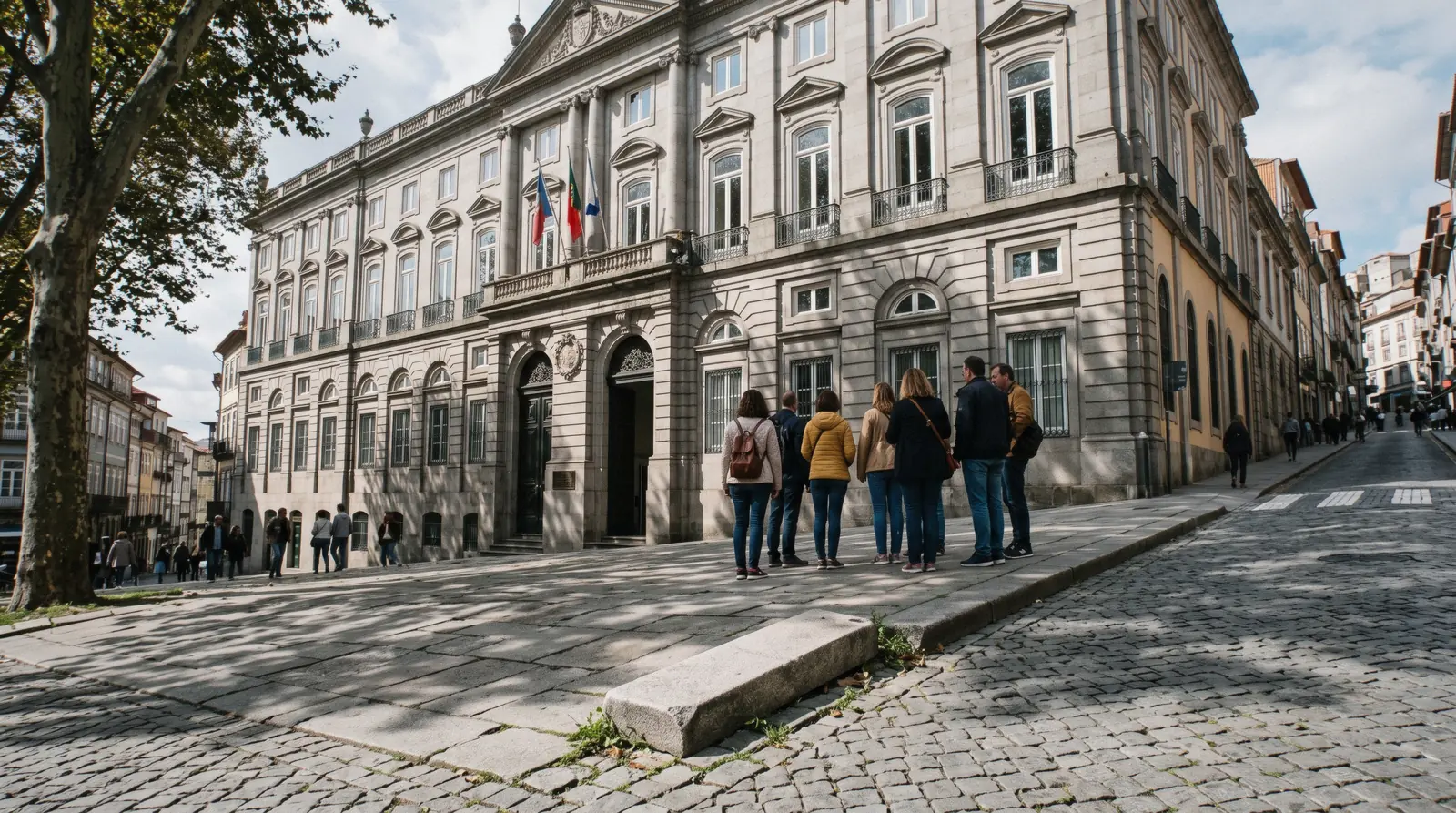
Palácio da Bolsa
Palácio da Bolsa is the nineteenth-century stock exchange of Porto's merchants, built on the burnt cloisters of the São Francisco convent and finished, room by room, over sixty-seven years; the Arab Room at the end of the route is the reason most people come. There is no wandering here: every visit is a guided tour of about thirty minutes, the language is assigned by the order you arrive in, and the adult ticket is $16.27 (€14) at the door. This page covers what the tour shows, the hours, the arrival-order rule and the way there; the ticket options are compared on the Palácio da Bolsa tickets page, the gilded church next door on the São Francisco church page, and the whole city order on the Porto city guide homepage.
Quick answer Guided tour only, thirty minutes, the Arab Room at the end, and what it costs — the four facts that decide the visit
Palácio da Bolsa is open every day from 09:00 to 18:30 and can only be seen on a guided tour of about thirty minutes, $16.27 (€14) for adults, $11.04 (€9.50) for students and seniors, free under 12; the language of your tour is assigned by the order you arrive in, from Portuguese, Spanish, French and English. The route ends in the Arab Room, the gilded Moorish-revival hall that took eighteen years to decorate, and that room alone is worth the ticket.
Key takeaways
- No platform sells a stand-alone Bolsa entry in Q3 2026: the official shop and the regional tourism board's booking site are the only sellers, and the Palácio da Bolsa tickets page walks through both
- The one listed Bolsa walking tour is a four-hour French-language walk that reaches the palace at the end and has you pay entry on site — for an English commentary of the old town, the three-hour highlights walk passes the door and you buy the palace tour yourself
- Do the São Francisco church next door on the same ticket-office visit: it is a separate ticket, but the two doors are fifty metres apart and the church stays open until 20:00 from April to September
Key facts
Opening hours
| Daily, all year (visits) | 09:00–18:30 |
|---|---|
| Shop, April–October | 09:00–18:30 |
| Shop, November–March | 09:00–17:30 |
Closed Not stated on the tourism page; the building hosts events and the Associação Comercial do Porto's own functions, so a room can be shut without notice
Admission
- Adult
- $16.27 (€14), guided tour included
- Reduced
- $11.04 (€9.50) for students, school groups and seniors; the age threshold for seniors is not stated
- Free
- Children under 12 accompanied by an adult (not children's groups)
Planning it
- Time needed
- 30 minutes on the tour, stated by the palace; allow 45–60 minutes with the wait for your language
- Book ahead
- Optional — walk-up usually fine
- Address
- Rua Ferreira Borges, 4050-253 Porto (side entrance with a ramp for wheelchairs)
Every way to stand inside the Palácio da Bolsa in Q3 2026, priced from palaciodabolsa.com, the regional tourism board's booking site, torredosclerigos.pt and GetYourGuide, converted at €1 = $1.1622. The palace sells its own tour at the door and online; the Clérigos ticket office sells a three-monument combo that includes it; the only platform product is a French-language walk that leaves the palace ticket for you to buy on arrival. The reduced fares and the online booking steps are on the Palácio da Bolsa tickets page.
Are you paying for the guided tour of the palace, or for a walk through the old town that ends at its door? The palace sells the tour itself; no platform includes the entry.
| Option | Price | Includes | Cancel | Book |
|---|---|---|---|---|
| Official guided tour, at the door or via the tourism board's booking siteEveryone who wants to see the inside; there is no other way in | $16.27 (€14); $11.04 (€9.50) reduced; under 12 free | The 30-minute tour in the next language slot: courtyard, staircase, Tribunal, Golden and Portrait rooms, Arab Room | Not stated as refundable | Official site |
| Clérigos combo: Tower + Palácio da Bolsa + MMIPO, sold by ClérigosThree tickets on one visit to the Clérigos office: €1 more than the tower and the palace bought separately, with the Misericórdia museum added for that euro | $29.06 (€25) | Tower and museum, the Bolsa guided tour, the Misericórdia museum | Not stated as refundable | Official site |
| Monumental and historic Porto with the Palácio da Bolsa, 4 h walk, French onlyFrench speakers who want the old town narrated first; the listing prints the on-site entry as +€10, the palace charges €14 — budget the palace's figure | $46.50 (€40) plus entry paid on site | Certified French-speaking guide, São Bento, the Sé, the bridge, Ribeira, ending at the palace; 4.6 from 12 reviews | Free up to 24 hours before | Check Availability |
The listing for the French walk states the palace entry as an extra €10 on site; the palace's own tourism page prints €14 for an adult in Q3 2026. We print the palace's figure and flag the difference; ask the guide before you pay. The Porto.CARD discount at the palace is not stated on the tourism page, and the card's own sales page has vanished — the Porto.CARD page explains that.
Palácio da Bolsa: the walk that ends at its door and the walks that pass it
Every card links to the operator's own page, where the calendar shows what is still open on your date. Prices in dollars as listed in Q3 2026; only the first card names the palace, and it leaves the entry to you.
 from €40
Monumental and historic Porto with the Palácio da Bolsa
listed at $46.45
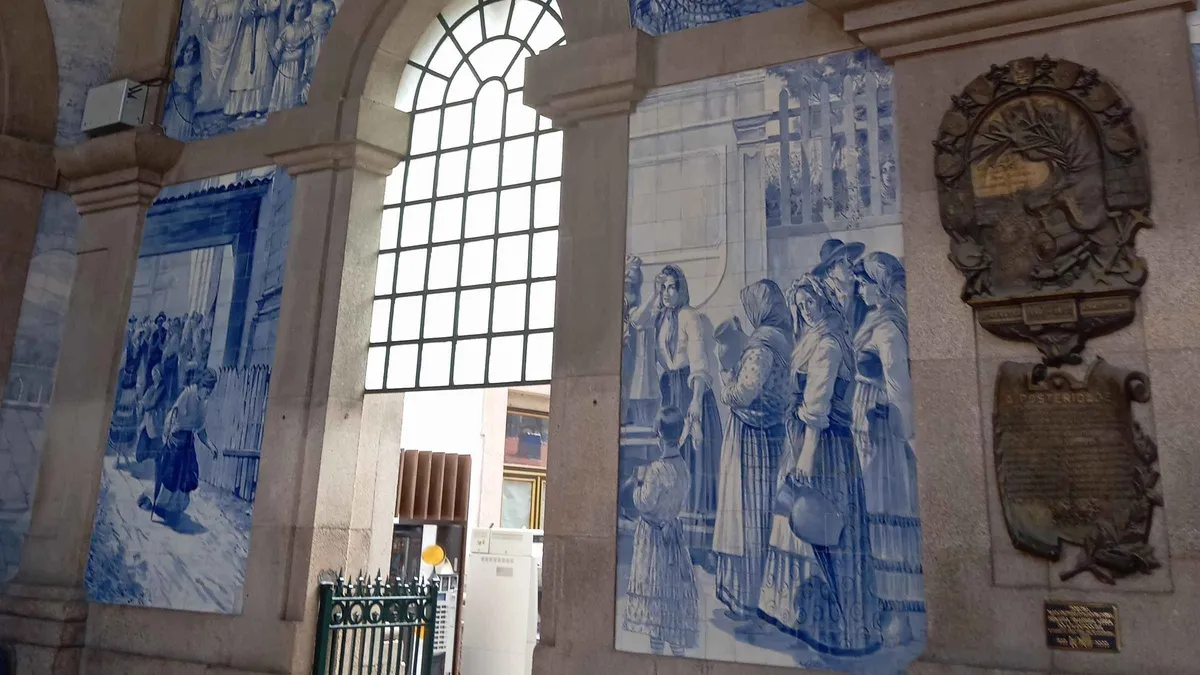
A four-hour French-language walk through the old town that ends with a guided visit of the Palácio da Bolsa; the palace ticket is paid on the spot. Only for French speakers, and with 12 reviews it is a new listing.
Check Availability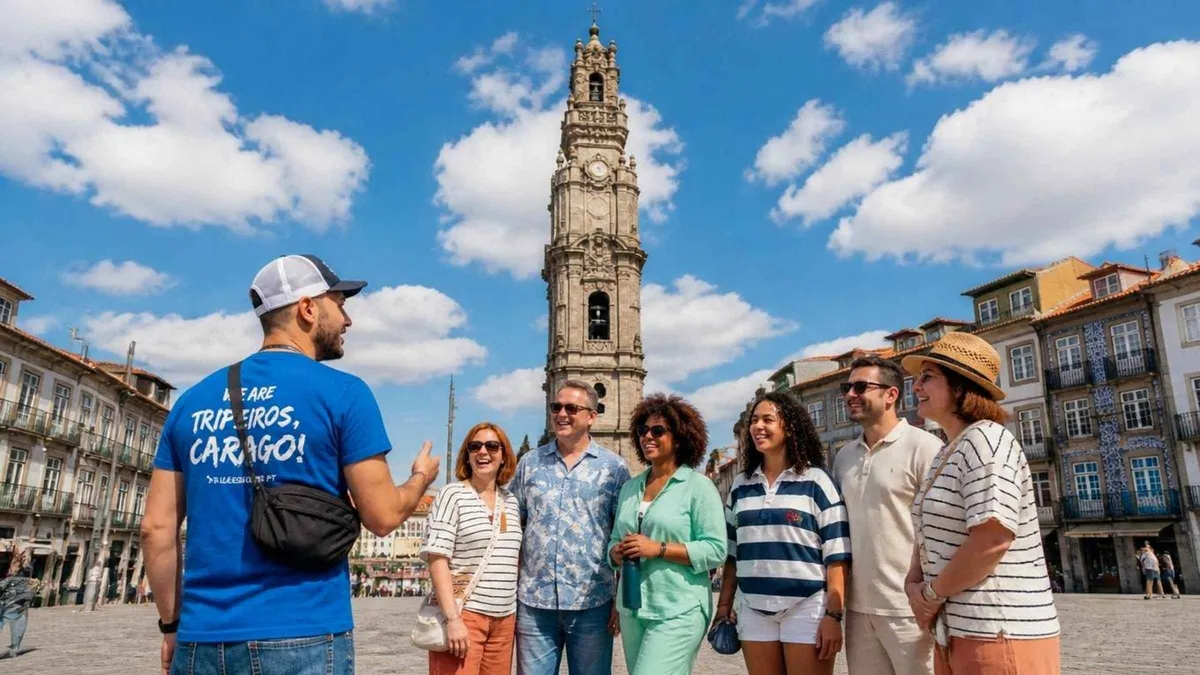 from €29
Porto: 3-Hour Guided City Highlights Walking Tour
listed at $33.68
The three-hour Bluedragon walk through the historic centre, offered in five languages with a private option. The most-booked classic walking tour in Porto, and a public tour needs at least two people.
Check Availability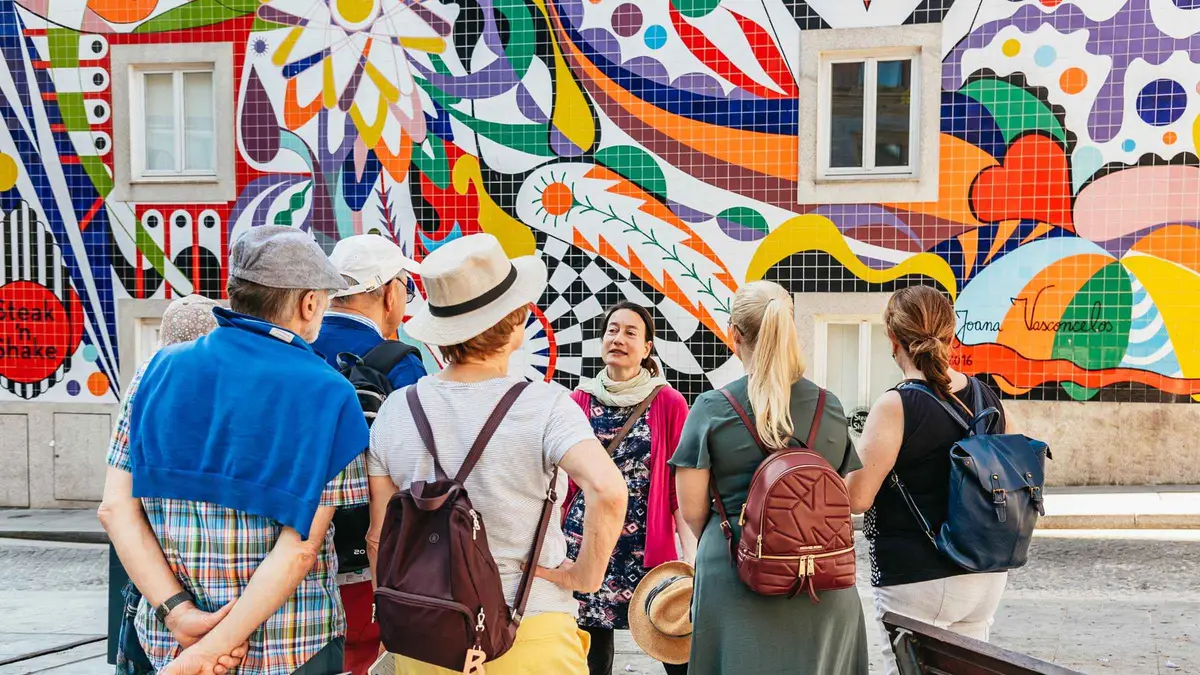 from €29
Porto Walking Tour: Highlights & hidden gems - max 8 pax
listed at $33.68
A capped-at-eight walk in English or German with restaurant recommendations written down at the end. The best-rated small-group walk here, with a two-person minimum to run.
Check Availability from €15
Porto: City Highlights Guided Walking Tour
listed at $17.42
A two-and-a-half-hour English walk from the Lions Fountain with a guide under a white umbrella. The cheapest scheduled walking tour on this page, from the Hi Lisbon team's Porto branch.
Check AvailabilityPrices, ratings and details are the platform's own, checked in Q3 2026; dollar figures are the listed prices — the platform bills in your account's currency.
Is Palácio da Bolsa worth it? Yes, for one room and a staircase
The most-asked question about the building has a short answer, and the reason it needs a page is that the visit works differently from every other monument in Porto.
Worth it, yes — but be clear about what the $16.27 (€14) buys. It buys thirty minutes with a guide through eight or nine rooms of a nineteenth-century merchants' hall, and one of those rooms, the Arab Room, is the most elaborate interior in the city: a Moorish-revival ballroom in gilded and painted stucco, inspired by the Alhambra, which took eighteen years to finish and was inaugurated on 12 June 1880. The rest of the route is a fine neoclassical building — the glass-domed Nations Courtyard with the coats of arms of Portugal's trading partners, the granite-and-marble staircase, the Tribunal Room, the Golden Room — that would earn a look on its own but would not, on its own, justify a queue.
What the ticket does not buy is freedom. You cannot walk the palace at your pace, photograph one room for twenty minutes, or skip to the end; you follow the guide, in the language your arrival time gave you, and you leave with the group. If that suits you, or if you would rather be told what you are looking at, the tour is good and the guides know the building. If you want an hour alone with the stucco, this is the wrong monument, and the São Francisco church next door, which lets you wander, may give you more per euro.
Our reading: for a first visit to Porto with two days or more, the Bolsa is a fixed stop; on a one-day visit it competes with the Clérigos tower and the cathedral cloister for the same hour, and the one-day itinerary puts it after lunch, when the Ribeira is at your feet anyway.
The guided-tour rule: language by arrival order, thirty minutes, no self-guided visit
Read on palaciodabolsa.com in Q3 2026. This is the fact that catches people: the palace is not a museum you enter with a ticket, it is a building you are shown.
How the languages are assigned
The tourism page says it plainly: tours are compulsory, last about half an hour, and are given in Portuguese, Spanish, French and English 'assigned based on visitor arrival sequence'. In practice that means the ticket desk fills the next departure with whoever is there, and the language of that departure follows the first arrivals. Turn up alone at a quiet hour and you may wait for the next slot in your language; turn up behind a Spanish coach party and the next tour is in Spanish. The palace prints no timetable of departures by language, so nothing here can promise you an English tour at 11:00 — ask at the desk which language leaves next and how long the wait for yours is.
Two consequences. First, the arrival-order rule rewards the first hour after 09:00 and the last hour before 18:30, when the desk is forming groups from a short line; in the middle of a summer day the wait for a specific language is the part of the visit nobody budgets for. Second, buying online through the tourism board's booking site does not change the rule: an online ticket still puts you in the next tour in your language, it does not reserve a departure. The tickets page has the booking steps.
What thirty minutes covers
The route is fixed: the Nations Courtyard on the ground floor, the staircase, then the first-floor sequence — the Tribunal Room, the Assembly Room where the Associação Comercial still meets, the Golden Room, the Portrait Room with the kings of Portugal on the walls — and the Arab Room last. The guide talks in each room; you photograph while they do. There is no free time at the end inside the Arab Room, so take your pictures as the group enters rather than waiting for the crowd to thin, because it will not.
The palace shop and the café are outside the tour and open on the hours in the key facts above.
Palácio da Bolsa history: a convent fire, a merchants' hall and sixty-seven years of decorating
Dates from the palace's own history page and the São Francisco church's, both read in Q3 2026. The story is shorter than the building.
1832: the cloisters burn
The site was the cloisters of the Franciscan convent whose church — the gilded Igreja de São Francisco — still stands beside the palace. During the siege of Porto in 1832, the year-long stand-off between the liberal and absolutist armies, a fire destroyed the old cloisters. The church survived; the convent did not, and the ruined ground beside it became the plot the city's merchants were given for a commercial exchange.
1842–1850: the shell
The palace's history page dates the first stone to 6 October 1842, laid under José Henriques Soares, Barão de Ancede, president of the Associação Comercial do Porto, to a general design by Joaquim da Costa Lima. The first floor and the main front were complete by 4 November 1850 — eight years for the neoclassical shell you see from Rua Ferreira Borges, with the granite façade, the pediment and the Infante Dom Henrique garden laid out in front of it.
1860s–1909: the rooms
The decoration took far longer than the building. Interior work began in the 1860s; the Arab Room, designed by Gustavo Adolfo Gonçalves e Sousa, took eighteen years and was inaugurated on 12 June 1880; the palace's page dates the end of the decorative campaign to 1909, marked by a visit from King Manuel II. Sixty-seven years separate the first stone from the last gilding, and the rooms show it — the courtyard is 1840s neoclassicism, the Arab Room is 1880 orientalism, the Portrait Room and the Golden Room belong to the decades in between.
1910–1918: taken, returned
The Republic was proclaimed on 5 October 1910, a year after the last room was finished; the building was inventoried and vacated, and its public ownership documented on 11 February 1911. The Associação Comercial regained possession in 1918 and still has its headquarters here — which is why the Assembly Room is a working chamber and why the palace hosts events, dinners and the occasional wedding, and why a room can be closed on a given day without the tourism page saying so. The building sits inside the Historic Centre of Porto, listed by UNESCO in 1996 together with the Luís I bridge and the Serra do Pilar monastery.
Palácio da Bolsa In Nine Dates
The building's own chronology, from the fire that cleared the plot to the year the merchants got their hall back.
-
1832
The convent cloisters burn in the siege of Porto
The fire during the liberal siege destroys the old cloisters of the Franciscan convent; the church beside them survives and is today the gilded São Francisco.
-
6 October 1842
First stone
Laid under José Henriques Soares, Barão de Ancede, president of the Associação Comercial do Porto, to Joaquim da Costa Lima's design.
-
4 November 1850
The first floor and the main front are finished
The neoclassical shell on Rua Ferreira Borges stands complete; everything inside is still bare.
-
1860s
Interior decoration begins
The courtyard dome, the staircase and the first-floor rooms are fitted out over the following decades, one room at a time.
-
12 June 1880
The Arab Room is inaugurated
Gustavo Adolfo Gonçalves e Sousa's Moorish-revival hall, eighteen years in the making, opens as the palace's reception room.
-
1909
The decorative work ends
King Manuel II's visit marks the finish of the campaign, sixty-seven years after the first stone.
-
5 October 1910 – 11 February 1911
The Republic takes the building
Inventoried and vacated after the proclamation of the Republic; its public ownership is documented the following February.
-
1918
The Associação Comercial regains possession
The merchants' association returns and keeps its headquarters here to this day, which is why the Assembly Room is still a working chamber.
-
1996
UNESCO
Inside the Historic Centre of Porto inscription, together with the Luís I bridge and the Serra do Pilar monastery.
Sources: the history page on palaciodabolsa.com and the São Francisco church's Wikipedia entry for the 1832 fire, both read in Q3 2026; the UNESCO listing for the Historic Centre of Oporto, Luiz I Bridge and Monastery of Serra do Pilar.
Inside Palácio da Bolsa: the rooms in the order the tour takes them
What each stop on the thirty-minute route holds, so you know where to spend your photographs. The palace publishes no room dimensions or gold weights; the figures blogs repeat for the Arab Room are not on any official page, and none appear here.
The Nations Courtyard
You enter into a covered court under an octagonal iron-and-glass dome, the Pátio das Nações. Around the upper walls run the painted coats of arms of the countries Porto traded with in the nineteenth century — the reason for the name — and the floor is a mosaic. This is where groups wait for their language, so it is also the room you will see for longest; look up at the dome while you do.
The staircase
The Escadaria Nobre climbs from the courtyard in two flights of granite and marble under a painted ceiling, with busts and statuary on the landings. Guides pause here for the ceiling; it is the one photograph on the route that works with a group in it, because the flights carry the eye up.
Tribunal, Assembly, Golden and Portrait rooms
The first floor is a run of formal rooms. The Tribunal Room is the commercial court, panelled and severe, with a painted ceiling; the Assembly Room is where the Associação Comercial still sits, so it is furnished as a working chamber rather than a museum; the Golden Room takes its name from the gilded plasterwork of its ceiling; the Portrait Room hangs the kings of Portugal on its walls, ending with the last of them. Guides move through these quickly — five minutes across the four is normal — because everyone knows what is at the end.
The Arab Room
The Salão Árabe is the last room and the reason for the ticket: a long hall in Moorish-revival style, its walls and ceiling covered in gilded and polychrome stucco arabesques, horseshoe arches, and calligraphic bands, inspired by the Alhambra at Granada, designed by Gonçalves e Sousa and finished in 1880 after eighteen years. It was built as the palace's reception hall and is still used as one: the Associação Comercial receives heads of state here, and it is hired for concerts and dinners, which is why a tour can find it dressed with chairs or, on a rare day, closed. The light is warmest in the late afternoon through the west windows.
You will have about five minutes in it; photograph from the door as you enter, then from the centre, and leave the far end to the group.
How Much Time To Give Palácio da Bolsa
The palace states the tour length itself — about thirty minutes — which makes this one of the few Porto monuments with an official duration. The variable is the wait for your language, which nobody prints.
Three routings, each against the same hours, 09:00 to 18:30 daily. Door-to-door times are from São Bento station, which is a seven-minute walk downhill; the Ribeira is three minutes the other way, so the palace sits between the two places you will be anyway.
| Routing | Inside the palace | Door to door from São Bento | What you skip |
|---|---|---|---|
| The tour alone, first departure after 09:00 | 30 minutes on the tour, $16.27 (€14); 10 minutes' wait at best | About 1 hour | Nothing inside; you skip the crowd and, most days, the language wait |
| Palace plus São Francisco next door | 30 minutes in the palace, 45 minutes in the church, museum and catacombs | About 2 hours | Nothing; the two doors are 50 metres apart and the church runs on its own ticket |
| With the French-language walk | The walk arrives at the palace after about four hours; the palace tour is the last 30 minutes | About 4 h 45 from Pier 1 on the Ribeira | An English commentary — the walk is French only — and any say over the palace departure time |
Whichever routing you take, the arrival-order rule means the first tour of the morning is the one you can plan; every later departure depends on who is in the courtyard ahead of you. If the palace is the fixed point of your day, be at Rua Ferreira Borges at 08:55 and the Clérigos tower, a twelve-minute climb uphill, can take the rest of the morning.
Palácio da Bolsa hours, closed days and the winter question
Figures from palaciodabolsa.com, English and Portuguese tourism pages, read in Q3 2026. Where the two pages differ, the table prints both.
The palace is open every day from 09:00 to 18:30, with the last tour presumably leaving before the close — the page prints no last-entry time, so treat 18:00 as the latest you should be at the desk. The shop keeps different hours by season: 09:00 to 18:30 from April to October, and a split day from 09:00 to 13:00 and 14:00 to 17:30 from November to March on the English page, to 18:00 on the Portuguese one. An older Portuguese snippet showed the visits themselves on that split winter day, 09:00–13:00 and 14:00–17:30; both current pages say 09:00–18:30 all year, and we print the current pages, but if you are visiting between November and March and the lunch hour matters, ring 223 399 013 first.
No closed days are printed. The building is a working headquarters and an events venue, so the honest line is that a room can be shut on a given day; the tourism page does not list which. Free visits on 25 March, Portugal's Dia Nacional dos Centros Históricos, are mentioned in the palace's own notes and sell out. The Monday closures page lists what else in Porto is shut on the day the state museums close — the Bolsa is not among them.
| Item | What the pages print | Source |
|---|---|---|
| Visits, all year | 09:00–18:30 daily | EN and PT tourism pages |
| Last tour | Not stated; be at the desk by 18:00 | Our routing |
| Shop, April–October | 09:00–18:30 (EN); 09:00–19:00 (PT) | EN and PT tourism pages |
| Shop, November–March | 09:00–13:00 / 14:00–17:30 (EN); to 18:00 (PT) | EN and PT tourism pages |
| Closed days | None printed; rooms close for events without notice | Tourism page |
| Quiet tours | First departures after 09:00; last hour before 18:30 | Our routing, not an official figure |
Palácio da Bolsa directions: from São Bento, the Ribeira and the metro
The palace stands on Rua Ferreira Borges, the street that drops from the Baixa to the river behind the Infante Dom Henrique garden. Fares are the 2026 Andante tariff read on metrodoporto.pt and the STCP tariff sheet in Q3 2026.
On foot, which is how nearly everyone arrives
From São Bento station, leave by the main doors onto Praça de Almeida Garrett, walk down Rua das Flores — the pedestrian street of pastry shops and tile façades — and at its bottom the Largo de São Domingos opens onto Rua Ferreira Borges; the palace's pedimented front is on your left behind the garden, seven minutes and all downhill. From the Ribeira waterfront it is three minutes uphill on Rua do Infante Dom Henrique, with the São Francisco church on the corner before the palace. From the Luís I bridge's lower deck, walk west along the quay to Praça da Ribeira and turn up: ten minutes.
Metro: the closest station is São Bento on line D, seven minutes' walk; a single Z2 title is $1.63 (€1.40) on an Andante card that costs $0.70 (€0.60) once. Bus: STCP lines along Rua do Infante Dom Henrique and the Ribeira stop within two minutes; the onboard fare is $2.91 (€2.50), a card fare $1.63 (€1.40). Tram: line 1 to the river mouth starts from the Infante stop on the quay below the palace, $6.97 (€6) a ride, not covered by Andante; the Porto tram page explains the fares. Car: there is no parking at the palace; the Ribeira car parks fill by mid-morning in summer, and the getting around page covers the alternatives.
| From | Route | Fare | Time |
|---|---|---|---|
| São Bento station | On foot down Rua das Flores | Free | 7 minutes |
| Ribeira waterfront | On foot up Rua do Infante Dom Henrique | Free | 3 minutes |
| Trindade / Aliados | Metro line D to São Bento, then on foot | $1.63 (€1.40) Z2 title | 15 minutes |
| Airport | Metro line E to Trindade, line D to São Bento, on foot | $2.67 (€2.30) Z4 title | About 50 minutes |
| Vila Nova de Gaia lodges | On foot over the lower deck of the Luís I bridge | Free | 15 minutes |
Step-free access
The tourism page lists a side entrance with a ramp, a toilet for reduced mobility, a lift suited to wheelchairs and priority service. The tour itself climbs to the first floor by the grand staircase; ask at the desk for the lift and the guide will meet the group at the top. The cobbles of Rua Ferreira Borges are the harder part.
Dos And Don'ts At Palácio da Bolsa
The short version of everything above, for the morning you go.
Do
- Be at the desk at 08:55 for the first departures: the language of every later tour depends on who arrived before you
- Ask which language leaves next and how long the wait for yours is before you pay; the palace prints no departure timetable
- Photograph the Arab Room from the door as the group enters — there is no free time in it at the end
- Buy the Clérigos three-monument combo at $29.06 (€25) if the tower is on your list anyway; it costs €1 more than tower plus palace and adds the Misericórdia museum
- Do the São Francisco church next door on the same visit; separate ticket, fifty metres, open until 20:00 in summer
- Ring 223 399 013 between November and March if the lunch hour matters — an older page showed the visits shutting 13:00–14:00 in winter
Don't
- Don't expect to wander: there is no self-guided ticket and the tour leaves as a group
- Don't budget the French walk's '+€10 on site' for the palace — the palace charges €14 for an adult
- Don't plan around a Porto.CARD discount; the palace prints none and the card's sales page has gone
- Don't repeat the gold-weight figures for the Arab Room; no official page publishes one
- Don't arrive after 18:00 and expect a tour; the page prints no last entry, and the close is 18:30
Palácio da Bolsa map: the door, the ramp and the next sights
The palace entrance on Rua Ferreira Borges, the step-free side entrance, and the five sights within a ten-minute walk. Coordinates from Wikidata; the side-entrance pin is approximate.
Five Things Most Visitors Do Not Know About Palácio da Bolsa
Facts that change how the building reads, each with where it comes from.
- It stands on a fire. The plot is the cloisters of the Franciscan convent, burnt in the siege of Porto in 1832; the church of that convent is the gilded São Francisco next door, and the two buildings share a wall of history if not of stone. (Church of São Francisco, Wikipedia, read in Q3 2026) - The Arab Room took longer than the whole shell. The first floor and the main front were up in eight years, 1842 to 1850; the Arab Room alone took eighteen, opening on 12 June 1880. (History page, palaciodabolsa.com) - The last room was finished the year before the monarchy fell. The decorative campaign ended in 1909 with a visit by King Manuel II; the Republic was proclaimed on 5 October 1910 and the building was inventoried and vacated.
The merchants got it back in 1918. (History page, palaciodabolsa.com) - It is still a headquarters. The Associação Comercial do Porto works here, the Assembly Room is a live chamber, and the Arab Room is a hire venue — which is why the tourism page prints no closed days and a room can be shut without warning. (Tourism and intro pages, palaciodabolsa.com) - Nobody official says what the Arab Room weighs in gold. The kilogram figures that circulate are not on the palace's site or on the tourism board's booking page; the palace publishes the dates and the architects, not the metal.
(Tourism, history and intro pages, palaciodabolsa.com, read in Q3 2026)
Eating At Palácio da Bolsa
The palace has a café and a shop on the ground floor, outside the tour; neither prints prices on the tourism page, so none appear here.
The café is fine for a coffee while you wait for your language, and the shop hours are in the key facts above. For a meal, the answer is the streets around the building. Rua das Flores, the seven-minute walk up to São Bento, is the densest run of cafés and pastry counters in the old town; the Ribeira quay three minutes downhill has the terraces with the view and the prices that go with it; the where to eat page names the places on citable lists, with the year of the list, rather than the terrace with the loudest menu board.
If you are doing the São Francisco church after the palace, eat after both — the church stays open to 20:00 from April to September and to 19:00 the rest of the year, so it can take the last hour of the afternoon while the palace cannot.
Next stop from Palácio da Bolsa
Walk minutes are our estimates from the GPS distances on Porto's slopes; everything below is downhill except the cathedral and the tower.
Igreja de São Francisco
The Gothic church whose interior was covered in gilded woodwork in the eighteenth century, with the Tree of Jesse and the catacombs on the museum route; open to 20:00 from April to September. The São Francisco church page has the ticket and the hours.
1 min walkRibeira
The quay, the boats and the view of the bridge. The six-bridges cruise boats leave from the quay below the palace, and the Porto tours hub compares them; the Ribeira page covers the quay itself.
3 min walk downhillSé do Porto
The Romanesque fortress-cathedral with a $3.49 (€3) ticket for the cloister, museum and tower — the cheapest paid monument in the city. The cathedral page covers the Mass times and the tower cut-off.
8 min walk uphillPalácio da Bolsa questions
Is Palácio da Bolsa worth it?
Yes for the Arab Room, the gilded Moorish-revival hall that took eighteen years to finish, and for the staircase and the glass-domed courtyard on the way to it; the rest is a handsome merchants' hall seen at a guide's pace. The visit is a mandatory thirty-minute tour at $16.27 (€14), so it is worth it for anyone happy to be shown a building rather than to wander one. The tickets page has the reduced fares.
How long does it take to see Palácio da Bolsa?
The palace states about thirty minutes for the guided tour, which is the only way in. Add the wait for a departure in your language — unmeasured by anyone, shortest at 09:00 — and the São Francisco church next door if you are doing both, for a total of about two hours.
Is Palácio da Bolsa free?
No. The adult ticket is $16.27 (€14), students, schools and seniors pay $11.04 (€9.50), and children under 12 with an adult go free; the price includes the compulsory guided tour. The garden and the façade on Rua Ferreira Borges cost nothing, and the palace notes free visits on 25 March, the national historic-centres day, which sell out. The three-monument combo sold by the Clérigos office is the only way to pay less per building.
Can you visit Palácio da Bolsa without a guided tour?
No. The tourism page says the tours are compulsory, about half an hour, in Portuguese, Spanish, French or English assigned by arrival order. Buying online does not change that; it puts you in the next departure in your language. The French-language walk on GetYourGuide ends at the palace and joins that same tour, with the entry paid on site.
What is the Arab Room at Palácio da Bolsa?
The Salão Árabe is the palace's reception hall, designed by Gustavo Adolfo Gonçalves e Sousa in Moorish-revival style with gilded and painted stucco inspired by the Alhambra, inaugurated on 12 June 1880 after eighteen years of work. It is the last room on the tour and still a working venue for state receptions and concerts. The inside section above describes the rest of the route.
What are the Palácio da Bolsa opening hours?
09:00 to 18:30 every day on both the English and Portuguese tourism pages read in Q3 2026, with no last-entry time and no closed days printed; the shop keeps a split day, 09:00–13:00 and 14:00–17:30, from November to March. An older page showed the visits on that winter split too, so ring 223 399 013 if a winter lunch hour matters. The Monday closures page lists what shuts on the day the museums do.
Where is the Palácio da Bolsa official website?
palaciodabolsa.com, with the tourism page at /en/tourism/ carrying the hours and prices; its online ticket link goes to the regional tourism board's booking site, booking.visitportoandnorth.travel. Both are plain links in the table above. Sites with 'bolsa' and 'tickets' in the domain are resellers; the tickets index lists the official shop for every Porto monument.
Where Palácio da Bolsa fits in a day
The palace is the hinge between the upper town and the river, so put it where the day crosses from one to the other. A morning that starts at the Clérigos tower at 09:00 and drops through Livraria Lello, the Sé and Rua das Flores reaches Rua Ferreira Borges by about 13:00; take the next tour in your language, do the São Francisco church next door, and you are on the Ribeira quay by 15:00 for the boat or the bridge walk to Gaia and the port lodges. Reverse it if you want the palace first: 08:55 at the desk gives you the one departure you can plan, and the rest of the morning climbs.
If you would rather have the old town narrated, the three-hour highlights walk passes the palace door and finishes near the river; buy the palace tour when it ends. The French-language walk does the same in reverse and ends inside. The one-day itinerary and the two-day plan place the Bolsa where the hours of everything around it allow.
Palácio da Bolsa on Video
Three films of the palace and the tour, the rooms in the order the guide takes them. Prices and hours on camera are from their filming dates; the figures on this page were read in Q3 2026.
Portugal, Palácio da Bolsa: Essential Guide to Porto's Historic Gem
A room-by-room walk of the tour route, the sequence described in the inside section above.
Video: European RibbonPORTO - Palacio da Bolsa (Stock Exchange Palace)
The courtyard, the staircase and the Arab Room on camera, with the crowd a summer tour actually carries.
Video: Massimo NalliPortugal Travel Guide: Palacio da Bolsa and Douro River Cruise | Explore the Best of Porto!
The palace and a river cruise in one afternoon, the pairing the day section above suggests.
Video: Too Much LuggageVideos load from YouTube only when you press play.
Reviewed Q3 2026 (July–September 2026); next review Q4 2026. Prices, hours and terms are set by the venue or operator and confirmed at checkout.
We may earn a commission if you book through one of our links, at no extra cost to you. Full affiliate disclosure