 Visit Porto City Guide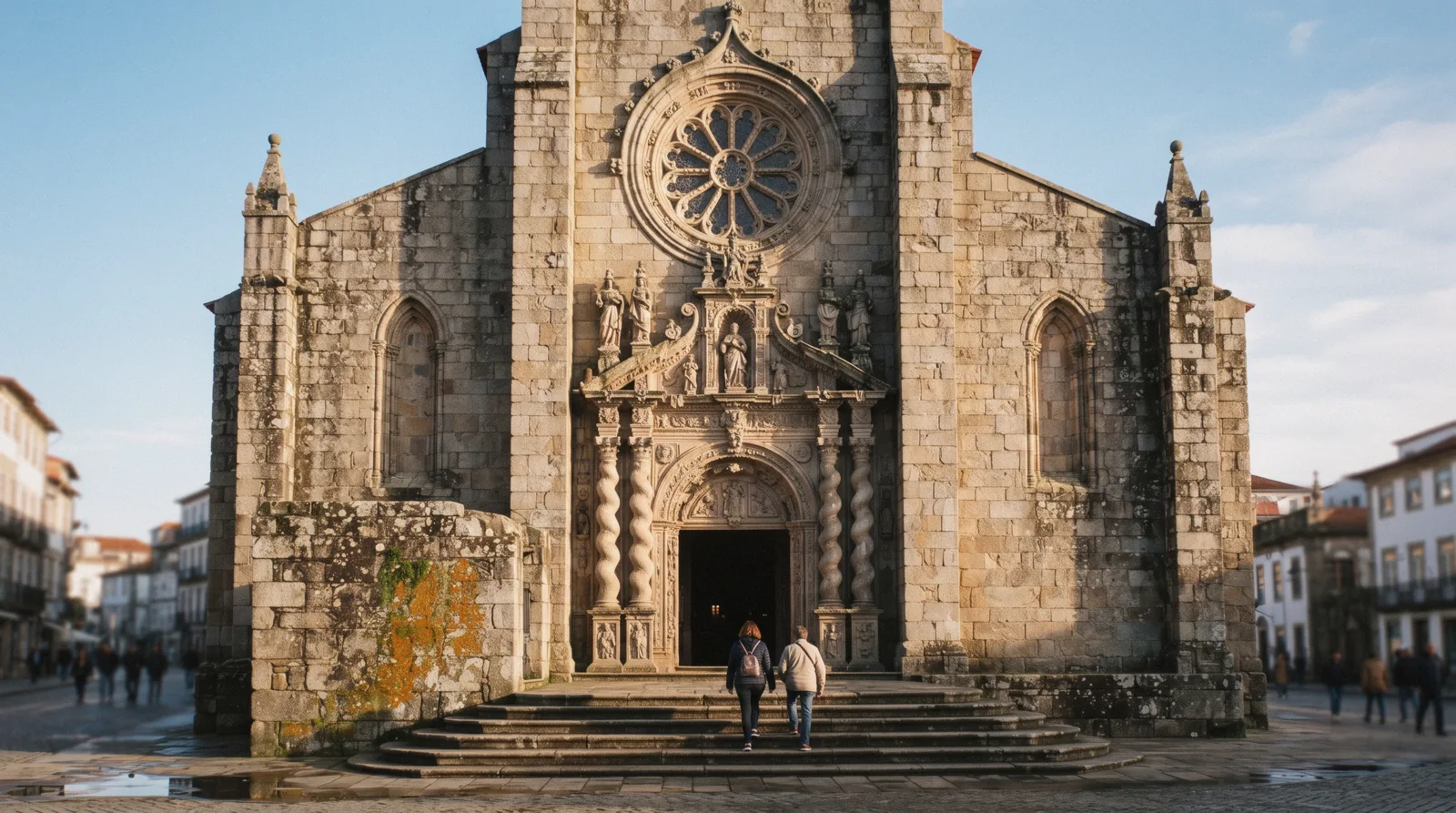
Igreja de São Francisco
Igreja de São Francisco Porto is the Gothic church beside the Palácio da Bolsa whose interior was buried in gilded woodwork in the eighteenth century — three aisles of carved and gold-leafed talha dourada over a plain mendicant shell of 1383–1410, plus a museum route through the Order's Casa do Despacho and the catacombs under the floor. It has been a monument rather than a parish church since the religious orders were dissolved, it belongs to the Venerável Ordem Terceira de São Francisco, and it is open daily 09:00–20:00 from April to September and 09:00–19:00 from October to March, closed only on 25 December. This page covers those hours, what there is to look at inside, the catacombs and the ossuary, the way in on Rua da Bolsa — and the thing no other page will tell you plainly: the Order publishes no admission price anywhere on its own site, checked in Q3 2026. The Palácio da Bolsa next door stands on this church's burnt cloister, and the city's other gilded interiors are compared on the Porto churches hub. The hours below come from the Order's own site, ordemsaofranciscoporto.pt, read in Q3 2026; what else to visit in Porto is on the homepage.
Quick answer Open daily, no online ticket, no published price — and what the gold actually is
Igreja de São Francisco is open every day 09:00–20:00 between 1 April and 30 September and 09:00–19:00 between 1 October and 31 March, closed on 25 December, according to the Venerável Ordem Terceira de São Francisco's own page read in Q3 2026. One admission covers the church, the museum route through the Casa do Despacho and the catacombs beneath it. There is no timed entry, no online sale and — this is the awkward part — no price published anywhere the Order controls, so you find out at the desk on Rua da Bolsa 80.
Key takeaways
- The gold is carved wood, not gilding on stone: talha dourada applied over a Gothic church in the first half of the eighteenth century, and the Tree of Jesse altarpiece of 1718–1721 is the piece people come for
- Under the floor are the catacombs, with an ossuary of thousands of bones visible through a glass panel — what the museum route holds explains what you walk over
- It is one minute from the Palácio da Bolsa, which was built on this church's cloister after the 1832 siege fire; do the two together and buy each ticket separately
- No walking tour on this site includes entry: the hop-on bus listing names the church in its highlights but states no attraction entry, and the city walks pass the door from outside
Key facts
Opening hours
| Daily, 1 April–30 September | 09:00–20:00 |
|---|---|
| Daily, 1 October–31 March | 09:00–19:00 |
Closed 25 December; no other closure is stated by the Order
Admission
- Adult
- Not stated — the Order publishes no admission price on its own site
- Reduced
- Not stated
- Free
- Not stated
Planning it
- Time needed
- Not stated by the Order; our routing: 45 minutes to an hour for church, museum and catacombs
- Book ahead
- Optional — walk-up usually fine
- Address
- Rua do Infante Dom Henrique (church); ticket desk and museum route at Rua da Bolsa 80, 4050-116 Porto
The Order sells its own admission at the door and nowhere else, which makes this the shortest ticket table on the site: one official row with a price cell that says what the Order says, and three GetYourGuide products that reach the church from the outside. Tour prices as listed in Q3 2026 with dollars computed at €1 = $1.1622; the official row's hours and closure come from ordemsaofranciscoporto.pt.
Are you paying for entry or for a guide? Entry is sold only at this door, and no tour on this site includes it.
| Option | Price | Includes | Cancel | Book |
|---|---|---|---|---|
| Admission at the desk, Rua da Bolsa 80Everyone who wants to go inside; there is no other seller and no online ticket | Not stated by the Order | Church, Casa do Despacho museum route and the catacombs | Nothing to cancel; there is nothing to book | Official site |
| City highlights guided walking tour, 2.5 hThe cheapest way to have the streets around the church explained; you still pay your own way in | $17.43 (€15) | English guide, the centre on foot from the Lions Fountain; no entry tickets | Free up to 24 hours before | Check Availability |
| Classic 3-hour guided city walkA French, Dutch, Spanish or German guide rather than English only | $33.70 (€29) | Guide in five languages, historic centre and riverfront; no entry tickets | Free up to 24 hours before | Check Availability |
| Hop-on hop-off bus, 24 or 48 hAnyone with the stops on their list already; its highlights name this church, but the entry is not included | $32.50 (€28) | Two bus lines, 16-language audio, port tasting, walking tours; no attraction entry | Free up to 24 hours before | Check Availability |
The Order's page prints the ticket desk's hours and no fare. Third-party guides print figures between €7.50 and €10 for church, museum and catacombs; none of them is the Order's own number, so this site does not repeat them as fact. Bring a card and enough cash for two admissions and expect to be told the price at the desk. Every published price in the city is indexed on the tickets page.
Guided walks that pass São Francisco: what each one actually covers
Every card links to the operator's own page, where the calendar shows what is still open on your date. Prices as listed on GetYourGuide in Q3 2026. None of the four includes entry to the church — the first three are street-level walks, the fourth is a bus whose highlights mention the building.
 from €15
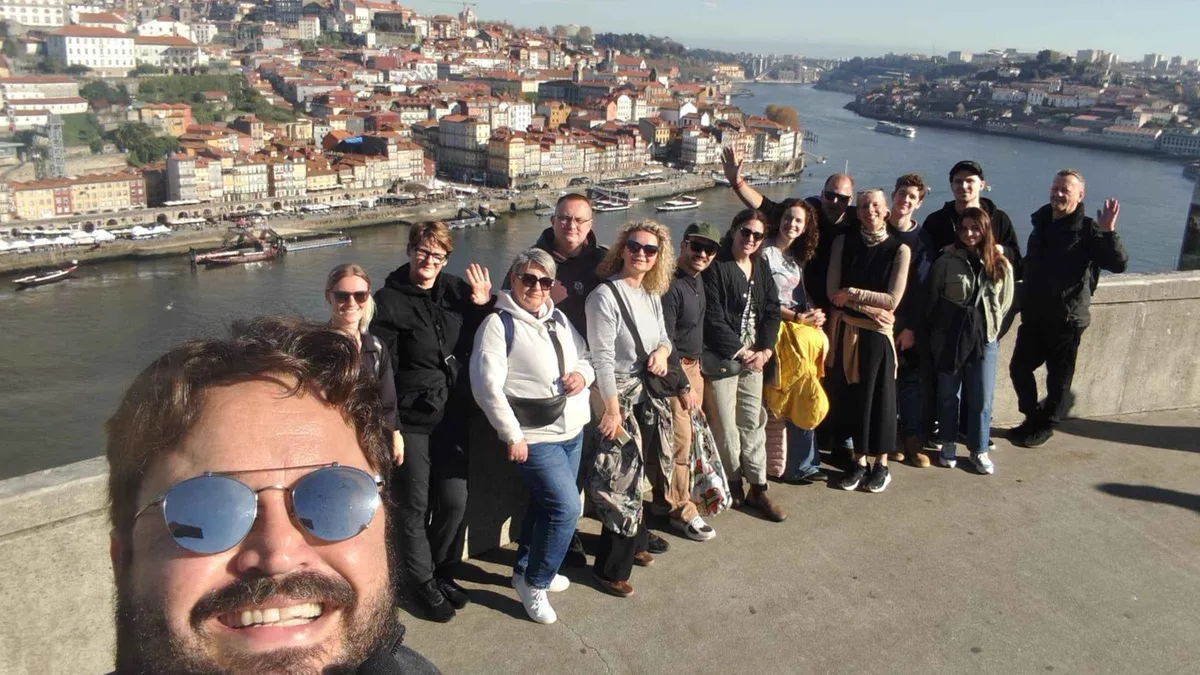
Porto: City Highlights Guided Walking Tour
listed at $17.42
A two-and-a-half-hour English walk from the Lions Fountain with a guide under a white umbrella. The cheapest scheduled walking tour on this page, from the Hi Lisbon team's Porto branch.
Check Availability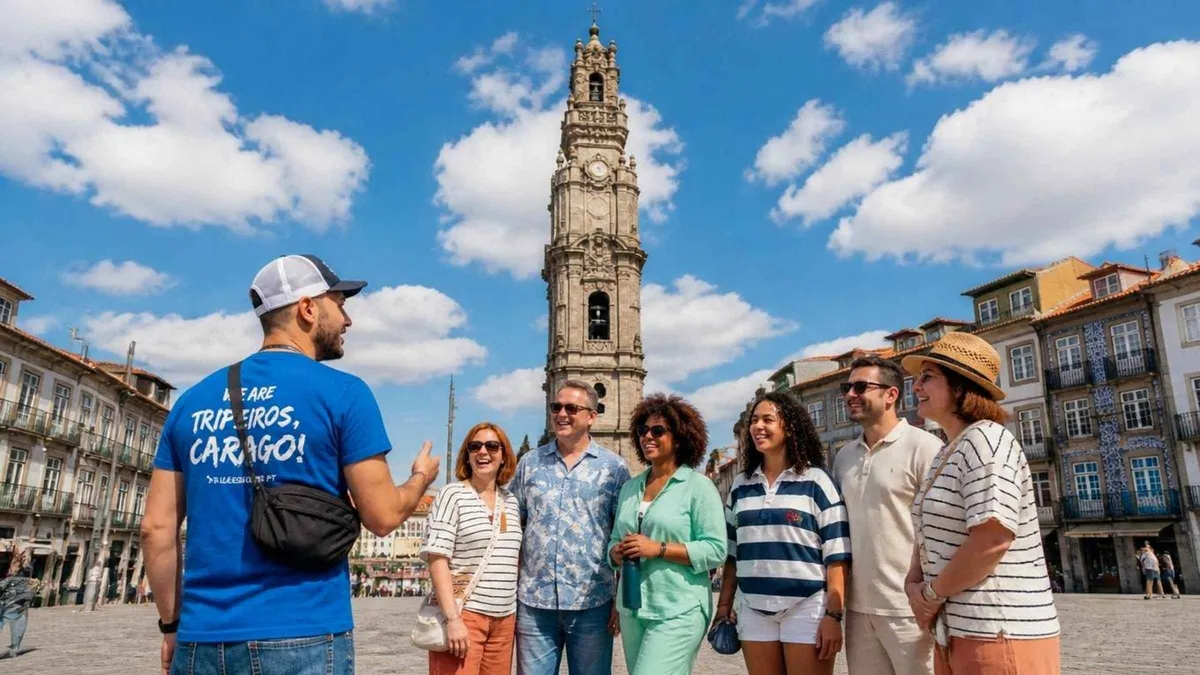 from €29
Porto: 3-Hour Guided City Highlights Walking Tour
listed at $33.68
The three-hour Bluedragon walk through the historic centre, offered in five languages with a private option. The most-booked classic walking tour in Porto, and a public tour needs at least two people.
Check Availability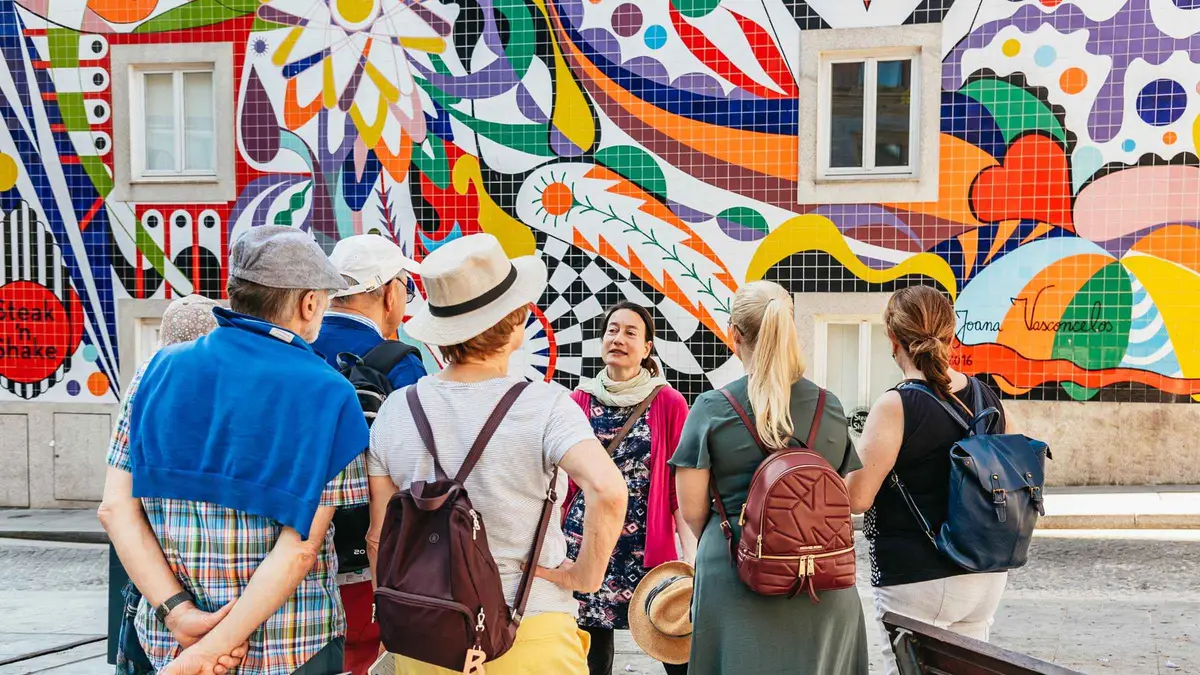 from €29
Porto Walking Tour: Highlights & hidden gems - max 8 pax
listed at $33.68
A capped-at-eight walk in English or German with restaurant recommendations written down at the end. The best-rated small-group walk here, with a two-person minimum to run.
Check Availability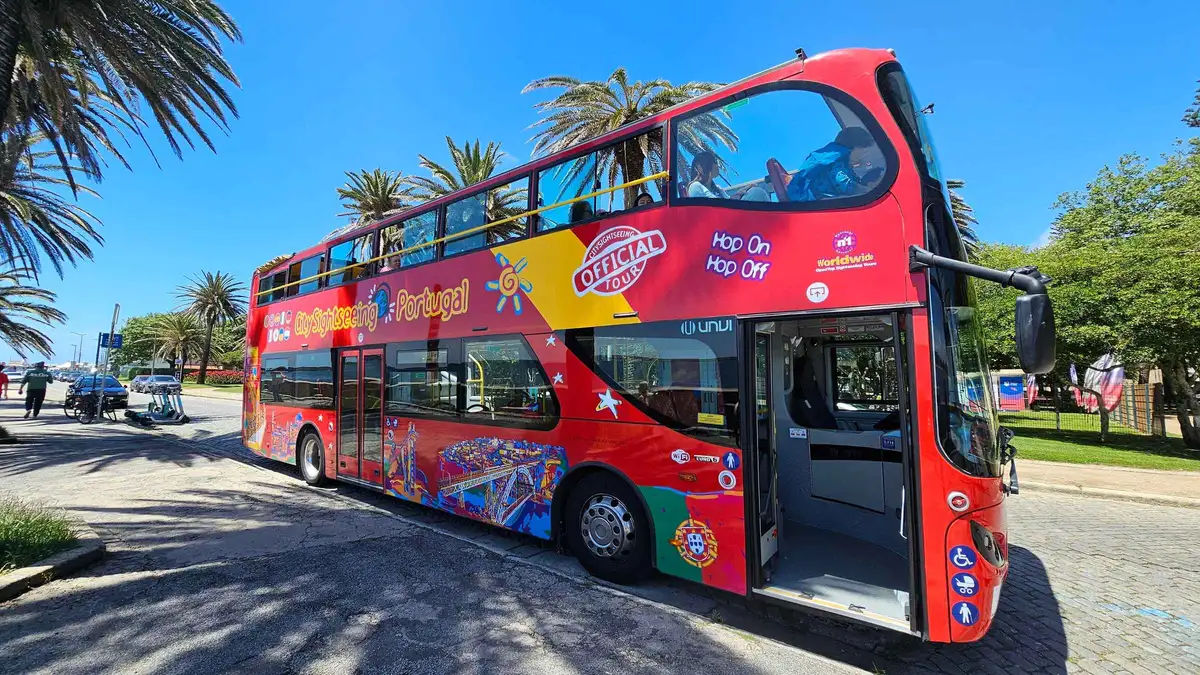 from €28
City Sightseeing Porto Hop-On Hop-Off Bus & Bookable Extras
listed at $32.52
The City Sightseeing bus on two lines with 16-language commentary, a port tasting and a Gaia walk thrown in; the 48-hour ticket adds a night tour and the cruise. Its 4.0 rating is the lowest on this page.
Check AvailabilityPrices, ratings and details are the platform's own, checked in Q3 2026; dollar figures are the listed prices — the platform bills in your account's currency.
What Igreja de São Francisco is: a Gothic church with a Baroque interior bolted on
Two buildings occupy one shell. The structure is late-Gothic and mendicant: three aisles in five bays, a projecting transept, a three-chapel east end, buttresses outside and a rose window over the west door. It is the best surviving Gothic architecture in Porto, and almost none of it is what you notice. What you notice is the eighteenth century — walls, piers, chapel fronts, window surrounds and vault linings covered in talha dourada, carved wood gilded with gold leaf, applied over the medieval stone in the first half of the 1700s and hiding most of it.
That contradiction is the whole visit. Stand at the west door and the shape is austere and vertical; look at any surface within reach and it is foliage, putti, vines and columns in gold. The order that paid for it, the Venerável Ordem Terceira de São Francisco, still owns the church, the museum next to it and the catacombs underneath, which is why one desk sells one admission to all three.
It is a monument, not a parish church
After the religious orders were dissolved in 1834 the church served as a customs warehouse until 1839, and it has never gone back to regular parish use. No Mass timetable is published, there is no font of holy water in use at the door and nobody will shush you for photographing — which is not true at the cathedral or the Capela das Almas, both of which are working churches with Masses through the morning. What it does mean is that this is a paid monument and the visit runs on museum rules.
Inside São Francisco: the Tree of Jesse and what else to look at
Attributions and dates below are from the Portuguese and English Wikipedia articles on the church, read in Q3 2026; the Order publishes no room-by-room guide of its own.
Give the north aisle your first ten minutes. The altarpiece of the Chapel of Nossa Senhora da Conceição was rebuilt between 1718 and 1721 by Filipe da Silva and António Gomes, with work by the sculptor Manuel Carneiro Adão, and it carries a Tree of Jesse: a family tree of Christ growing out of the recumbent body of Jesse, twelve kings of Judah on its branches, Joseph at the top under the Virgin and Child, and Saint Anne, Saint Joachim and four Franciscan doctors of the Immaculate Conception in the flanking niches. It is the most exuberant treatment of the subject in Portugal, and it is carved wood — walk close enough to see the tool marks under the gold.
Six other things worth stopping at
- The polychrome granite Saint Francis by the entrance, thirteenth-century and set into a Baroque altarpiece — the only substantial survivor of the first, smaller church on this site
- The Chapel of São João Baptista, built around 1534 in the right transept for the Carneiro family, with Manueline rib vaulting and a sixteenth-century Baptism of Christ painting kept inside its later Baroque frame
- The rose window over the west door: the one piece of original decoration left on the main front, everything else there being Baroque, including the solomonic columns and the statue of Saint Francis
- The south portal, facing the river — still Gothic, with a gable carrying a pentagram and an inner moulding of Mudéjar arcading
- The small rose window over the main chapel, whose tracery is also a pentagram, best seen when the transept windows put light across the crossing in the middle of the day
- The seventeenth- and eighteenth-century altarpieces along the aisles — São Brás of 1595, Nossa Senhora dos Anjos of 1612–1615, Santo António of 1724 — which show the gilding campaign arriving chapel by chapel rather than all at once
The gold-weight figure you will read everywhere
Guidebooks and plaques repeat that three hundred kilograms of gold dust went into the interior. No source under the Order's control publishes a weight, and the figure travels without a citation; treat it as folklore rather than fact. What is documented is the technique and the dates, which are more interesting anyway: this is gilded woodwork, added over roughly fifty years, and it was thought excessive enough in its own time that the church's ornament became a talking point about wealth in a poor quarter.
Igreja de São Francisco In Nine Dates
The church from the Franciscans' arrival in Porto to the classification that protects it, with the fire that turned the cloister into a stock exchange.
-
1233
The Franciscans are granted the ground
Land near the river is assigned to the order, over the objections of the bishop and the established clergy — a dispute that stalls building for a century.
-
1244
A papal bull settles the title
Innocent V's Bulla Doelentis accepimus confirms the order's possession; foundations for the convent and a modest single-nave church follow.
-
1383
The present church is begun
Under the protection of King Fernando, on a far larger plan: three aisles in five bays, a projecting transept and a three-chapel east end.
-
1410
Building finished
The Portuguese account gives 1410 and the English one about 1425; the structure has not been significantly altered since, which is why it is Porto's best Gothic building.
-
1530s
The Chapel of São João Baptista
Built for the Carneiro family with Manueline vaulting — one of several side chapels funded by Porto families who chose the Franciscans as their pantheon.
-
1718–1721
The Tree of Jesse is carved
Filipe da Silva and António Gomes rebuild the Conceição altarpiece; the wider gilding campaign covers most interior surfaces in the first half of the century.
-
1832–1833
The cloister burns in the siege of Porto
Fire started by gunfire at the end of the siege destroys the convent buildings; the ruins are cleared for the Palácio da Bolsa. Sources differ between 1832 and 1833.
-
1834–1839
A customs warehouse
With the religious orders dissolved, the church is used for storage by the customs house until 1839.
-
1910
Classified a national monument
The protection it still holds; the historic centre around it was added to the UNESCO World Heritage list in 1996.
Sources: the Portuguese and English Wikipedia articles on the Igreja de São Francisco (Porto), read in Q3 2026, which cite the Portuguese architectural-heritage inventory; the Order's own site publishes descriptions of the three spaces but no chronology. Where the two accounts differ — the completion date and the year of the fire — both are printed above.
The museum route and the catacombs: what you walk over
Descriptions from the Order's own pages for the three spaces, read in Q3 2026.
The admission is not only the church. The route continues into the Casa do Despacho, the Order's own building by the architect Nicolau Nasoni, where the Sala do Tesouro holds a permanent display of objects tied to the Venerável Ordem Terceira and to the city's history, and the second-floor Sala das Sessões has an octagonal coffered ceiling painted white with gilded inlay above walls hung with the Order's decoration. It is a small, dense museum and most visitors give it ten minutes; it deserves twenty.
Under it is the cemitério catacumbal — the catacombs. Brothers and benefactors of the Order were buried here in vaults under the floor, and a glass panel lets you look straight down into the ossuary, where thousands of bones from the emptied graves are stacked. Nothing is dramatised, there is no lighting effect and no sound; it is a stone floor, numbered vaults and a window into the bones. Children are usually fine with it because it is presented so plainly, but it is the part of the visit to decide about before you buy.
The Order's own app instead of an audioguide
The Order publishes a free multimedia app covering the church, the museum and the catacombs, with a suggested route, free exploration of individual points and content in several languages. It is the only guiding the Order offers — there is no in-house guided tour on its pages and no audioguide handset at the desk — so bring headphones if you want anything spoken. The app's own listing states no price.
São Francisco hours, and the price nobody publishes
Hours from ordemsaofranciscoporto.pt, read in Q3 2026. Everything the Order does not state is marked as such rather than filled in from elsewhere.
The hours are simple and generous by Porto standards: every day, 09:00 to 20:00 from 1 April to 30 September, 09:00 to 19:00 from 1 October to 31 March, with 25 December the only closure named. That 20:00 summer close is later than any other paid monument in the historic centre — the Sé shuts at 18:30 in summer, the Palácio da Bolsa at 18:30 all year — so a summer evening is the one slot where you can have a gilded interior nearly to yourself.
The missing price is the honest headline of this page. The Order runs a hospital, two residential homes and an archive as well as the monument, and its site is an institutional one with a ticket-office section that prints hours and stops there. The older domain the church used, ordemsaofrancisco.pt, now fails its TLS handshake, so the price is not hiding on an old page either.
No official figure exists to quote, which is why this site quotes none.
| What | The Order states | What that means for you |
|---|---|---|
| Summer hours | 1 April–30 September, 09:00–20:00, daily | The latest close of any paid door in the centre |
| Winter hours | 1 October–31 March, 09:00–19:00, daily | Still open after the Bolsa and the cathedral have shut |
| Closed days | 25 December | No weekly closing day; open Mondays, when much of Porto is not |
| Last entry | Not stated | Assume the desk stops selling before the close and arrive 45 minutes ahead |
| Admission price | Not stated anywhere on the Order's site | Pay at the desk on Rua da Bolsa 80; no online sale exists |
| Reduced and free categories | Not stated | Ask at the desk; nothing is published for students, seniors or children |
| Photography | Not stated | No rule is published either way; assume no flash and no tripod |
Open on a Monday, which matters more than it sounds
Porto's museum Monday is a real problem — most municipal and state museums close, and the Monday closures page lists what survives it. São Francisco is open every day of the year except Christmas Day, and so is the Palácio da Bolsa next door, which makes this corner of the riverfront the strongest Monday morning in the city.
How Much Time To Give Igreja de São Francisco
The Order states no visit length. These are our three routings, with the door-to-door time and what each gives up.
For most people the middle routing is the answer: you have already paid for the museum and the catacombs, and they are the half of the visit nobody photographs. If you are pairing it with the palace, do the church first — the palace tours run by arrival order and the queue there builds through the morning, while this church absorbs visitors without a bottleneck.
| Routing | Door to door | What you do | What it skips |
|---|---|---|---|
| The church only | 25 minutes | The nave, the Tree of Jesse, the Saint Francis by the door and the two rose windows | The Casa do Despacho museum and the catacombs, which the same admission covers |
| Church, museum and catacombs | 45–60 minutes | The full route the ticket buys, ending in the ossuary under the Casa do Despacho | Nothing; this is the visit the Order sells |
| With the Palácio da Bolsa next door | 2 hours 15 | This church first at 09:00, then the palace's 30-minute guided tour from about 10:00 | A relaxed lunch; the palace's tour language depends on who arrived before you |
Dos And Don'ts At Igreja de São Francisco
The short version of everything above, for the morning you go.
Do
- Go to the desk at Rua da Bolsa 80 rather than the church front on Rua do Infante Dom Henrique — that is where admission is sold
- Carry enough cash to cover the whole party in case the desk's card terminal is out; no price is published, so you cannot plan the exact amount
- Do the museum and the catacombs, not just the nave: the same admission covers them and most visitors skip them
- Spend the first ten minutes at the Tree of Jesse in the north aisle, close enough to see that the gold is carved wood
- Come after 18:00 in summer, when the church is open until 20:00 and every other paid door in the centre has shut
- Pair it with the Palácio da Bolsa one minute away, which is also open every day
Don't
- Don't look for an online ticket; there is no online sale and no timed slot for this monument
- Don't repeat the three-hundred-kilos-of-gold figure — no source under the Order's control publishes a weight
- Don't expect a Mass or a service: the building has been a monument, not a parish church, since 1834
- Don't assume a walking tour gets you in — none of the listings on this site includes entry here
- Don't leave the catacombs to the end of a tired day with children who have not been told what is under the glass
Igreja de São Francisco map: the two doors and the next stops
The church front on Rua do Infante Dom Henrique, the ticket desk and museum entrance around the corner on Rua da Bolsa, and the four places on this site within a ten-minute walk. Church coordinates from Wikidata; the ticket-desk pin is approximate.
Walking minutes are our estimates from the GPS distances; the streets between the church and the cathedral are steep.
Five Things Most Visitors Do Not Know About Igreja de São Francisco
- The Palácio da Bolsa stands on this church's cloister: the convent buildings burned at the end of the siege of Porto and the ruins were cleared for the merchants' stock exchange [Portuguese and English Wikipedia on the Igreja de São Francisco, read in Q3 2026].
- The church spent five years as a customs warehouse, from the dissolution of the religious orders in 1834 until 1839, which is part of why it never returned to parish use [Portuguese Wikipedia, read in Q3 2026].
- It took a papal bull to get it built: Innocent V's Bulla Doelentis accepimus of 1244 confirmed the Franciscans' title to ground the bishop of Porto disputed [English Wikipedia, read in Q3 2026].
- The Order publishes no admission price on its website, and the old domain the church used, ordemsaofrancisco.pt, now fails its TLS certificate — so there is no official figure online at all [ordemsaofranciscoporto.pt and facts pack A, checked in Q3 2026].
- There is an official free app covering the church, museum and catacombs in several languages, with a suggested route — the only guiding the Order provides, since it runs no in-house tours [ordemsaofranciscoporto.pt app page, read in Q3 2026].
Next stop from Igreja de São Francisco
Walk minutes are our estimates from the GPS distances; everything towards the river is downhill and everything towards the cathedral is not.
Palácio da Bolsa
The merchants' palace built on this church's burnt cloister, $16.27 (€14) with a compulsory 30-minute guided tour whose language is decided by arrival order. Open every day like the church, which makes the pair a Monday-proof morning — the Palácio da Bolsa page explains how the language queue works.
1 min walkRibeira
The quay under the bridge, three minutes down the hill, where the six-bridges boats leave and the terraces face the Gaia lodges. The Ribeira page covers the square and the walk along the water.
3 min walk downhillSé do Porto
The fortress cathedral above the old town, with one $3.49 (€3) ticket for the cloister, the museum and the tower — the cheapest paid monument in Porto and a working church with Mass at 11:00. The cathedral page has the seasonal hours and the tower cut-off.
8 min walk uphillIgreja de São Francisco questions
How much does it cost to enter the Igreja de São Francisco?
The Order does not publish a price. Its site, ordemsaofranciscoporto.pt, has a ticket-office section that prints the opening hours and nothing else, checked in Q3 2026, and the older domain it used no longer loads. Admission is sold at the desk on Rua da Bolsa 80 and covers the church, the Casa do Despacho museum and the catacombs together; there is no online ticket and no reseller. Third-party guides print figures between €7.50 and €10, none of them the Order's own, which is why the ticket table above leaves the cell as not stated. Every price that is officially published in Porto is indexed on the tickets page.
What are the opening hours of the Igreja de São Francisco?
Daily 09:00–20:00 from 1 April to 30 September and daily 09:00–19:00 from 1 October to 31 March, with 25 December the only stated closure. There is no weekly closing day, so it is open on Mondays when most of Porto's museums are not — the Monday closures page lists what else survives that day. No last entry is published; arrive 45 minutes before the close to be safe.
Can you visit the catacombs under the São Francisco church?
Yes, and they are included in the same admission rather than sold separately. The route runs from the church into the Casa do Despacho, with the Sala do Tesouro and the Sala das Sessões, and down to the cemitério catacumbal, where brothers and benefactors of the Order were buried in vaults under the floor and an ossuary of thousands of bones is visible through a glass panel. What the museum route holds describes the whole circuit.
Why is the Igreja de São Francisco called the golden church?
Because the interior of a plain Gothic building was covered in talha dourada — carved wood finished with gold leaf — during the first half of the eighteenth century, over walls, piers, chapel fronts and vaults. The showpiece is the Tree of Jesse altarpiece of 1718–1721 by Filipe da Silva and António Gomes. The often-repeated three-hundred-kilo gold figure has no source under the Order's control and is not repeated here.
Is the Igreja de São Francisco still a working church?
No. The religious orders were dissolved in 1834, the building served as a customs warehouse until 1839, and it has been a monument since; the Order publishes no Mass timetable for it. If you want a service, the cathedral says Mass at 11:00 and the Capela das Almas has Mass on the hour through the morning.
Do any guided tours include entry to the São Francisco church?
None of the products on this site does. The 2.5-hour city walk and the 3-hour classic walk both state that no entry tickets are included, and the hop-on hop-off bus names the church in its highlights while stating no attraction entry. Buy your own admission at the desk; the Porto tours hub compares every tour on the site if you want the streets explained as well.
Where Igreja de São Francisco fits in a Porto day
This is the riverfront corner's first stop. Start at 09:00 when the desk opens, give the church, museum and catacombs an hour, and walk one minute to the Palácio da Bolsa for a mid-morning tour — the two together are about two and a quarter hours and cover the two best interiors in the lower town. From the palace it is three minutes downhill to the Ribeira for lunch and the boats, or eight minutes uphill to the cathedral if you would rather climb while you are fresh. That sequence is the spine of the one-day itinerary.
The other slot that works is the end of a summer day. The church is open until 20:00 from April to September, later than anything else you can pay to enter in the centre, and the gilding takes low light better than midday glare. Come at 18:30, walk out onto Rua do Infante Dom Henrique with the light on the river, and you are already at the Luís I bridge for the crossing to Gaia.
Igreja de São Francisco on Video
Three films shot inside the church and the catacombs — the only way to see how dense the gilding is before you decide whether to pay at the desk.
Igreja de São Francisco Porto: Travel Video Guide
A short English overview of the exterior and the gilded nave, useful for placing the building on the riverfront.
Video: Expoza TravelIgreja de Ouro e Catacumbas Antigas: Igreja Monumento de São Francisco
The one film here that goes down into the catacombs and the ossuary, in Portuguese.
Video: Uns Dias Por AíIgreja de São Francisco — 30 Lugares no Porto
A short walk through the interior showing the aisles and the altarpieces, including the Tree of Jesse.
Video: Isis ZimmermanVideos load from YouTube only when you press play.
Reviewed Q3 2026 (July–September 2026); next review Q4 2026. Prices, hours and terms are set by the venue or operator and confirmed at checkout.
We may earn a commission if you book through one of our links, at no extra cost to you. Full affiliate disclosure