 Visit Porto City Guide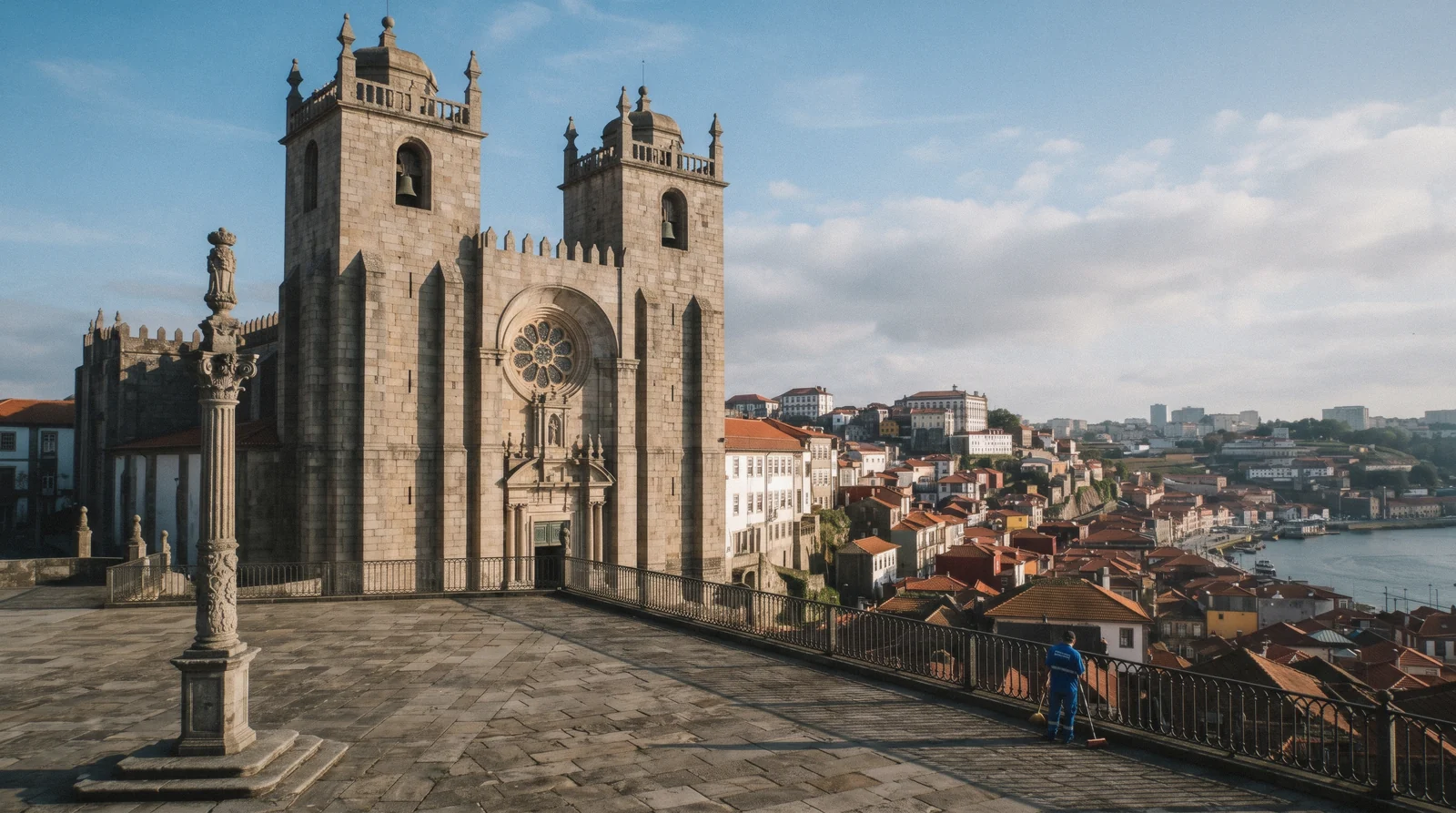
Porto Cathedral (Sé do Porto)
Porto Cathedral — the Sé do Porto — is the fortress-church on the ridge above the river where the city began, Romanesque in its bones, Gothic in its cloister and baroque in almost everything you can touch; the church is free, and the cloister, the Casa do Cabido museum and the tower are one $3.49 (€3) ticket at the door, with Mass at 11:00 every day. This page covers what each part holds, the hours by season and the two closures, the dress and photography questions, the terrace that gives the Sé's own view over the bridge, and how to walk up from the station; the ticket and the guided tours that include it are on the Porto Cathedral tickets page, the other churches on the Porto churches hub, and the first day that joins them on the Porto city guide homepage.
Quick answer Free church, one €3 ticket, hours by season, Mass at 11:00, and what we would pay for
Porto Cathedral is open every day, 09:00 to 18:30 from April to October and 09:00 to 17:30 from November to March, closing for Christmas and Easter; the church is free and a single $3.49 (€3) ticket at the desk covers the Gothic cloister, the Casa do Cabido museum and the tower, which shuts 30 minutes before the cathedral. Mass is at 11:00 daily. Read on diocese-porto.pt and culturaportugal.gov.pt in Q3 2026.
Key takeaways
- Pay the $3.49: the tiled cloister, Nasoni's staircase and the terrace over the bridge are the Sé, and the free nave on its own is twenty bare minutes — the Porto Cathedral tickets page has the two official sources side by side
- With a guide, the one-hour cathedral tour with tickets at $18.60 (€16) is the cheapest guided entry in the city; the three-hour Beautiful Story of Porto walk adds the Clérigos church and São Bento da Vitória
- Come before 10:30 or after 12:00; the 11:00 Mass takes the nave for about an hour and the Clérigos crowd arrives at noon
- No online ticket exists, so nothing sells out; the reseller sites in the results are charging a fee on a $3.49 door
Key facts
Opening hours
| Daily, April–October | 09:00–18:30 |
|---|---|
| Daily, November–March | 09:00–17:30 |
| Tower, April–October | 09:00–18:00 |
| Tower, November–March | 09:00–17:00 |
Closed Closes for Christmas and Easter; the diocese prints no exact dates. The nave is closed to visitors during the 11:00 Mass
Admission
- Adult
- Church free; $3.49 (€3) general ticket for the cloister, Casa do Cabido museum and tower
- Reduced
- Not stated on either official page
- Free
- The church itself; no free categories printed for the ticketed areas
Planning it
- Time needed
- Not stated by the diocese; our routing: 20 minutes for the church, 45 minutes more for the cloister, museum and terrace
- Book ahead
- Optional — walk-up usually fine
- Address
- Terreiro da Sé, 4050-573 Porto
The three ways into the ticketed parts of the Sé, priced from culturaportugal.gov.pt and GetYourGuide in Q3 2026 and converted at €1 = $1.1622. The cathedral sells one general ticket at the door and nothing online; the two guided tours include it with a guide. The church itself is free and is not in the table because it needs nothing.
Are you paying for entry, or for someone to explain it? Entry is $3.49 at the desk and never sells out; the tours are for the guide, not the door.
| Option | Price | Includes | Cancel | Book |
|---|---|---|---|---|
| General ticket at the cathedral desk (no online sale)Everyone; there is no queue to skip and no cheaper way in | $3.49 (€3); church free | Cloister, Casa do Cabido museum and treasury, Nasoni staircase, terrace, tower | Not applicable — paid on the day | Official site |
| Porto Cathedral guided tour with entrance tickets, 1 hThe cloister and the Cabido explained in an hour; stairs, so not for wheelchair users | $18.60 (€16) | Certified guide in six languages, church, cloisters and Casa do Cabido with tickets, express security check; 4.7 from 338 reviews | Free up to 24 hours before | Check Availability |
| The Beautiful Story of Porto guided tour with entry tickets, 3 hA first morning that does three interiors with one guide; the Clérigos climb is not included | $39.50 (€34) | Guide in six languages, the cathedral complex, Clérigos Church and São Bento da Vitória with all tickets, a tasting; 4.8 from 168 reviews | Free up to 24 hours before | Check Availability |
Blogs print €3 to €5 for a 'cloister ticket'; only the €3 general ticket is official, and no per-area split is printed. Third-party ticket sites that sell 'Porto Cathedral entry' online are reselling the door price with a fee.
Porto Cathedral with a guide: the two tours that include the ticket
Both cards link to the operator's own page, where the calendar shows the start times still open. Prices in euro as listed in Q3 2026; the door ticket is sold only at the cathedral.
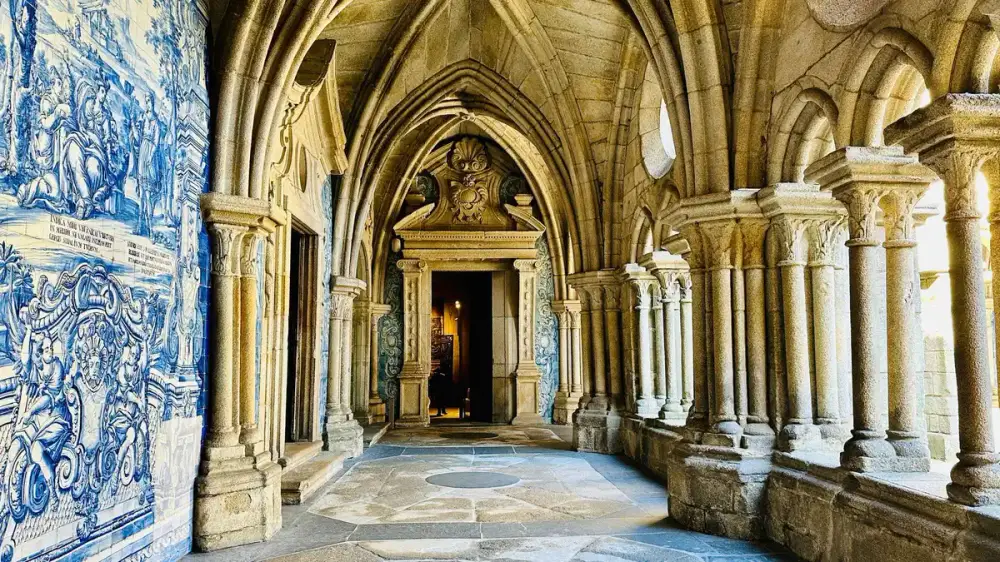 from €16
Porto Cathedral Guided Tour with Entrance Tickets
listed at $18.77
One hour inside the Sé with a certified guide, cloisters and Cabido House included, and a Bishop's Palace add-on every day except Sunday. The cheapest way to have the cathedral explained rather than just walked through.
Check Availability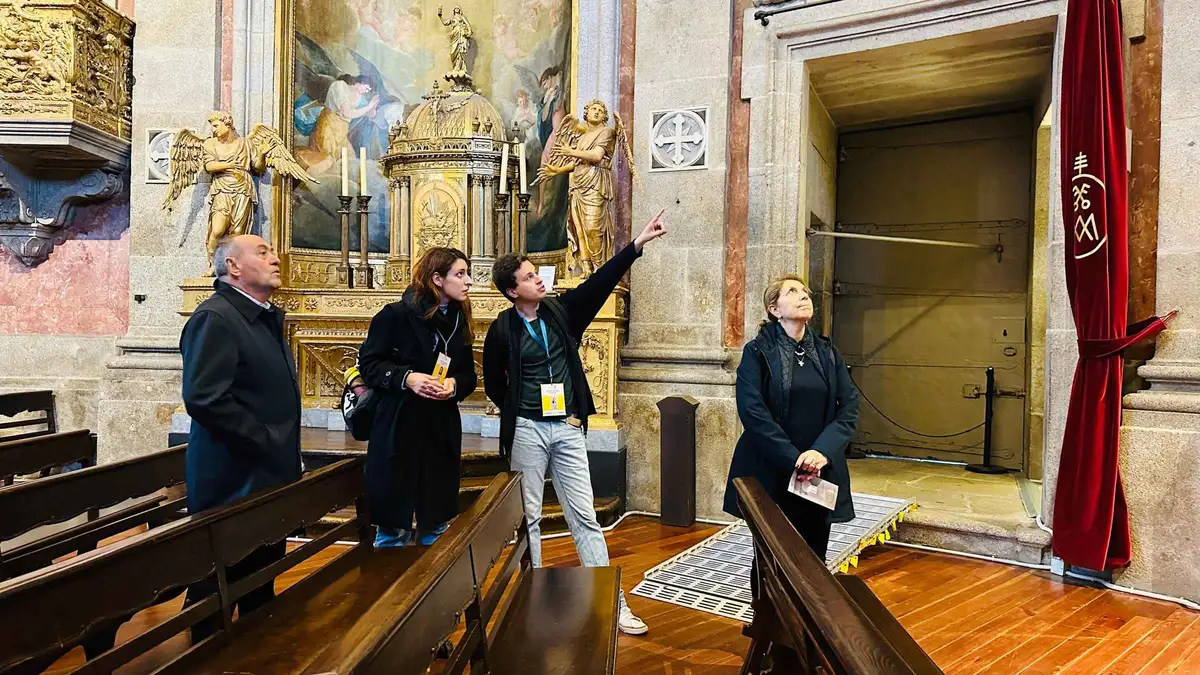 from €34
The Beautiful Story of Porto: Guided Tour with Entry Tickets
listed at $39.95
Three hours with a licensed guide inside the Cathedral, Clérigos Church and the São Bento da Vitória monastery, with a tasting of local delicacies. Best for a first morning when you want the entry tickets handled.
Check AvailabilityPrices, ratings and details are the platform's own, checked in Q3 2026; dollar figures are the listed prices — the platform bills in your account's currency.
Porto Cathedral history: a fortress-church rebuilt in every century
The Sé is the oldest building in continuous use in the city, and almost nothing you see is the age of the walls. Here is the sequence, so the interior makes sense.
1108–1387: the Romanesque church and the Gothic cloister
A chapel founded by Henry of Burgundy and his wife in 1108 stood on this ridge, and a pre-Romanesque church is recorded here in 1147, the year the crusaders bound for Lisbon stopped in the city. The present building was begun in the second half of the twelfth century and worked on until the sixteenth: a narrow nave under a barrel vault, two aisles, two square towers with buttresses, a rose window under a crenellated arch, and flying buttresses over the central aisle — among the first in Portugal. The battlements are not decoration; the cathedral was the strong point of the walled hilltop, and it still reads as a fortress from the square.
Around 1333 the Gothic chapel of João Gordo, a Knight Hospitaller in the service of King Dinis, was added, with his tomb carved with his recumbent figure and the Apostles. The cloister, also Gothic, was begun at the end of the fourteenth century in the reign of João I — the king who married Philippa of Lancaster in this cathedral on 2 February 1387, an alliance with England that has never been formally revoked.
1610–1772: the baroque takes over
The medieval apse with its ambulatory came down in the seventeenth century and a Mannerist chancel of 1610 replaced it, later filled with the gilded altarpiece designed by Santos Pacheco and carved by Miguel Francisco da Silva between 1727 and 1729, one of the capital pieces of Portuguese baroque. The Chapel of the Blessed Sacrament received its silver altar, begun in 1632 and worked on into the nineteenth century, the great object of Portuguese goldsmithing. Nicolau Nasoni, arriving in Porto in 1725 to paint the chancel walls, built the loggia on the north side facing the city in 1736 and the noble staircase up to the cloister's upper court the same year; the cloister's seven azulejo panels of the Song of Songs by Valentim de Almeida went up between 1729 and 1731, and the Casa do Cabido's chapter house got its painted ceiling by Giovanni Battista Pachini in 1737.
In 1772 a new main portal replaced the Romanesque one and the tower cupolas were altered — the façade you see is a baroque re-facing of a Romanesque wall.
1801 to now: a battle, a restoration and a patroness
During the War of the Oranges in 1801 a party of Spanish soldiers briefly held the cathedral before the townspeople retook it; a marble plaque behind the altar records the dead. The whole monument went through a major restoration in the 1930s, when the state stripped some baroque additions in search of the Romanesque underneath. In 1984 the fourteenth-century image of Nossa Senhora da Vandoma, the city's patroness, was enthroned in the left transept, and in 1985 a large Georg Jann organ was installed in the upper choir.
The historic centre, with the Sé at its top, was inscribed by UNESCO in 1996. The ticketed areas — cloister, museum, tower — are run for the cathedral's chapter with the regional culture directorate, which is why the price appears on a government page and not on the diocese's.
Porto Cathedral In Ten Dates
Nine hundred years in ten lines, from the first chapel to the patroness.
-
1108
Henry of Burgundy founds a chapel on the ridge
The count and his wife Teresa endow a hermitage where the cathedral will stand; a pre-Romanesque church is recorded here in 1147.
-
Second half of the 12th century
The Romanesque cathedral is begun
A narrow barrel-vaulted nave, two towers with buttresses, a rose window under battlements, and flying buttresses that are among the first in Portugal.
-
c. 1333
The chapel of João Gordo
A Gothic funerary chapel for a Knight Hospitaller in King Dinis's service, his tomb carved with his effigy and the Apostles.
-
2 February 1387
João I marries Philippa of Lancaster here
The wedding that sealed the Anglo-Portuguese alliance; the Gothic cloister is begun in his reign, at the end of the century.
-
1610
The medieval apse gives way to a Mannerist chancel
The ambulatory is demolished; the new chancel later takes the gilded altarpiece of 1727–1729 by Santos Pacheco and Miguel Francisco da Silva.
-
1632
The silver altar is begun
In the Chapel of the Blessed Sacrament, worked on in phases into the nineteenth century; the capital piece of Portuguese goldsmithing.
-
1729–1737
Nasoni's decade
Valentim de Almeida's Song of Songs azulejos in the cloister (1729–1731), Nasoni's loggia and noble staircase (1736), Pachini's chapter-house ceiling (1737).
-
1772
A baroque portal replaces the Romanesque one
The main door and the tower cupolas are altered; the façade becomes the baroque re-facing seen today.
-
1801
Spanish soldiers hold the cathedral for hours
During the War of the Oranges; the townspeople retake it and a marble plaque behind the altar names the dead.
-
1984–1996
The patroness enthroned, the organ, the UNESCO listing
Nossa Senhora da Vandoma placed in the left transept (1984), the Georg Jann organ in the upper choir (1985), the historic centre inscribed (1996).
Sources: the Diocese of Porto's cathedral page (diocese-porto.pt) and the Direção Regional de Cultura do Norte's page on culturaportugal.gov.pt, both read in Q3 2026; the Wikipedia page for Porto Cathedral and its sources; the UNESCO listing for the Historic Centre of Oporto.
Porto Cathedral inside: the free nave, the paid cloister, the terrace
The visit divides at the desk inside the church. Here is what is on each side of it, in the order you meet it.
The church, free
Through the baroque portal the nave is narrow, tall and almost bare, the thick clustered piers and the slightly pointed barrel vault giving what the diocese calls a sober grandeur. By the doors stand the three red-marble holy-water fonts of the late seventeenth century, each carried by a figure, and by the seventeenth-century font a bronze relief of the Baptism of Christ by António Teixeira Lopes. The chancel at the far end is the baroque showpiece: the gilded altarpiece of 1727–1729 under Nasoni's wall paintings, with the chapter's stalls and two organs, seventeenth-century on the left and nineteenth on the right.
In the left transept is Nossa Senhora da Vandoma, the fourteenth-century patroness; in the right, Nossa Senhora da Silva. The Chapel of the Blessed Sacrament holds the silver altar, begun in 1632 — look for the Eucharistic scenes worked across it and the modern lamp by Teixeira Lopes. Twenty minutes covers the church; the 11:00 Mass closes it to sightseeing for about an hour.
The cloister and the Casa do Cabido, $3.49
The desk is inside the church, by the door to the south transept, and the $3.49 (€3) ticket takes you into the Gothic cloister: a square court with pointed arcades and, on the walls, seven large azulejo panels of the Song of Songs by Valentim de Almeida, 1729–1731, the blue-and-white dialogue between God and the Virgin that the cathedral is dedicated to. Off it, the chapel of São João Evangelista holds João Gordo's tomb with its effigy and a Last Supper; the old cloister beyond, once the bishops' cemetery, keeps capitals from the first cathedral and some archaeology. The Casa do Cabido, the chapter house of the early eighteenth century, is the museum: religious sculpture from the fourteenth to eighteenth centuries upstairs, Vital Rifarto's tiles in the old archive, Pachini's fourteen moral allegories around St Michael on the chapter-room ceiling, and in the vaulted middle floor the treasury in nine cases — goldsmiths' work, vestments and liturgical books.
The Chapel of São Vicente, late sixteenth century, has a seventeenth-century choir with Old and New Testament scenes and the tombs of several bishops.
Nasoni's staircase and the terrace
From the cloister Nasoni's noble staircase of 1736 climbs to the upper court. On the landings are the bronze lectern of 1616 bearing the arms of Bishop Gonçalo de Morais and the old city clock bell of 1697; on the upper court, tile panels of country and mythological scenes and the view — south over the Sé district's roofs to the Luís I bridge, the Gaia lodges and the Serra do Pilar — which is the Sé's own answer to the Clérigos climb, with no spiral. The tower on the same ticket shuts 30 minutes before the cathedral; the culture directorate's page prints that cut-off and nothing about what the tower visit involves, so we print nothing either.
The lantern tower over the crossing, sixteenth century, is not climbed.
Nasoni's loggia and the Terreiro da Sé: the outside is half the visit
Walk round the north side, facing the city, before or after going in. The loggia Nasoni built there in 1736 — an open baroque gallery hung on the Romanesque flank — is the same hand as the Clérigos Tower and the Sé's staircase, and the tourist office's Sé branch sits in the medieval tower at the corner of the square, on Calçada Dom Pedro Pitões, where the Porto.CARD question can be put to someone official. The Terreiro da Sé itself, the paved square in front of the west door, has the Pelourinho column at its centre — the city's pillory, where sentences were carried out — and, from its parapet, the view down over the Barredo roofs to the river that most photographs of 'Porto from above' are taken from.
It costs nothing, it is open all night, and on a Sunday morning it is where the congregation gathers before 11:00. The Episcopal Palace, the huge eighteenth-century block on the south side of the square, is a separate building with its own hours and is not on the cathedral ticket.
How Much Time To Give Porto Cathedral
The diocese publishes no visit length. Three routings against the summer hours, 09:00 to 18:30 with the tower closing at 18:00.
The Sé is on the ridge between the station and the river, so the routings below assume you are walking through it on the way down to the Ribeira, which is how the one-day plan uses it.
| Routing | Inside | Door to door from São Bento | What you skip |
|---|---|---|---|
| The free church and the square | 20 minutes, free | About 35 minutes, on foot | The cloister, the tiles, the treasury and the terrace — most of what makes the Sé worth the climb up |
| Church, cloister, museum, terrace | 60–75 minutes, $3.49 (€3) | About 1 h 30, on foot | Nothing; this is the page's own routing, before 10:30 or after 12:00 |
| With the one-hour guided tour | 60 minutes with the guide, $18.60 (€16) tour, tickets included | About 1 h 30 | The terrace at your own pace; stay on after the tour ends, the ticket still admits you |
The three-hour walk is a fourth routing that does the Sé, the Clérigos church and São Bento da Vitória with one guide and a tasting; it is the morning for someone who wants the three interiors explained and the afternoon free for the river.
Porto Cathedral hours, Mass times and the two closures
Figures from the Diocese of Porto's page and the culture directorate's page, read in Q3 2026. The two agree on the hours and differ on how precisely they print them; the table shows both.
The cathedral, museum and cloister are open every day of the week, including Mondays, which makes the Sé one of the few paid interiors in the city that the Monday closures do not touch. The diocese prints summer 09:00–18:30 and winter 09:00–17:30 without saying where the seasons divide; the culture directorate prints the split as April to October and November to March, with the tower closing half an hour earlier in each — 18:00 and 17:00. Mass is at 11:00 daily, Sunday included, and the nave is not for sightseeing while it is said; the cloister desk keeps working.
Confessions are listed with the Mass on the diocese page without times. The cathedral 'closes for Christmas and Easter', in the diocese's words, with no dates given — take it as 25 December and Easter Sunday at least, and the days beside them as uncertain. School visits are by appointment through the education service on weekdays; that is the one booking the cathedral takes.
| Item | What the sources print | Source |
|---|---|---|
| Hours, April–October | 09:00–18:30; tower to 18:00 | culturaportugal.gov.pt (DRCN) |
| Hours, November–March | 09:00–17:30; tower to 17:00 | culturaportugal.gov.pt (DRCN) |
| Hours, as the diocese prints them | Summer 09:00–18:30, winter 09:00–17:30, no boundary months | diocese-porto.pt |
| Mass | 11:00 daily and Sunday; confessions listed, no times | diocese-porto.pt |
| Closed | 'Closes for Christmas and Easter'; exact dates not stated | diocese-porto.pt |
| Quiet hours | Before 10:30; 12:00–14:00 | Our routing, not an official figure |
Dress code, photography and the Mass: what the cathedral asks
Neither official page prints a dress code, a photography rule or a bag rule, so we state none as a rule. What applies is what applies in any working Portuguese cathedral: it is a church with a daily Mass, shoulders and knees covered is the courtesy, hats off inside, and nobody is turned away at the door for shorts in August in practice. Photography without flash is tolerated everywhere we have seen it, including the cloister, and the terrace is where everyone takes the bridge shot.
During the 11:00 Mass sightseeing in the nave stops and the doors nearest the altar are for the congregation; the cloister desk keeps selling tickets, so a visitor who arrives at 11:05 does the paid parts first and the church after noon. On a Sunday the Mass is larger and the church takes longer to clear. The Porto churches hub covers the etiquette that the gilded churches downhill share, and the safety page the pickpocket warning that applies to any crowded nave.
Porto Cathedral directions: from São Bento, the Ribeira and the airport
The Sé stands on the ridge two hundred metres east of São Bento station, above the Ribeira. Fares are the Andante and STCP 2026 tariffs, read on the Portuguese pages in Q3 2026; the Guindais funicular that used to climb the ridge from the river is closed for maintenance with no reopening date.
On foot from São Bento: out of the station, right along Avenida Dom Afonso Henriques and up the steps to the Terreiro da Sé, five minutes uphill; the square is signed. Metro: São Bento on Line D is the stop; a Zone 2 single is $1.63 (€1.40) on an Andante card at $0.70 (€0.60), the 24-hour Zone 2 title $6.22 (€5.35), the Andante Tour 1 day pass $9.01 (€7.75). Heritage tram 22: its Batalha terminus is four minutes east of the square; $6.97 (€6) a ride, not on Andante. From the Ribeira: the direct way is the stepped lanes of the Barredo, ten steep minutes; the Guindais funicular from Ribeira up to Batalha, $4.65 (€4) when it runs, is shut, and the getting around page will say when that changes. From the airport: Line E to Trindade, Line D to São Bento, about half an hour, on a Zone 4 single at $2.67 (€2.30); the airport page has the timetable. Taxis and ride-hails can reach the Terreiro da Sé from the Batalha side.
| From | Ride | Fare (2026 tariff) | Walk at the end |
|---|---|---|---|
| São Bento station | On foot via Avenida Dom Afonso Henriques | Free | 5 minutes uphill |
| Anywhere on the metro | Line D to São Bento | $1.63 (€1.40) Zone 2 single; $6.22 (€5.35) 24 hours | 5 minutes |
| Carmo (Clérigos) | Tram 22 to Batalha | $6.97 (€6) single; not on Andante | 4 minutes |
| Ribeira | On foot through the Barredo lanes | Free; the Guindais funicular ($4.65 / €4) is closed | 10 minutes, steep |
| Airport | Line E to Trindade, Line D to São Bento | $2.67 (€2.30) Zone 4 single | 5 minutes |
Dos And Don'ts At Porto Cathedral
The short version of everything above, for the morning you go.
Do
- Pay the $3.49 (€3) at the desk; the cloister tiles, Nasoni's staircase and the terrace are the visit
- Arrive before 10:30 or after 12:00, around the 11:00 Mass
- Walk the north side for Nasoni's loggia and the square's parapet before you go in; both are free
- Book the one-hour guided tour if you want the Cabido explained; it is the cheapest guided interior in Porto
- Come on a Monday if that is your day: the Sé is open when the museums are not
Don't
- Don't buy a 'Porto Cathedral ticket' online from a reseller; there is no online sale and no queue, only a $3.49 door
- Don't plan on the tower after 18:00 in summer or 17:00 in winter; it shuts half an hour before the cathedral
- Don't come at Christmas or Easter without checking; the diocese says it closes and prints no dates
- Don't count on the Guindais funicular from the river; it is closed for maintenance with no date
- Don't take the three-hour walk as a Clérigos climb; it enters that church, not its tower
Porto Cathedral map: the square, the station and the next sights
The west door on the Terreiro da Sé, the station that serves it, and the five sights within twelve minutes on foot, most of them downhill.
Five Things Most Visitors Do Not Know About Porto Cathedral
Facts that change how the building reads, each with where it comes from.
- The oldest alliance in the world was sealed here. João I married Philippa of Lancaster in this cathedral in 1387, the marriage behind the Anglo-Portuguese treaty that has never been revoked. (Wikipedia, Porto Cathedral; the diocese's history) - The plaque behind the altar is magnetic on purpose. It records the dead of 1801, when Spanish soldiers briefly held the cathedral, and its magnetite backing was chosen to swing the compasses of anyone passing — a reminder built into the stone. (Wikipedia, Porto Cathedral) - The façade is a baroque skin on a Romanesque wall. The main portal you enter by dates from 1772, when it replaced the original; the rose window and the battlements above it are the twelfth-century church showing through.
(culturaportugal.gov.pt, DRCN; Wikipedia) - The city's old clock bell sits on Nasoni's staircase. On a landing of the 1736 stair to the cloister's upper court stands the bell of 1697 that once kept time for the city, beside a bronze lectern of 1616 with a bishop's arms. (diocese-porto.pt, read in Q3 2026) - The price is on a government page, not the church's. The diocese prints hours and the 11:00 Mass and no ticket; the €3 general fare appears only on the culture directorate's page, because the cloister, museum and tower are run with the state. (diocese-porto.pt and culturaportugal.gov.pt, read in Q3 2026)
Eating Near Porto Cathedral
The cathedral sells nothing and the square has no café of its own. The food is below the ridge.
The stepped lanes down from the Terreiro da Sé to the river pass small tascas that publish no menus; the price is on the board outside. At the bottom, the Ribeira waterfront is the tourist strip, with terraces on the quay and the sense to look for the restaurants one street back. Uphill, the Bolhão market is a twelve-minute walk with its upstairs restaurants open Monday to Saturday 08:00 to midnight and shut on Sunday.
The where to eat page lists the Michelin 2026 addresses and the certified gluten-free bakeries; none of the starred rooms is on this ridge. Carry water: the Barredo lanes are steep and shadeless at noon.
Next stop from Porto Cathedral
Walk minutes are our estimates from the GPS distances; the Sé is on a ridge, so the downhill figures are the honest ones.
Luís I Bridge
The 1886 iron arch with a pedestrian upper deck, free and open through the Metro's maintenance windows, closed on São João night. The Luís I bridge page has the deck to take and the Gaia side beyond.
8 min walkPalácio da Bolsa
The stock-exchange palace with the Arab Room: $16.27 (€14) on a mandatory 30-minute guided tour, language by arrival order, no self-guided visit. The Palácio da Bolsa page explains the tour rule.
8 min walk downhillSão Bento Station
The tiled station hall two hundred metres below the square, free, with the metro underneath. The São Bento page reads the panels — including the one of João I's wedding you have just stood in the church for.
5 min walk downhillPorto Cathedral questions
Is Porto Cathedral free?
The church is free. The cloister, the Casa do Cabido museum with the treasury, Nasoni's staircase, the terrace and the tower are one $3.49 (€3) general ticket bought at the desk inside, with no reduced fare printed and no online sale. The Porto Cathedral tickets page has the two official sources side by side.
Is Porto Cathedral worth visiting?
For $3.49, yes: the Gothic cloister with its Song of Songs azulejos, the treasury and the terrace over the bridge are the best three euros in the city. The free nave alone is twenty bare minutes and the reason some visitors leave unimpressed. The one-hour guided tour at $18.60 (€16) is the way to have the Cabido explained.
Is there a dress code for Porto Cathedral?
None is printed on the diocese's or the culture directorate's page. It is a working church with Mass at 11:00 daily, so covered shoulders and knees and hats off are the courtesy, and in practice nobody is turned away for summer clothes. Photography without flash is tolerated. The dress and Mass section has the detail.
How long does it take to see Porto Cathedral?
Twenty minutes for the free church; sixty to seventy-five with the cloister, museum and terrace on the $3.49 (€3) ticket; the diocese states no figure. The time table above sets three routings side by side, and the three-hour walk does the Sé with two other interiors.
What are the Porto Cathedral opening hours and Mass times?
Daily 09:00 to 18:30 from April to October and 09:00 to 17:30 from November to March, the tower closing 30 minutes earlier; Mass at 11:00 every day; closed for Christmas and Easter without printed dates. Read on diocese-porto.pt and culturaportugal.gov.pt in Q3 2026. It is open on Mondays, unlike the museums.
What is inside the Porto Cathedral cloister?
Seven large azulejo panels of the Song of Songs by Valentim de Almeida (1729–1731) around a Gothic arcade begun in the late fourteenth century, João Gordo's tomb in the chapel of São João Evangelista, the old cloister with capitals from the first cathedral, and Nasoni's 1736 staircase up to the terrace. The inside section walks through it room by room.
How do I get to Porto Cathedral from São Bento station?
On foot: right out of the station along Avenida Dom Afonso Henriques and up the steps to the Terreiro da Sé, five minutes uphill. The station is on Metro Line D, a $1.63 (€1.40) Zone 2 single. The Guindais funicular from the river is closed for maintenance; the getting around page has the card and the fares.
Where Porto Cathedral fits in a day
It is the hinge of the first morning: on the ridge between the station and the river, open every day from 09:00, with a Mass at 11:00 that sets the timing. Climb the Clérigos Tower at opening, do Livraria Lello on a 09:45 voucher, walk down Rua dos Clérigos to São Bento for the tiles, and be at the Sé by 10:30 — church first, then the cloister and terrace while the Mass is said, out by noon. From the terrace the way down is obvious: the Barredo lanes to the Ribeira, the Luís I bridge to Gaia and a lodge visit after lunch. That is the one-day plan, and the three-day itinerary keeps the same morning and gives the Bolsa and São Francisco their own afternoon.
With a guide, the one-hour cathedral tour at 10:00 fits the same morning exactly, and the three-hour walk replaces it with the Sé, the Clérigos church and São Bento da Vitória in one go; the Porto tours hub has both against the $3.49 door they include.
Porto Cathedral on Video
Three films of the Sé inside and out: a guided walk, a room-by-room tour and the cloister. Hours and prices on camera are from their filming dates; the figures on this page were read in Q3 2026.
Guided Tour of the Stunning Porto Cathedral | Portugal
A guided walk through the church and cloister, the route the one-hour tour above follows.
Video: POV ToursPorto Cathedral. Tour guide.
The nave, the silver altar and the cloister explained, the order the inside section takes.
Video: Trailblazing AdventuresPorto Cathedral Portugal | Full Walking Tour Inside Sé do Porto
A full walk inside at an ordinary hour, tiles, staircase and terrace included.
Video: Walking the TourVideos load from YouTube only when you press play.
Reviewed Q3 2026 (July–September 2026); next review Q4 2026. Prices, hours and terms are set by the venue or operator and confirmed at checkout.
We may earn a commission if you book through one of our links, at no extra cost to you. Full affiliate disclosure