 Visit Porto City Guide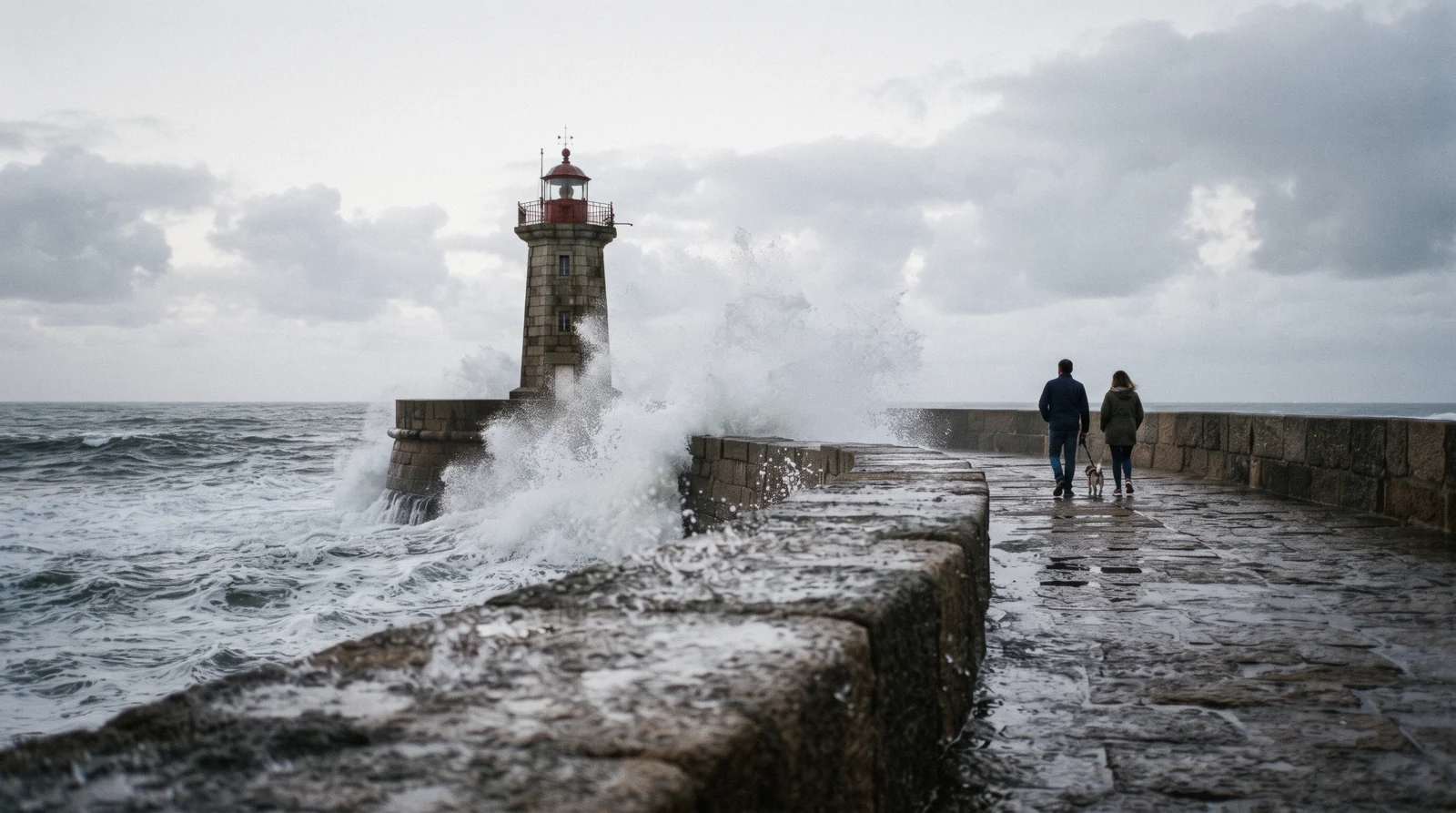
Foz do Douro, Porto
Foz do Douro is where the river stops being a river: the last 5 kilometres of Porto before the Atlantic, with the lighthouse of 1886 on the breakwater, four beaches that flew a Blue Flag in 2026, a colonnaded seafront promenade and two forts that never fired a useful shot. It is the address wealthy Porto moved to when the centre got crowded, and it is the one part of the city that visitors reliably skip and then wish they had not. This page gives what is ticketed in Foz do Douro with the prices we read on the venues' own sites in Q3 2026, the tram fare that catches everyone out, the flagged beaches with the season dates, the walk along the water, and what a room out here costs against one in town. It is one of the six quarters mapped in this independent Porto guide.
Quick answer What it is, what costs money, how to get there, how long, in four lines
Foz do Douro is the river mouth, about five kilometres west of the old town, and almost everything in it is free: the Passeio Alegre gardens, the Pergola colonnade, the breakwater lighthouse, the two forts seen from outside and four beaches — Homem do Leme, Gondarem, Foz and Aquario — that held a Blue Flag in 2026. The only substantial ticket is the aquarium at the northern end at $22.10 (€19). Half a day covers it, and the interesting part of the journey is getting there.
Key takeaways
- Ride out and walk back: the heritage tram line 1 runs the riverside from Infante to the Passeio Alegre in about twenty-five minutes for $6.97 (€6) paid on board — no Andante ticket and no tourist pass covers the trams, which is the mistake most visitors make
- The promenade north from the lighthouse to the Castelo do Queijo is about two and a half kilometres of continuous seafront path, and the three-hour electric bike tour rides the whole bank from the old town if you would rather not do it twice
- The four flagged beaches are Atlantic, exposed and cold; the Porto beaches page has the flag list and the season, and the sheltered swimming is over the water at Matosinhos and the tidal pool at Leca
- Staying out here buys sea air and quiet and costs you twenty-five minutes each way to everything ticketed; where to stay sets it against Baixa, and Porto's $3.49 (€3) nightly tourist tax applies the same
Foz do Douro: what is ticketed, what is free, and when
Prices and hours read in Q3 2026 on the venues' own sites — visitsealife.com for the aquarium, ambiente.cm-porto.pt for the city gardens and the Parque da Cidade, stcp.pt for the tram, and the Blue Flag list published by ABAE for the beaches. Where a monument is military property or publishes nothing, the cell says so rather than repeating a guidebook. Dollar figures at the European Central Bank rate of €1 = $1.1622.
| Place | Adult price | Hours | Closed | Note |
|---|---|---|---|---|
| Sea Life Porto, at the Castelo do Queijo end | $22.10 (€19); annual pass $51.10 (€44) | 10:00–18:00, last entry 17:15 | Not stated | The one indoor ticket on this coast; the with kids page sets it against the tram museum |
| Jardim do Passeio Alegre | Free | Not stated — the city's page for this garden prints none | Not stated | About 41,000 m2 of palm alley, two Nasoni obelisks, an Art Nouveau public convenience of 1910, mini golf and a cafe |
| Farol de Felgueiras, the breakwater lighthouse | Free to look at; not open to visitors | n/a | n/a | The 1886 hexagonal tower on the mole; the sea comes over the wall in a westerly and people still walk out |
| Forte de Sao Joao Baptista | Not open — active military property | n/a | n/a | The seventeenth-century fort above the river mouth; you walk round it, not into it |
| Castelo do Queijo, Forte de Sao Francisco Xavier | Not stated — no official price page we could read | Not stated | Not stated | The granite fort on the rocks at the north end of the promenade, 2.5 km from the lighthouse |
| The four Blue Flag beaches | Free | Lifeguarded in the bathing season only | Out of season, unsupervised | Homem do Leme, Gondarem, Foz and Aquario held the 2026 flag; ABAE's Porto page still shows the 2025 season dates |
| Parque da Cidade, behind the north end | Free ("Acesso Livre") | 08:00–24:00 April to September; 08:00–22:00 October to March | None stated | 83 hectares running down to the sea — the largest urban park in the country, and empty on a weekday |
| Tram line 1, Infante to Passeio Alegre | $6.97 (€6) single; $9.30 (€8) two trips in a day; $13.95 (€12) two-day | Daily 8:40–20:43, roughly every 20 minutes | n/a | Child $4.07 (€3.50); Andante monthly passes with the right zoning are valid, occasional tickets and tourist passes are not |
The Blue Flag season for the Porto beaches in 2026 is not stated: the programme's Porto page still showed the 2025 dates of 14 June to 14 September when we read it, while neighbouring Matosinhos and Gaia both published 13 June to 13 September 2026.
Getting to Foz do Douro and along its coast
No tour is sold as a Foz tour, so these are the products that actually reach the river mouth: the electric bike ride down the whole bank, the open-top bus with a coastal loop, the tuk-tuk that runs the riverside road, and the boats that turn round at the bar. Prices in dollars as listed on the platform in Q3 2026, euro beside; ratings are the operator's own numbers.
 from €28
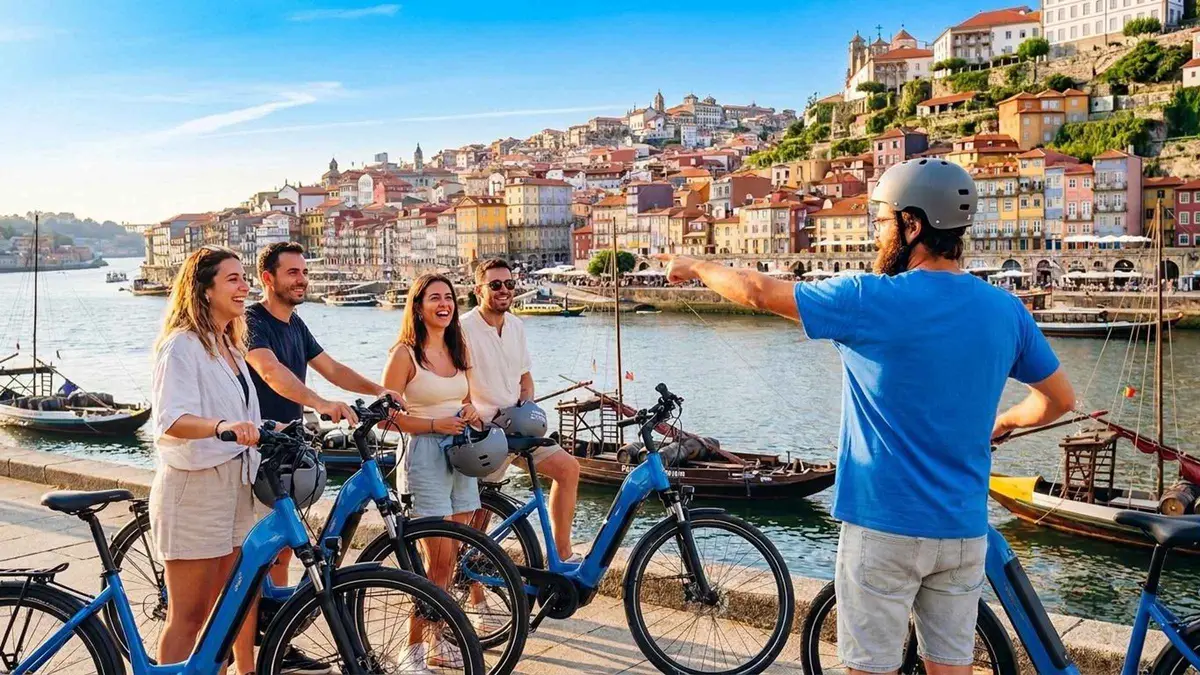
Porto: City Highlights 3-Hour Guided Electric Bike Tour
listed at $33.10
Three hours by e-bike across the historic centre and the riverfront with Bluedragon, in five languages. The weight limit is 118 kg and the operator can refuse riders who cannot handle a bike, without refund.
Check Availability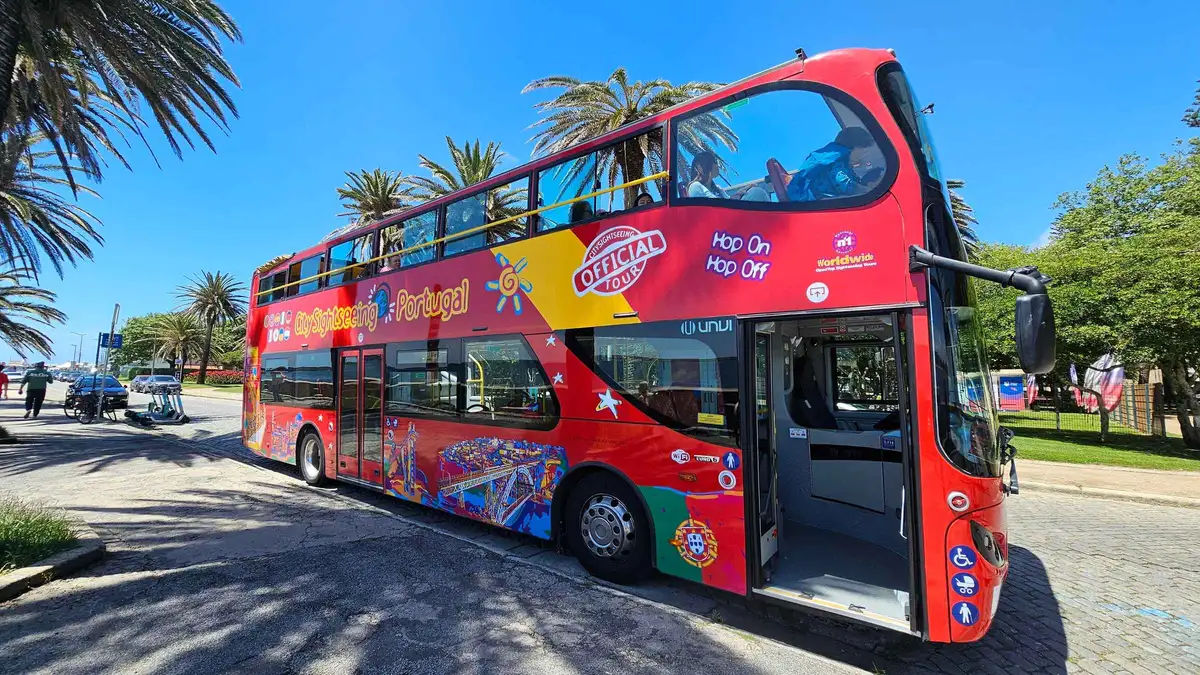 from €28
City Sightseeing Porto Hop-On Hop-Off Bus & Bookable Extras
listed at $32.52
The City Sightseeing bus on two lines with 16-language commentary, a port tasting and a Gaia walk thrown in; the 48-hour ticket adds a night tour and the cruise. Its 4.0 rating is the lowest on this page.
Check Availability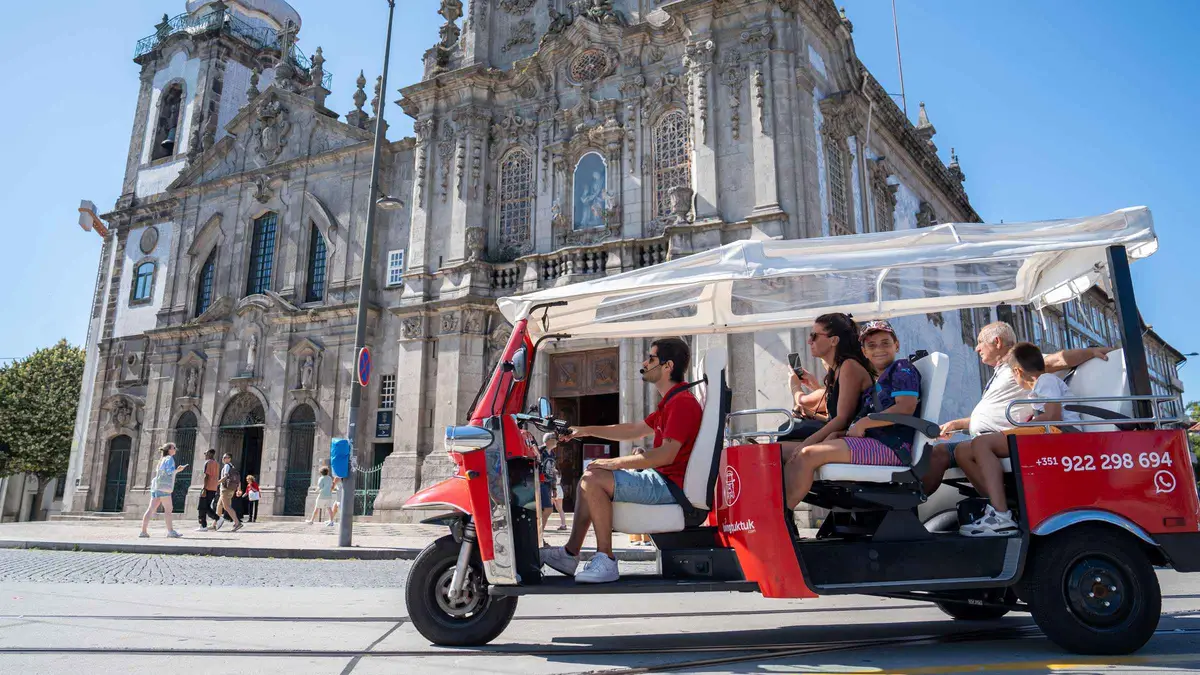 from €25
Porto: Guided Tour by Tuk-Tuk & Optional Douro River Cruise
listed at $29.03
A 50-minute electric tuk-tuk loop through the centre, with an open-dated Six Bridges cruise ticket on the combined option and a walking-tour voucher for the next day. Shared bookings may be split across several tuk-tuks.
Check Availability from €18
Porto: Six Bridges Cruise
listed at $20.90
The 50-minute Six Bridges loop on a traditional-style boat, the cheapest way onto the river and the most-booked. Audio comes by QR code on your own phone; the 4.2 rating reflects the crowds.
Check Availability from €29
Porto: 3-Hour Guided City Highlights Walking Tour
listed at $33.68
The three-hour Bluedragon walk through the historic centre, offered in five languages with a private option. The most-booked classic walking tour in Porto, and a public tour needs at least two people.
Check AvailabilityPrices, ratings and details are the platform's own, checked in Q3 2026; dollar figures are the listed prices — the platform bills in your account's currency.
What Foz do Douro is, and why the city moved out here
Foz means river mouth, and that is the whole geography: the Douro finishes here, between a granite outcrop on the Porto bank and the long sand of Gaia opposite, across a bar that wrecked ships for four centuries. The Forte de Sao Joao Baptista was put up above it in the 1560s to keep raiders out of the estuary, and the Felgueiras breakwater with its little hexagonal lighthouse was finally built in the 1880s to make the entrance survivable. Neither entirely worked, which is why the deepwater port was eventually dug at Leixoes instead, two kilometres north.
The transformation into an address happened in the nineteenth century, when sea bathing became fashionable and the Porto bourgeoisie built villas along the shore. The Passeio Alegre gardens were laid out on the old ballast ground, the palm alley planted, the Chalet Suico and the tiled public conveniences of 1910 installed, and a tramway run out along the river to bring people from the city. That tramway is still there — line 1, in restored wooden cars — and it is now the most pleasant way any visitor reaches any part of Porto.
What you get today is a quarter with the highest property prices in the city, a seafront that runs unbroken for two and a half kilometres, restaurants that are mostly good and mostly expensive, and almost no admission fees. It is where Porto goes on a Sunday. It is also, and this matters for planning, a place where the Atlantic sets the terms: the wind is constant, the water is cold in August, and a grey day at the river mouth is genuinely bleak in a way the same day in Ribeira is not — which is why the front page of this Porto guide puts the weather ahead of the sights.
Getting to Foz do Douro: the tram, the bus and the fare nobody expects
Tram fares and hours from the STCP 2026 tariff and the operator's tram page; bus and metro fares from the intermodal tariff in force since 1 January 2026, all read in Q3 2026. The English metro fares page still shows 2024 figures. Walking and cycling times are ours.
There is no metro to Foz do Douro. The line that looks close on the map runs to Matosinhos well to the north, and the nearest station to the river mouth is a long walk away. So the choices are a tram, a bus, a bicycle or a taxi, and the tram is the one that costs money in a way people do not anticipate.
Tram 1 is the reason to come. It leaves from Infante, on the riverside road below Sao Francisco at the western end of Ribeira, and runs along the water past Miragaia and Massarelos all the way to the Passeio Alegre, daily from 8:40 to 20:43, roughly every twenty minutes. It takes about twenty-five minutes in a restored wooden car with the windows down. It costs $6.97 (€6) a single, paid on board — and here is the trap: the Andante Tour passes, the 24-hour tickets and the single Zone 2 tickets do not cover the heritage trams. The operator's own tariff prints the exclusion in as many words. A same-day two-trip ticket is $9.30 (€8) and a two-day tram ticket is $13.95 (€12), so if you are riding out and back, buy the two-trip and save a euro; if you plan to use the tram museum as well, the single trip gets you 30% off the museum and the two-day ticket 50%.
Buses are the cheap way. STCP's coastal services run from the centre out along the river and up the coast on ordinary Andante fares — a Zone 2 single is $1.63 (€1.40) for an hour on a $0.70 (€0.60) card, or $2.91 (€2.50) if you buy on board, payable by card on every bus since 26 January 2026. The exact line numbers and timetables for the Foz services are not published in a form we could verify, so this page names none; ask at a tourist office or read the stop pole.
By bicycle the riverside path from the old town is flat, continuous and about six kilometres, which is why the electric bike tour uses it. On foot from Ribeira it is a little over an hour, and pleasant in one direction only.
| From | How | Fare | Time | Note |
|---|---|---|---|---|
| Ribeira, Infante stop | Tram line 1 along the river | $6.97 (€6) on board | About 25 minutes | 8:40 to 20:43; no Andante or tourist pass covers it |
| Ribeira, Infante stop | Tram line 1, two trips same day | $9.30 (€8) | 50 minutes both ways | The right ticket if you are coming back by tram |
| City centre | STCP bus on the coastal services | $1.63 (€1.40) Zone 2, or $2.91 (€2.50) on board | About 30 minutes | Line numbers not published in a source we could verify |
| Ribeira | Bicycle on the riverside path | Free, or a rental | About 30 minutes | Flat and continuous; the way the bike tour goes |
| Ribeira | On foot along the water | Free | A little over an hour | Fine going west, long coming back |
The walk: lighthouse to fort, two and a half kilometres of seafront
Get off the tram at the Passeio Alegre, the nineteenth-century garden at the terminus. It is about 41,000 square metres, laid out with an alley of Canary palms along the river side that carries a public-interest classification, a Norfolk pine, two obelisks by Nasoni brought from the Quinta da Prelada, the Chalet Suico, and a tiled public convenience from 1910 with English fittings that is a listed piece of Art Nouveau in its own right. There is a cafe and a mini golf. The city publishes no opening hours for the garden.
Walk south-west to the Felgueiras breakwater and its 1886 lighthouse. On a calm day you can walk most of the mole; on a westerly the sea comes clean over the wall and people photograph it from a safe distance and then move closer, which is how the local news gets its winter pictures. Do not be one of them.
Turn north and the seafront begins: the Pergola da Foz, a colonnade built in the 1930s in imitation of the promenade at Nice, then a continuous paved and boardwalk path running past Praia dos Ingleses, Praia do Molhe, Homem do Leme and Gondarem to the Castelo do Queijo, the granite fort sitting directly on the rocks at the north end. That is about two and a half kilometres and takes forty minutes at a stroll. The fort's own hours and any admission fee are not published on a page we could read.
Behind the fort is Sea Life Porto, open 10:00 to 18:00 with last entry at 17:15, at $22.10 (€19) an adult — the only indoor ticket out here and the answer to a wet afternoon with children. And behind that, the Parque da Cidade: 83 hectares of grassland, lakes and pine running from the city down to the sea, free, open 08:00 to midnight from April to September and to 22:00 in winter. It is the largest urban park in Portugal and on a weekday you will share it with joggers and nobody else.
From the Castelo do Queijo, a bus or a walk of about twenty-five minutes further north brings you to Matosinhos and the fish restaurants, which is how a half day in Foz becomes a full one.
The beaches at Foz do Douro, and what the flag actually means
Beach names from the 2026 Blue Flag list published by ABAE, the programme's national operator, read in Q3 2026. Sea temperature is not published in any source we could verify, so this page prints none.
Four Porto beaches held a Blue Flag in 2026: Homem do Leme, Gondarem, Foz and Aquario. All four are on this stretch of coast, all four are city beaches with a road behind them, and all four are Atlantic in the full sense — open swell, rip currents when it is running, and water that does not warm up the way the Mediterranean does.
The flag is worth understanding before you plan around it. It certifies water quality, information, safety equipment and lifeguard provision during the declared bathing season — it is not a statement that a beach is sheltered, sandy at all tides or good for children. Neighbouring Matosinhos declared a 2026 season of 13 June to 13 September, and Gaia the same, but the programme's page for Porto itself still showed the 2025 dates of 14 June to 14 September when we read it, so the city's own 2026 season is, strictly, not stated. Outside the season there are no lifeguards on any of them.
Which one to walk to depends on what you want. Praia dos Ingleses and Praia do Molhe, nearest the lighthouse, are small, rocky at the edges and the most sheltered from the north wind. Homem do Leme is the widest and the one with the most reliable sand. Gondarem sits between them with the promenade at its back. For actual swimming with children, the honest answer is not Foz at all: it is the tidal pool at Leca da Palmeira or the long flat sand at Matosinhos, both covered on the beaches page with the surf school at $34.84 for a lesson.
Eating in Foz do Douro, honestly
Foz eats well and charges for it. The Rua do Passeio Alegre, the Esplanada do Castelo and the streets behind the Pergola carry the highest concentration of serious restaurants in the city outside the centre, and the sea view is priced into every one of them.
We name a restaurant only when a citable list does. The Michelin Guide's Portugal 2026 selection gives Porto eleven one-star tables, and two of the ones we could confirm on the guide's own pages are out here on this coast: Pedro Lemos, in Foz do Douro, and Vila Foz, on the seafront — both one star. That is the whole of what we can print with a source; the guide's index pages refuse our fetches, so three of the eleven names are ones we could not capture, and anything else on this coast is a recommendation without provenance. The Portuguese coeliac association's certified list for the north names no address in Foz do Douro.
Two practical rules. The bread, olives and butter that arrive unasked are the couvert and are charged from the moment you touch them — at Foz prices that matters more than it does in a tasca. And Sunday lunch out here is the busiest meal of the week in the whole city: the promenade fills, the terraces fill, and a table on the water without a booking after 13:00 is unlikely. The where to eat page has the city-wide list, the certified gluten-free addresses and the francesinha warning.
Is Foz do Douro worth visiting, and when it is not
Yes, on two conditions, and it is worth being blunt about them because Foz is the part of Porto most often visited on the wrong day.
Go when the weather is on your side. This coast is exposed to the open Atlantic and the whole point of it is being outdoors: the promenade, the breakwater, the gardens, the park. The airport's 1991 to 2020 climate normals give Porto 1,147 mm of rain a year across 105 days, with November the wettest month at 166 mm and July the driest at 17 mm — so from November to March the odds of a walk along an exposed seafront being unpleasant are real. On a wet day the whole quarter reduces to one aquarium, and the rainy day page has better answers in town.
Go with time, not on a schedule. Nothing here is ticketed except the aquarium, so there is no slot to catch and no queue to skip; the value is entirely in walking three or four kilometres slowly. Half a day is the right size. Squeezing Foz into a morning between two museums produces a tram ride, a photograph of a lighthouse and nothing else.
And if you are in Porto for a single day, skip it. The one-day itinerary has no room for a fifty-minute round trip to a place whose attraction is that nothing happens there. Foz belongs to a second or third day — ideally the one that continues north to Matosinhos for lunch, which turns the whole coast into a single unhurried outing.
Foz do Douro map: the promenade, the beaches and the tram terminus
The tram terminus, the lighthouse, the two forts, the flagged beaches and the aquarium, in the order the seafront walk reaches them. The quarter's coordinates come from Wikidata; the rest are placed from the addresses each venue publishes.
Beach positions are approximate to the promenade frontage; the Blue Flag names are from the ABAE 2026 list.
Next stop from Foz do Douro
Times are our estimates from the Pergola.
Matosinhos
The fishing port, the grilled-fish street and the tidal pool by Siza. Matosinhos is where a Foz walk should end at lunchtime.
About 30 min walk north, or a short busWhat a room in Foz do Douro costs, and whether to sleep by the sea
Three bases on and behind this coast, with the trade-offs that decide them. We do not print a nightly rate band we have not measured; the where to stay page carries the dated bands for every district and the links below open the live search for your dates. Porto adds $3.49 (€3) per person per night in tourist tax for up to seven nights, with children of twelve and under exempt.
The Foz seafront, along the Pergola
- Walking distance
- On the promenade; tram 1 terminus about 10 minutes south
- Typical double
- See live rates for your dates
- Suits
- Waking up to the Atlantic, running the seafront, dinner without a taxi
Twenty-five minutes each way to everything ticketed in the old town, and the wind off the sea is constant rather than occasional.
See stays in The Foz seafront, along the PergolaPasseio Alegre and the river mouth
- Walking distance
- At the tram terminus; the lighthouse 5 minutes, the promenade 10
- Typical double
- See live rates for your dates
- Suits
- The tram at the door, the gardens across the road, river on one side and sea on the other
The most sheltered corner of Foz and the busiest on a Sunday; the tram passes until 20:43.
See stays in Passeio Alegre and the river mouthBehind the coast, towards Serralves and the park
- Walking distance
- 10 to 20 minutes to the sea; buses into the centre
- Typical double
- See live rates for your dates
- Suits
- Quiet residential streets, the museum and the city park within a walk, room to park a car
You are inland enough to lose the sea view and the sea air, and you still have the same journey into town.
See stays in Behind the coast, towards Serralves and the parkRates are set by the property and confirmed at checkout. We take a commission if you book through these links, at no extra cost to you.
Foz do Douro: questions
Is Foz do Douro worth visiting?
Yes, on a dry day and with half a day to give it — the seafront walk from the lighthouse to the Castelo do Queijo is two and a half kilometres of continuous promenade and it costs nothing. On a wet November day, when Porto averages 166 mm of rain, it reduces to one aquarium and a tram ride; the rainy day page has better answers then. The worth it section sets out both cases.
How do I get from Porto to Foz do Douro?
There is no metro. Take tram line 1 from Infante at the western end of Ribeira, which runs the riverside to the Passeio Alegre in about twenty-five minutes for $6.97 (€6) paid on board — and note that no Andante ticket or tourist pass covers the heritage trams. Buses on the coastal services take ordinary Zone 2 fares at $1.63 (€1.40). The getting there section prices every route.
What does Foz mean in Portuguese?
Mouth, in the river sense — Foz do Douro is literally the mouth of the Douro, where the river meets the Atlantic between the Sao Joao Baptista fort and the Felgueiras breakwater. The bar across that mouth wrecked enough shipping that the deepwater port was eventually dug north at Leixoes instead, which is why Matosinhos has the cruise terminal and Foz has a lighthouse.
What is there to do in Foz do Douro?
Walk the promenade from the Pergola to the Castelo do Queijo, sit in the Passeio Alegre gardens, watch the sea break over the breakwater, use one of the four Blue Flag beaches, and take the children to Sea Life at $22.10 (€19) — the only substantial ticket out here. Behind it all is the 83-hectare Parque da Cidade, free and open to midnight in summer. The table above prices everything.
Can you swim at the beaches in Foz do Douro?
You can, in the season and with sense. Homem do Leme, Gondarem, Foz and Aquario all held a 2026 Blue Flag, which certifies water quality and lifeguard provision during the declared bathing season only; the programme's Porto page still showed the 2025 dates when we read it, so this page does not print a 2026 season for the city's own beaches. The water is open Atlantic and cold. The beaches section explains what the flag does and does not mean.
Is Foz do Douro a good place to stay in Porto?
It is good for sea air, quiet and running, and bad for anyone with a tight sightseeing list, because everything ticketed is twenty-five minutes away and the tram back costs $6.97 (€6) a ride rather than a pass fare. The hotel block above has three bases out here and where to stay sets them against the Baixa and Ribeira.
How far is Foz do Douro from the centre of Porto?
About five kilometres west along the river: twenty-five minutes on tram 1, roughly half an hour by bus, about thirty minutes by bicycle on the flat riverside path, and a little over an hour on foot. The walk is pleasant westward and long coming back, which is why this page recommends riding out and walking part of the way home. The getting there section has the fares.
Foz do Douro on Video
Three films of the river mouth: the promenade at ground level, a day spent in the quarter, and the coast from the air. The prices and hours on this page are the ones we read in Q3 2026, not the ones in the films.
Foz do Douro | Porto | Portugal 4K
The seafront path at walking pace — the same route as the walk described above.
Video: TouristingA day in Porto's beach town, Foz do Douro
A whole day out here, which is roughly the amount of time the quarter is worth.
Video: What Tomorrow BringsFoz do Douro — a bird's eye view of Porto's seafront
The breakwater, the forts and the beaches from above, which is how the geography finally makes sense.
Video: Luis GaioVideos load from YouTube only when you press play.
Reviewed Q3 2026 (July–September 2026); next review Q4 2026. Prices, hours and terms are set by the venue or operator and confirmed at checkout.
We may earn a commission if you book through one of our links, at no extra cost to you. Full affiliate disclosure