 Visit Porto City Guide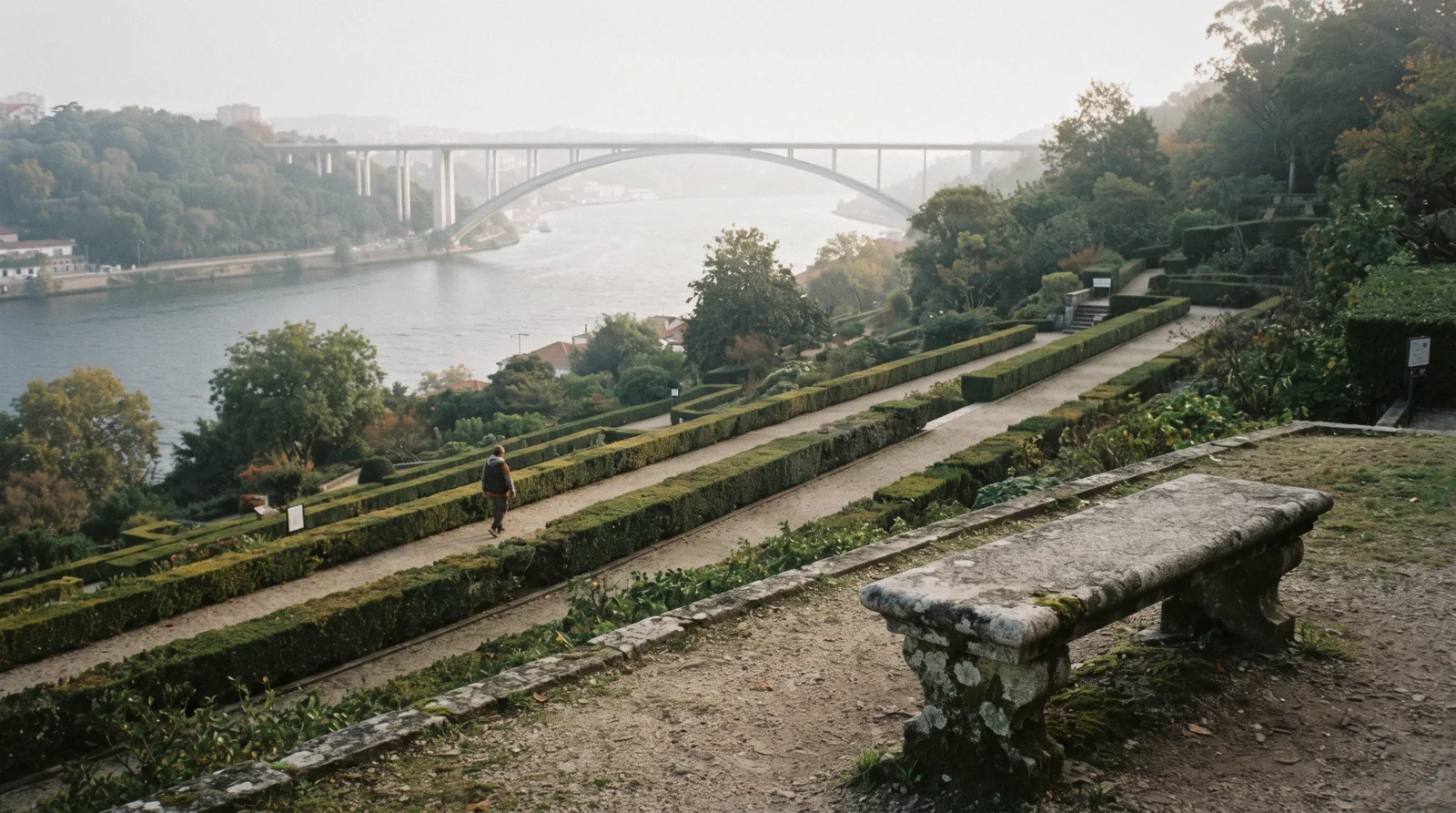
Jardins do Palácio de Cristal
The Jardins do Palácio de Cristal are the eight hectares of terraced gardens on the ridge west of the centre, free to enter, open from 8:00 every day, and the best place in Porto to look at the Douro without paying for the privilege. Everything on this Palacio de Cristal Porto page comes from the city's own parks listing. The palace of the name is not there — the iron-and-glass hall that King Luís opened in 1865 was demolished in 1951 — and this page explains what stands in its place, prints the city's own hours, walks you through the formal gardens, the camellia wood and the free public library, and gets you up the hill; the Serralves museum further west and the free things to do page cover the rest of the no-ticket city, and the whole first day is on the Porto city guide homepage.
Quick answer Free, 8:00 to 21:00 in summer, no palace, and the best free river view in the city
The Jardins do Palácio de Cristal are free — the city's parks department prints "Acesso Livre" and there is no ticket desk — and they open at 08:00 every day, closing at 21:00 from April to September and at 19:00 from October to March. The city publishes no closed day. Read on ambiente.cm-porto.pt in Q3 2026.
Key takeaways
- There is no crystal palace. The iron-and-glass exhibition hall opened by King Luís in 1865 was demolished in 1951 and replaced by the sports pavilion now called the Rosa Mota, so the dome you can see is not the building in the postcards — the history section has the whole sequence
- The river terraces on the west side are the free alternative to every paid viewpoint in Porto, including the closed Serra do Pilar monastery and the ticketed Clérigos tower
- Inside the gardens are a free public library with an exhibition gallery, a rose garden, the camellia wood and the sculptures A Ternura and A Dor — none of them ticketed
- The heritage tram lines 1 and 18 both serve the gardens, and a tram ticket bought on board is $6.97 (€6) — a fare the Andante card does not cover
Key facts
Opening hours
| April–September, daily | 08:00–21:00 |
|---|---|
| October–March, daily | 08:00–19:00 |
Closed None stated by the city — the gardens list no closed day and no holiday closure
Admission
- Adult
- Free ("Acesso Livre" on the city's own page)
- Reduced
- Not applicable — there is no ticket
- Free
- Everyone, at all published hours; the Almeida Garrett public library and its exhibition gallery inside the gardens are also free entry
Planning it
- Time needed
- Not stated by the city. Our routing: 45 minutes for the formal gardens and the river terraces, 90 minutes to add the camellia wood and the library
- Book ahead
- Optional — walk-up usually fine
- Address
- Rua de D. Manuel II, Porto
Nothing here is ticketed, so this table compares what it costs to get to the gardens rather than to get in — the useful question when the gate is free. Fares from the STCP and Metro do Porto 2026 tariff and from GetYourGuide, read in Q3 2026 and converted at €1 = $1.1622. The paid rows are sightseeing products that stop here; none of them buys you anything the free gate does not.
Are you paying to get in, or paying to get up the hill? Entry is free and always has been; the only money this page can save you is on the climb from the river or the Baixa.
| Option | Price | Includes | Cancel | Book |
|---|---|---|---|---|
| Walk in from Rua de D. Manuel IIEveryone. There is no ticket, no queue and no closed day — this is the row you want | Free | The whole eight hectares, the river terraces, the camellia wood, the rose garden and the free library | Not applicable | Official site |
| Heritage tram to the gardens, lines 1 or 18Anyone who wants the ride to be part of the visit; the tram page has the two routes and the fares | $6.97 (€6) adult single, $4.07 (€3.50) child, bought on board | One tram trip to the Carmo or Massarelos end of the circular route; not covered by any Andante title | Not applicable — sold by the conductor | Official site |
| City Sightseeing hop-on hop-off bus, 24 or 48 hA first day covering distances on wheels; its 4.0 rating is the lowest of any product on this site, so read the listing | $32.52 (€28) | Two bus lines with a stop at the gardens, 16-language commentary, a port tasting and a Gaia walk; 4.0 from 3,494 reviews | Free up to 24 hours before | Check Availability |
| Three-hour guided e-bike tour of the centreThe hill is the problem in this part of Porto, and an e-bike is the honest answer to it | $33.10 (€28) | Guide in five languages, e-bike and helmet, the historic centre and the riverfront; 4.8 from 3,789 reviews | Free up to 24 hours before | Check Availability |
The Super Bock Arena — the domed Rosa Mota pavilion inside the grounds — is a separate concert venue with its own tickets and its own promoters, and none of the rows above includes anything there. The gardens stay open around it on event days.
Ways to reach the gardens without the climb
No listing on this site sells entry to the Palácio de Cristal gardens, because entry is free. These three are the sightseeing products whose routes take in the gardens or the ridge they sit on, and each is priced as listed in Q3 2026.
 from €28
City Sightseeing Porto Hop-On Hop-Off Bus & Bookable Extras
listed at $32.52
The City Sightseeing bus on two lines with 16-language commentary, a port tasting and a Gaia walk thrown in; the 48-hour ticket adds a night tour and the cruise. Its 4.0 rating is the lowest on this page.
Check Availability from €28
Porto: City Highlights 3-Hour Guided Electric Bike Tour
listed at $33.10
Three hours by e-bike across the historic centre and the riverfront with Bluedragon, in five languages. The weight limit is 118 kg and the operator can refuse riders who cannot handle a bike, without refund.
Check Availability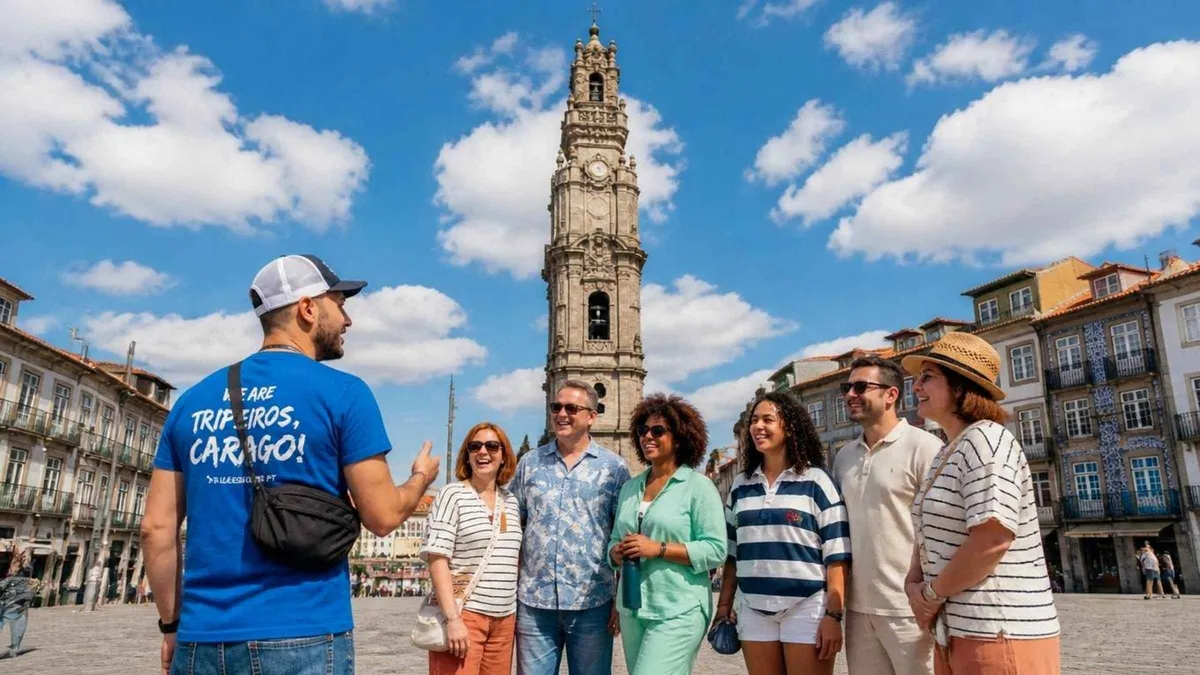 from €29
Porto: 3-Hour Guided City Highlights Walking Tour
listed at $33.68
The three-hour Bluedragon walk through the historic centre, offered in five languages with a private option. The most-booked classic walking tour in Porto, and a public tour needs at least two people.
Check AvailabilityPrices, ratings and details are the platform's own, checked in Q3 2026; dollar figures are the listed prices — the platform bills in your account's currency.
What is free here, and what has a ticket
One of the two questions the search results keep asking. The answer is that almost everything inside the railings is free, and the exception is a concert hall.
The city's parks page states the access condition in two words — Acesso Livre, free access — and lists no price, no reduced fare and no ticket office. That covers the gardens themselves, the formal Émile David parterres at the entrance, the informal woodland on the west side, the rose garden, the camellia wood, the river terraces, the fountains and the sculpture collection scattered through them. There is no gate to pass, only entrances.
The Biblioteca Municipal Almeida Garrett inside the gardens is a public library with an exhibition gallery, and the city's own description says the gallery is free-entry. It is also the one building here with a roof, which makes it the answer to the obvious rainy-afternoon problem — the rainy day page has the rest.
The Super Bock Arena — Pavilhão Rosa Mota, the round building in the middle of the grounds, is a separate venue. It runs concerts and events with their own promoters and their own tickets, and nothing about it is included in a walk through the gardens. If you have read that you can go inside the dome as part of a garden visit, that is wrong: you go inside it when you have a concert ticket.
Two small things that surprise people. There are no admission-charging glasshouses here of the kind Lisbon has; the plant collections are outdoors and open. And the peacocks that people arrive expecting to photograph are not a municipal exhibit with hours — they are birds in a garden, and the city publishes nothing about them, so we print nothing about their numbers or their whereabouts.
Why there is no crystal palace at the Palácio de Cristal
The most common disappointment on this hill is entirely avoidable, and the story behind it is one of the better ones in the city. Every date below is from the city's own page for the gardens, read in Q3 2026.
1542–1854: the Field of the Marker Tower, then a chapel for an exiled king
From 1542 this ground was known as the Campo da Torre da Marca — the field of the marker tower — after a tower built here as a reference point for ships entering the mouth of the Douro. In 1854 the Capela Carlos Alberto was raised on the site in honour of the King of Piedmont-Sardinia, who went into exile in Porto after losing the Battle of Novara and died in the city shortly afterwards. The chapel is still there, and almost nobody who walks past it knows who it commemorates.
1865: King Luís opens an iron-and-glass palace
Prompted by the industrial and technological fever of the age and by the international exhibitions in London and Paris, a group of Porto citizens founded the Sociedade do Palácio de Cristal Portuense to build a hall for agricultural, industrial and artistic exhibitions. Agricultural shows were already being held on the Campo da Torre da Marca, so the field was the obvious site. In 1865 King Luís inaugurated the Exposição Internacional Portuguesa inside a palace of iron and glass measuring 70 metres wide by 150 metres long, designed by Thomas Dillen Jones.
Around it, the romantic gardens laid out by Émile David were themselves the statement: a new idea of what leisure in a city could be.
1933–1952: the city buys it, and then knocks it down
Maintenance costs were high and the building never paid for itself. It fell into disuse and was bought by the Câmara do Porto in 1933. In 1951 the Palácio de Cristal was demolished, and in its place went the Pavilhão de Desportos — the sports pavilion, today the Pavilhão Rosa Mota — built to host the 1952 Roller Hockey World Championship. That is the domed building you can see from the gardens and from half of Porto. It is a good deal younger than the name on the gate, and the confusion between the two is why this section exists.
What survived the demolition is the more valuable half: the gardens. The city's own description puts its finger on why they work — the combination of formal parterres with informal woodland, and a position on the ridge that opens several different views of the Douro from within one park.
The Hill In Seven Dates
From the marker tower for ships on the Douro to the pavilion that stands where the palace did.
-
1542
The Campo da Torre da Marca
The ground takes its name from a tower built here as a reference point for ships entering the mouth of the river.
-
1854
The Capela Carlos Alberto
Built in honour of the King of Piedmont-Sardinia, who came into exile in Porto after the Battle of Novara and died in the city soon after.
-
1860s
The Sociedade do Palácio de Cristal Portuense is founded
Citizens of Porto, watching the international exhibitions in London and Paris, set out to build a hall for agricultural, industrial and artistic shows.
-
1865
King Luís opens the Portuguese International Exhibition
Inside an iron-and-glass palace 70 metres by 150, by Thomas Dillen Jones, with romantic gardens by Émile David around it.
-
1933
The city buys the site
High maintenance costs and poor returns leave the palace in disuse; the Câmara do Porto takes it on.
-
1951
The Palácio de Cristal is demolished
The iron hall comes down after eighty-six years. Only the gardens and the name survive.
-
1952
The sports pavilion opens on the same ground
Built for the Roller Hockey World Championship and known today as the Pavilhão Rosa Mota, now trading as the Super Bock Arena.
Source: the city parks department's own page for the Jardins do Palácio de Cristal, ambiente.cm-porto.pt, read in Q3 2026.
What to walk to inside the gardens
Eight hectares is more than it sounds when it is stacked down a hillside. This is the order we would walk them, entering from Rua de D. Manuel II.
The formal gardens at the entrance
The Jardim Émile David beds are the first thing inside the gate: clipped, symmetrical, and planted with camellias in the outer borders — the city calls Porto a city of camellias and means it. It is the most photographed corner and the least interesting one; walk through it.
The river terraces on the west side
Keep going west and the ground falls away in terraces towards the Douro. This is the reason to come. The view runs downstream over the rooftops of Massarelos to the Arrábida bridge and the river mouth, and it is entirely free at a moment when the Serra do Pilar terrace is the only comparable free viewpoint in the two cities and the Clérigos tower charges $11.62 (€10) for a higher one.
There are benches along the walk, and no railing to fight for.
The camellia wood and the rose garden
The city names two camellia routes: east from the Rosa Mota pavilion to the Roseiral, the rose garden, with specimens lining the path, and west into the Bosque das Camélias — the camellia wood — which is also the best place to see how the informal half of the garden was designed. Camellias flower in Porto through the winter and into early spring, which makes this one of the few gardens in Europe worth a January visit.
The sculptures, the fountains and the library
Fountains and sculpture of several periods are scattered through the grounds; the city singles out two, A Ternura by Sousa Caldas and A Dor by Teixeira Lopes. The Biblioteca Municipal Almeida Garrett sits on the northern edge with a free exhibition gallery. And the Museu Romântico da Quinta da Macieirinha stands immediately beside the gardens on the same slope — a separate municipal house-museum, listed by STCP as one of the stops on its tram route.
Getting to the Palácio de Cristal gardens
The gardens are on the ridge about a kilometre west of the Clérigos tower, and the walk from the river is a genuine climb. Fares are the STCP and Metro do Porto 2026 tariff and the STCP tram tariff, read in Q3 2026.
The main entrance is on Rua de D. Manuel II, and the city lists a long line of buses that stop at it. What follows is the shortest version of each approach with what it costs.
| From | Route | Cost | Time |
|---|---|---|---|
| Clérigos / Cordoaria | On foot west along Rua de D. Manuel II | Free | About 12 minutes, gently uphill |
| São Bento or the Baixa | STCP bus — the city lists 200, 201, 207, 208, 303, 500, 501 and 507 among others | $2.67 (€2.30) on board; $1.63 (€1.40) on a two-zone Andante single | About 15 minutes |
| Ribeira / the river | Heritage tram line 18 from Carmo, or line 1 along the river to Massarelos and up | $6.97 (€6) on board, not covered by Andante | 20 to 30 minutes with the wait |
| Casa da Música | On foot down Rua de D. Manuel II, or one stop by bus | Free on foot | About 15 minutes downhill |
| Serralves | STCP bus east along the Boavista axis | $2.67 (€2.30) on board | About 20 minutes |
Two notes the timetables do not carry. The tram is a scenic ride rather than a transport option: line 18 runs about every 30 minutes between 09:15 and 19:45 and line 1 about every 20 minutes between 08:40 and 20:43, and the fare is separate from every transport pass in the city. And the walk in from the Clérigos end is the one to take if you have any choice — it is level for most of its length and it brings you into the formal gardens at the top of the slope, so you walk downhill towards the river view instead of up towards it.
How Much Time To Give The Gardens
There is no ticket to justify and no closing rush except the gate hour, which makes this one of the few sights in Porto where you decide the length yourself. Three routings against the city's own hours.
The variable is not the gardens; it is the hill. Everything below assumes you arrive on foot from the Clérigos end and leave the same way, and includes the walk in each direction.
| Routing | In the gardens | Door to door from the Baixa | What you skip |
|---|---|---|---|
| The view and out | 20 minutes | About 45 minutes | The camellia wood, the rose garden and the library — everything except the terraces |
| Formal gardens, terraces, library | 45 minutes | About 1 h 15 | The Bosque das Camélias on the west side and the walk down to Massarelos |
| The full circuit with the camellia wood | 90 minutes | About 2 hours | Nothing; this is the routing we would take on a clear morning |
On when to come: opening at 08:00 all year makes this the earliest thing in Porto you can do, and the hour before nine on the terraces is the quietest, cleanest light of the day. The other good window is the last hour before the gate closes — 21:00 from April to September, which in June is well after the sun has gone down over the river mouth.
Dos And Don'ts At The Palácio de Cristal Gardens
The short version of everything above, for the morning you walk up.
Do
- Walk west to the river terraces first; they are why the gardens are worth the climb, and they are free
- Come at 08:00 if you can — the gates open then all year and the terraces are empty and well lit
- Use the free exhibition gallery in the Almeida Garrett library if the weather turns; it is the only roof in the grounds
- Walk in from the Clérigos end along Rua de D. Manuel II so the slope works for you rather than against you
- Visit in winter for the camellias — Porto flowers them from December, and the Bosque das Camélias is planted for it
- Check whether the Super Bock Arena has an event before a Saturday evening visit; the gardens stay open but the approach street does not stay quiet
Don't
- Don't come expecting a crystal palace: the iron hall was demolished in 1951 and the dome you can see is a 1952 sports pavilion
- Don't pay for a viewpoint on the same day; these terraces do free what the Clérigos tower charges $11.62 (€10) for
- Don't assume your Andante title covers the heritage tram up here — it does not, and the on-board fare is $6.97 (€6)
- Don't plan on going inside the Rosa Mota dome as part of a garden walk; it is a concert venue with its own tickets
- Don't arrive at 19:30 in November expecting the summer hour — the gate shuts at 19:00 from October to March
Palácio de Cristal map: the entrance, the terraces and what is near
The garden entrance on Rua de D. Manuel II, the tram stops that serve the ridge, and the four sights within twenty minutes on foot.
Next stop from the gardens
Walk minutes are our estimates from the GPS distances; the two eastward walks are gently downhill.
Clérigos Tower
The baroque bell tower at the other end of Rua de D. Manuel II: $11.62 (€10) for the tower, church and museum, open daily to 19:00. The Clérigos page has the night dates and the step count nobody prints.
12 min walk eastPorto tram
Line 18 passes the ridge and line 1 runs the riverfront below; the tram museum at Massarelos is $9.30 (€8). The Porto tram page has the fares, the routes and the museum discount.
15 min downhill to MassarelosSerralves
The contemporary art museum, the art deco villa and eighteen hectares of park: $27.90 (€24) for all spaces, $17.43 (€15) for the park alone. The Serralves page has the tiers and the free first Sunday.
About 20 min by bus westPalácio de Cristal questions
Is the Palácio de Cristal free?
Yes. The city's parks department prints "Acesso Livre" on its own page for the gardens and there is no ticket desk at any entrance; the Almeida Garrett library and its exhibition gallery inside the grounds are free-entry too. Read on ambiente.cm-porto.pt in Q3 2026. What is free and what is not draws the one exception, which is the concert venue.
Why is the Palácio de Cristal closed?
The gardens are not closed — the city publishes no closed day at all, and the gates open at 08:00 every day of the year. What is gone is the palace: the iron-and-glass hall of 1865 was demolished in 1951 and replaced by the sports pavilion now called the Rosa Mota. The history section has the sequence, and the dome you can see is that 1952 replacement.
What are the Palácio de Cristal gardens opening hours?
08:00 to 21:00 from April to September and 08:00 to 19:00 from October to March, every day, with no closed day published by the city. That 08:00 opening makes it the earliest thing you can do in Porto, and the first hour on the river terraces is the quietest of the day.
Is there a view of the Douro from the Palácio de Cristal gardens?
Yes, and it is the best free one on the Porto bank. The west side of the gardens falls away in terraces towards the river, looking downstream over Massarelos to the Arrábida bridge and the river mouth. The paid alternative, the Clérigos tower, costs $11.62 (€10) and the Serra do Pilar terrace across the water is the other free one.
What is inside the Jardins do Palácio de Cristal?
Formal parterres by Émile David at the entrance, informal woodland to the west, a rose garden, the Bosque das Camélias, fountains and sculpture including A Ternura by Sousa Caldas and A Dor by Teixeira Lopes, the free Almeida Garrett library with an exhibition gallery, and the Rosa Mota pavilion. The walking order puts them in the sequence we would take.
How do you get to the Palácio de Cristal gardens?
Twelve minutes on foot west from the Clérigos tower along Rua de D. Manuel II, or by any of the STCP buses the city lists at the entrance for $2.67 (€2.30) on board and $1.63 (€1.40) on a two-zone Andante single. The heritage tram lines 1 and 18 also serve the ridge at $6.97 (€6), a fare no transport pass covers. The approaches are compared with times.
When do the camellias flower at the Palácio de Cristal?
Through the Porto winter and into early spring — the city runs a camellia programme and plants them along the path from the Rosa Mota pavilion to the rose garden as well as in the Bosque das Camélias on the west side. That makes the gardens one of the few things in the city that a January visit improves rather than spoils; the best time to visit page has the month-by-month picture.
Where the gardens fit in a Porto day
Free, open at eight and never closed makes this the most flexible stop in the city — which is exactly why it is worth deciding in advance where to put it.
Our routing: start here at 08:15 on a clear morning, walk the terraces while the light is still low on the river, and be back east at Livraria Lello or the Clérigos tower for a 09:00 or 09:30 slot — the walk is twelve minutes and gently downhill, so the gardens cost you nothing but the early alarm. That order also means you see the free view before you decide whether to pay for the tower's.
The alternative is the end of the day: the gate does not shut until 21:00 from April to September, later than any ticketed sight in Porto, so this is where an evening goes when everything else has closed. The free things to do page has the other late options.
On a Monday, when the municipal museums shut, the gardens and the library gallery are both open, which puts them near the top of that day's short list. And in the rain, the twenty minutes it takes to cross from the entrance to the terraces is the whole exposure — the rainy day page has the indoor alternatives if that is twenty minutes too many.
The Palácio de Cristal Gardens On Film
Three walks through the gardens, so you can see the slope and the terraces before you climb them. What they show is free to visit; the hours and figures on this page were read in Q3 2026.
PORTO Portugal Jardins do Palácio de Cristal PORTO 4K HDR
A slow walk through the formal gardens and out to the river terraces, in the order this page recommends.
Video: Zen WalksJardins do Palácio de Cristal Porto Walking Tour 4K Portugal
The full circuit including the camellia wood on the west side and the Rosa Mota pavilion.
Video: Walking the TourPorto Garden & Park Tour - Palácio de Cristal / São Roque
The gardens set beside another municipal park, useful for judging how much of the hill you want to walk.
Video: Where Dafuq?Videos load from YouTube only when you press play.
Reviewed Q3 2026 (July–September 2026); next review Q4 2026. Prices, hours and terms are set by the venue or operator and confirmed at checkout.
We may earn a commission if you book through one of our links, at no extra cost to you. Full affiliate disclosure